

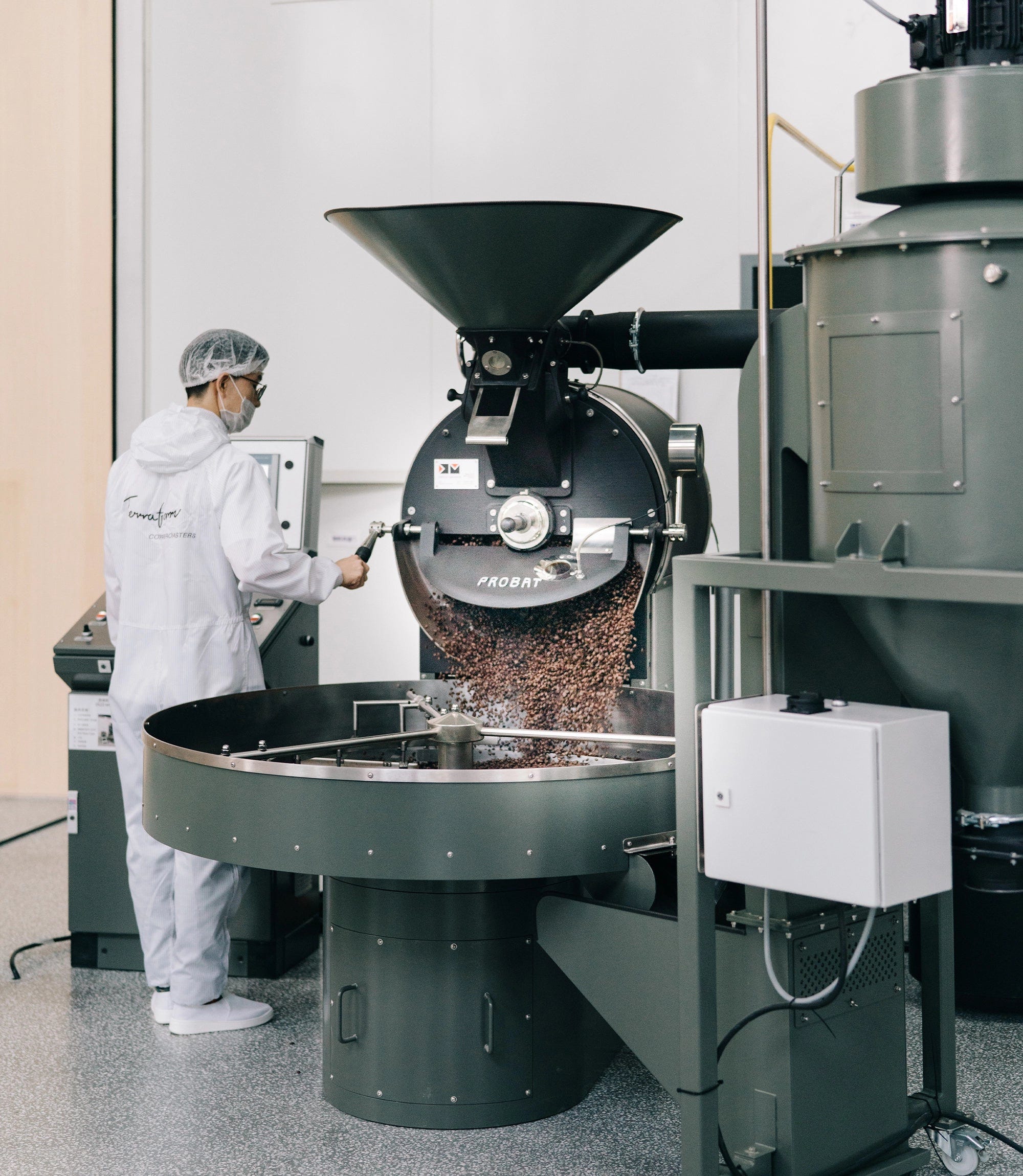
Coffee roasting is a craft that blends thermodynamics, physics, and chemistry — From loading beans, dehydration, color change to the development phase, roasters use smell, sight and parameter control to release, reorganize, and stabilize the flavor compounds hidden in green beans under high heat.
If we roughly apportion the origins of a cup’s flavor (I don’t recall where I first saw this sentence): 40%–50% comes from the green bean (variety, origin, soil, microclimate and altitude set the flavor ceiling), while roasting accounts for at least another 30%+. Meaning - without excellent roasters, the good coffee in our cups would not exist — so saying “roasting is the soul of specialty coffee” isn’t an exaggeration.
But what does this say about the China market? Aren’t Chinese cafés just selling “sweet drinks” and novelty creative coffees that mask the real coffee flavor — strange, complex recipes that don’t require good green beans or careful roasting?
Admittedly, if we’re talking about large chains, it might have a point — Luckin treats coffee like a sweet beverage & bubble‑tea brands now sell milk‑based coffees. But the hard truth is that in almost every SPECIALTY café — except for a tiny minority (well under 0.1% ) devoted entirely to signature creations — the main sales still come from two categories: Americano and latte. Creative drinks function mainly as a marketing or funnel tool — loud online but not the business’s foundation, because core coffee consumers don’t buy creative drinks frequently, while non-core users have broad options for creative drinks outside of cafe offerings. True survival still depends on traditional coffee.
> Notes: As this piece focuses on specialty‑coffee culture, when I don’t explicitly mention “signature creative drinks,” I mean true traditional espresso‑based or hand‑brewed coffee — so don’t misread me.
In short: labeling China’s market as dominated by “sweet drinks” or “creative novelties” is probably outdated view ( Maybe many hold this view, including my lovely readers — I don’t want to be the bad guy unless absolutely necessary, but I have to call it out because it risks creating a serious misperception about China’s coffee landscape.). Those novelty drinks may attract non‑daily-coffee-audiences heavily, but traditional coffee remains the core profit driver.
(The special role of signature drinks in China merits a separate article, I’d think about it.)
This is precisely why I want to write about roasters’ booming in China: the rise of China’s specialty coffee = the boom in traditional coffee alongside it, which is inseparable from the work and development of coffee roasters behind storefronts.
In fact, I thought long and hard about which angle to take for this piece on Chinese roasting brands — region? roasting style? history? In the end I chose the simplest and most blunt framework — scale — because it’s more direct and easy-to-read.
So — this article maps China’s specialty roasting ecosystem by scale and its business model: large roasting brands (including specialty chains and national roasters), regional roasters, and the redefined “independent studios / in-house roasters” (including online-first). At the end I focus on China’s market particularities and future outlook.
Scope & boundaries:
To keep the piece focused, I exclude two groups:
1) ultra-large commercial roasting plants (not specialty coffee chains) and OEM factories;
2) non‑professional roasters — for example, estate-only roasting operations that don’t retail broadly or study wider green-bean sourcing.
This article centers on “distinct, professional specialty roasters” — brands that may not be headline-grabbing but quietly drive China’s specialty coffee growth.
> Note: the roasting brands mentioned in this article are listed in no particular order and are not ranked.
Let’s begin!!
Big specialty roasters: two main routes and their logic
To me, within the “big brand” category there are two clear commercial logics:
Chain-driven roasting systems (supply-chain oriented)
Role Models: Manner (local specialty chain) and Peet’s ( the US brand that earned the solid reputaiton domestically and inspired many local players).
These brands may have started relying on local OEM in their early stages, but ultimately established their own factories and consolidated their own formulas and methodologies — fast service, consistency, cost and reproducibility. Their beans tend toward stable blends and cost-effective single origins; rarity is not the priority.
National-scale roasters that don’t depend on store sales # the real and powerful drivers of specialty culture diffusion here in recent years
These brands typically have stronger green‑bean procurement networks, more diversified product lines, and clearer roast aesthetics. They grew with the specialty‑cafe wave and set industry trends and standards — many independent cafés use their beans at the bar. Representative features and examples:
Captain George 乔治队长 ( Guiyang) : Undisputed leader and adventurer in the industry at the moment. Even before its founder won the 2025 World Brewers Cup, the brand was already a roasting powerhouse (I mentioned it in my last year’s piece). It has no major blind spots across all product categories, and early on more balanced, nailed milk‑based coffee beans that suits Chinese consumers. Its strong online sales and solid retail experience make it a increadible force 👇.

Shanghai cluster (examples, not ranked):
Terraform 启程拓殖 (brand name for its offline stores: Black Sheep 黑羊): Made SOE; focuses on single‑lot, small‑batch freshness and is active internationally.
Big Sur: One of the early adopters of the “ultra light roast” aesthetic; strong in direct green‑bean sourcing, giving it rarity and diversity advantages plus tight quality control.
Lucky Draw (有容乃大): Skilled at soft, balanced blends and deeply involved in Yunnan processing improvements and origin work.
Pincle 拼一口 (Nantong) :Pincle’s founder is currently the only Chinese world roasting champion. Beyond the title, he’s also a seasoned operator — owning multiple outlets in Nantong and now running two branches in Shanghai. Unlike many peers, he humbly tests customers’ preferences directly and has been evolving his roasting toward sweetness, development and fullness, even incorporating direct‑fire styles rather than following the mainstream light‑roast trend. I expect he’ll keep bringing surprises to the market.
Gout & Co (Chengdu): staunch advocates of French-style light roasts. Interestingly, they’re committed to professionalizing the in‑shop experience — encouraging average customers to taste coffee like competition judges. Crazy.
Other national‑level roasters with notable influence include:
Nanjing — M2M (As an OG in the industry, calling them merely “roasters” is misleading — they’re one of the pioneers and remain leaders of China’s specialty coffee.)
Shanghai — T12(OG) / Aokka / Little Whale (白鲸 );
Qingdao — Coffee Buff
Jingdezhen — Daily Routine (德林造味);
Guangzhou — Rose Cafe(OG);
Hefei — MOVE RIVER (合川水流);
Shenzhen — KW(自在心) / Abit;
Chengdu — Puman (䇚满)
Beijing — S.O.E. (OG )……..
…….etc.
Regional roasters: local depth and differentiated survival
Compared to national brands, their strengths are local understanding and network coverage: fast local delivery preserves freshness; they tailor products to local tastes and can operate with more flexible rhythms. While, for various reasons, they do not yet have nationwide influence or recognition — perhaps the founders never intended to.
Examples:
1% (Hangzhou): over ten local stores in Hangzhou with a bold playbook — very high product refresh frequency, an extremely wide selection of beans (multiple roast styles coexist), and a push toward higher‑concentration espresso consumption, creating a distinctive customer experience.
黑叶 Kuroba (Suzhou) — operates several storefronts in Suzhou; known for Japanese dark roast style; top local reputation but low expansion appetite and almost no visibility on national stage at all.
领地 La Finca (Qingdao) — owner of ten local outlets. See the name? bold and ambitious. This true local king now has more loyal hometown fans than Coffee Buff, even though Coffee Buff is better known nationally today.
瑰夏村咖啡 Geisha or Gesha Cafe ( Nanjing ): — multiple local stores serving expensive, rare Gesha or Geisha in espresso-based coffee; service and origin storytelling deliver very high emotional value — Their baristas will walk customers through the bean story even behind a flatwhite or latte in detail 👇.
…and etc….
Independent roasters
Independent roasters are super diverse as their business models are more flexible and niche. My personal definition for Independent roaster = small‑batch roasting + targeting niche or specific fan communities.
Local experience type: cafe or workshop centered; focus on in‑store experience, fresh delivery and community influence (many “small and beautiful” neighborhood roasters).
Online‑first type: Little or no physical experience space; rely on group‑buy platforms, social communities and e‑commerce; grow via fan management and frequent small‑batch drops.
Hybrid: Combine local store experience with strong online channels — cultivate local core users then convert to online repeat buyers.
Of course, we should avoid hastily labeling these niche roasters; although they currently serve a small audience, many are likely aiming to become the next national brand.
Examples(not ranked):
Soft Focus 纽巷 (Shanghai): runs a workshop and opens weekends only; careful bean selection. Their roasting uses a hybrid hot‑air/fire approach — delivering consistent, soft, balanced, espresso‑oriented coffees backed by deep roasting expertise. You can buy their products in‑store or on Taobao.
煮屿 Brew Island (Shanghai): An astonished showroom of coffee origin and terroir stories. High‑end small batches, frequent updates, rare estate beans — a go‑to for coffee aficionados and industry insiders. The founder manages the green beans, roasting and bar experience from A to Z. You can buy his beans at his shop or through group‑buy communities.
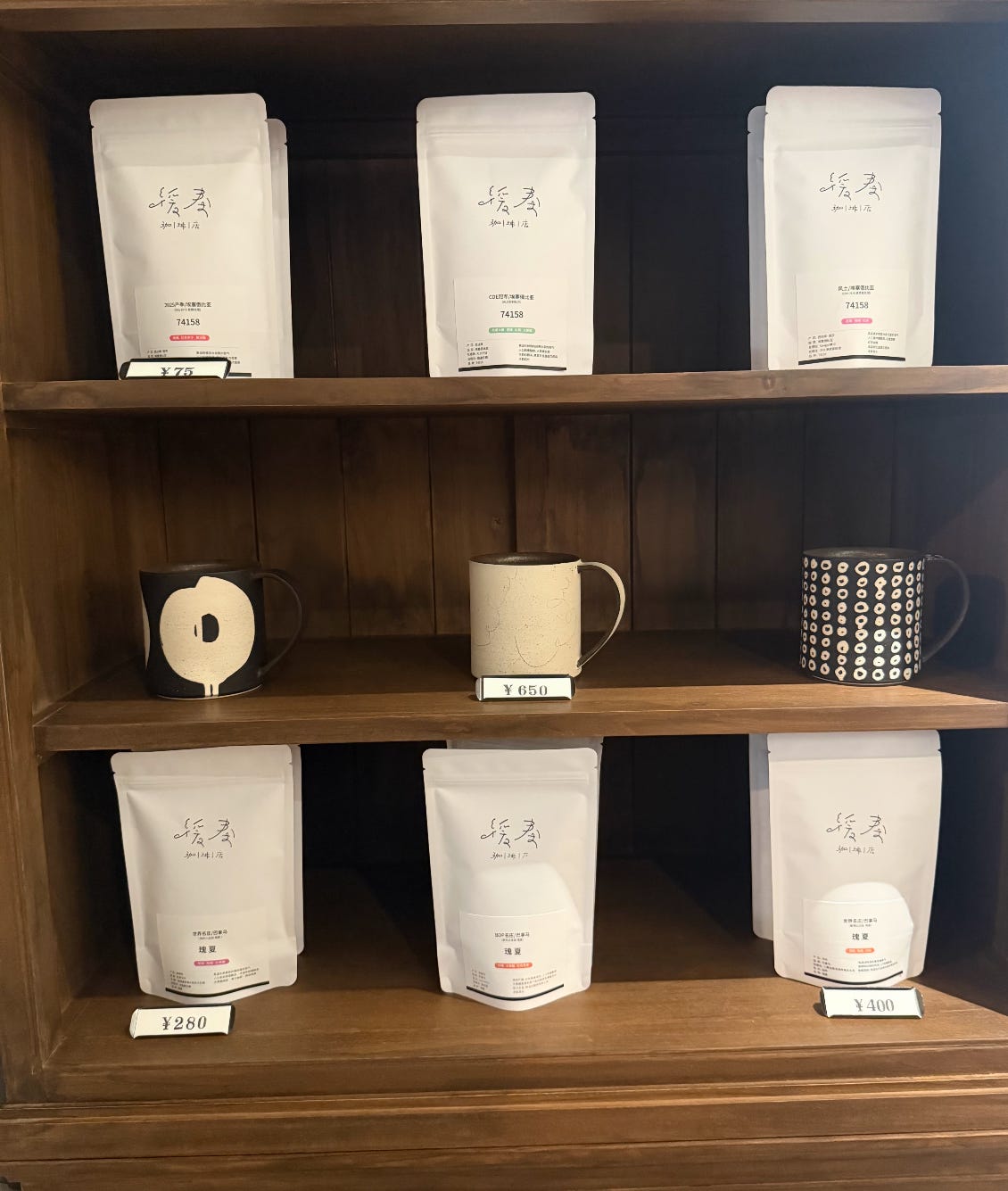
缓奏 (Hangzhou): the founder specializes in all‑hot‑air roasting. The cafe is tastefully appointed, and he insists on personally preparing drinks at the counter every day. Produces clean, fresh, highly developed and meticulously crafted roast profiles, while staying low‑profile in marketing — bean product can be bought in store .
Aroma ESP (Chengdu): blend‑ and omni‑roasting specialists led by founders with a humble approach and a global vision. Their distinctiveness lies not only in their roasting strategy but also in their business approach — they strive to give customers real power over flavors rather than treating them as passive recipients, regularly hosting cuppings where to help consumers get their favorite blend recipes. I am not sure about the overseas market, at least, this is very unique in today’s China, where most coffee insiders wanna push customers to “fall in love” with a certain type of coffee. Plus, they are now frequently touring the world with bar takeovers and coffee events. To me, aroma esp is hard to define — not big in scale for now, but highly creative, globally minded, full of energy and ambition. I’m excited to see their next moves — Certainly, China currently has many such brands. Without a doubt, as emerging forces, they will play an important role in the industry in the future.
Online exemplars: Light Wave, Right Paw, Naizui — fan‑driven, group‑buy oriented. Many have no physical shops and rely entirely on online fan communities, selling beans tailored to customer demand for profit. They frequently use scarcity‑driven marketing — positioning “good coffee beans” as an accessible luxury.
…and etc….
Overseas roasters: role models, adaptation and varied strategies
Foreign roasters have long been teachers for the Chinese market. (Regardless of how Chinese coffee evolves, we must show sufficient respect to overseas coffee practitioners. )
After continuous market exploration and product introductions, those brands that become popular here in China are generally outstanding at adapting to Chinese tastes.
Of course, I don’t mean these brands are truly tailor‑making everything for Chinese customers (maybe some are, but I don’t know); rather, they just “flourished” repeated rounds of market selection — the ones left are those tested and proven by markets and consumers.
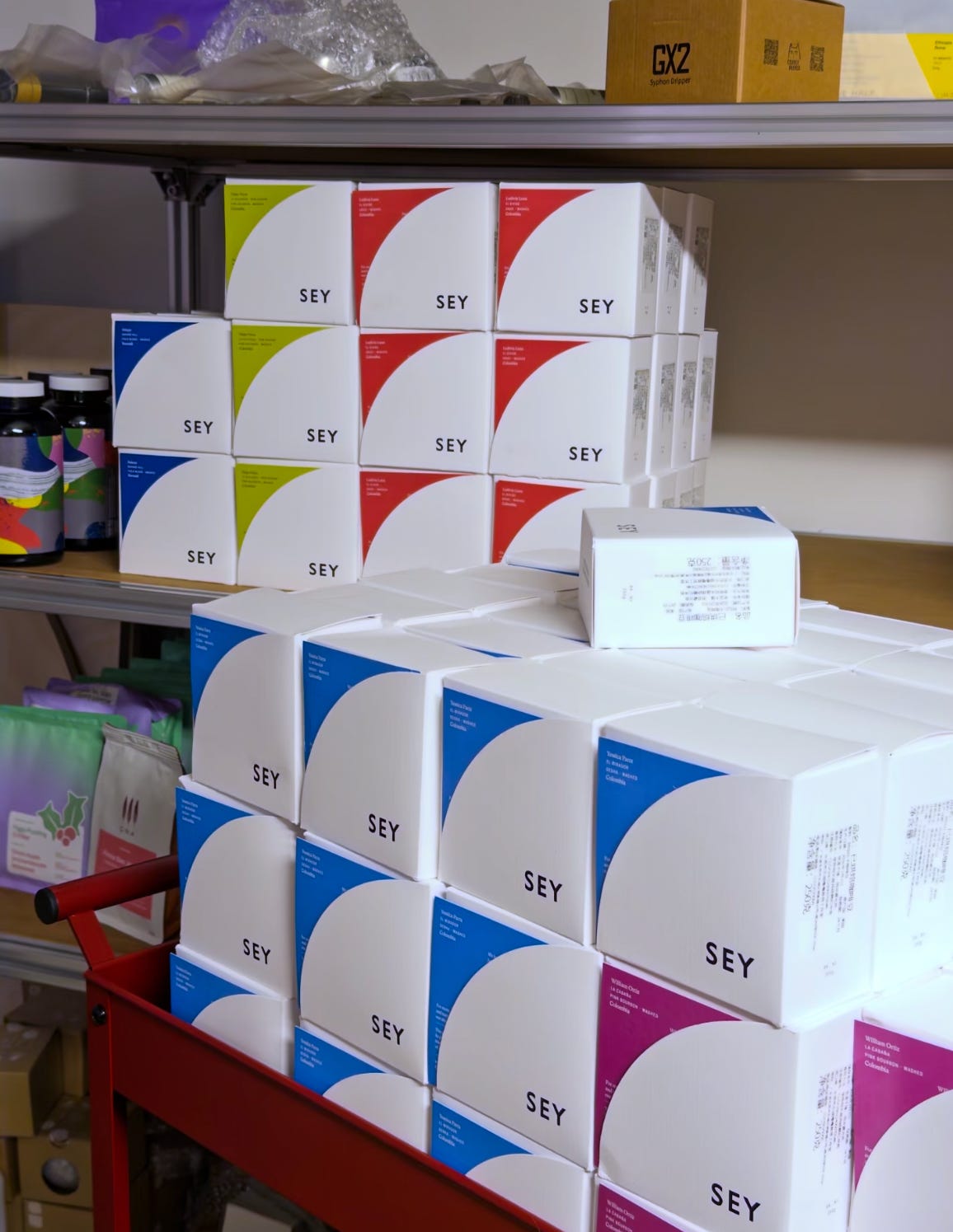
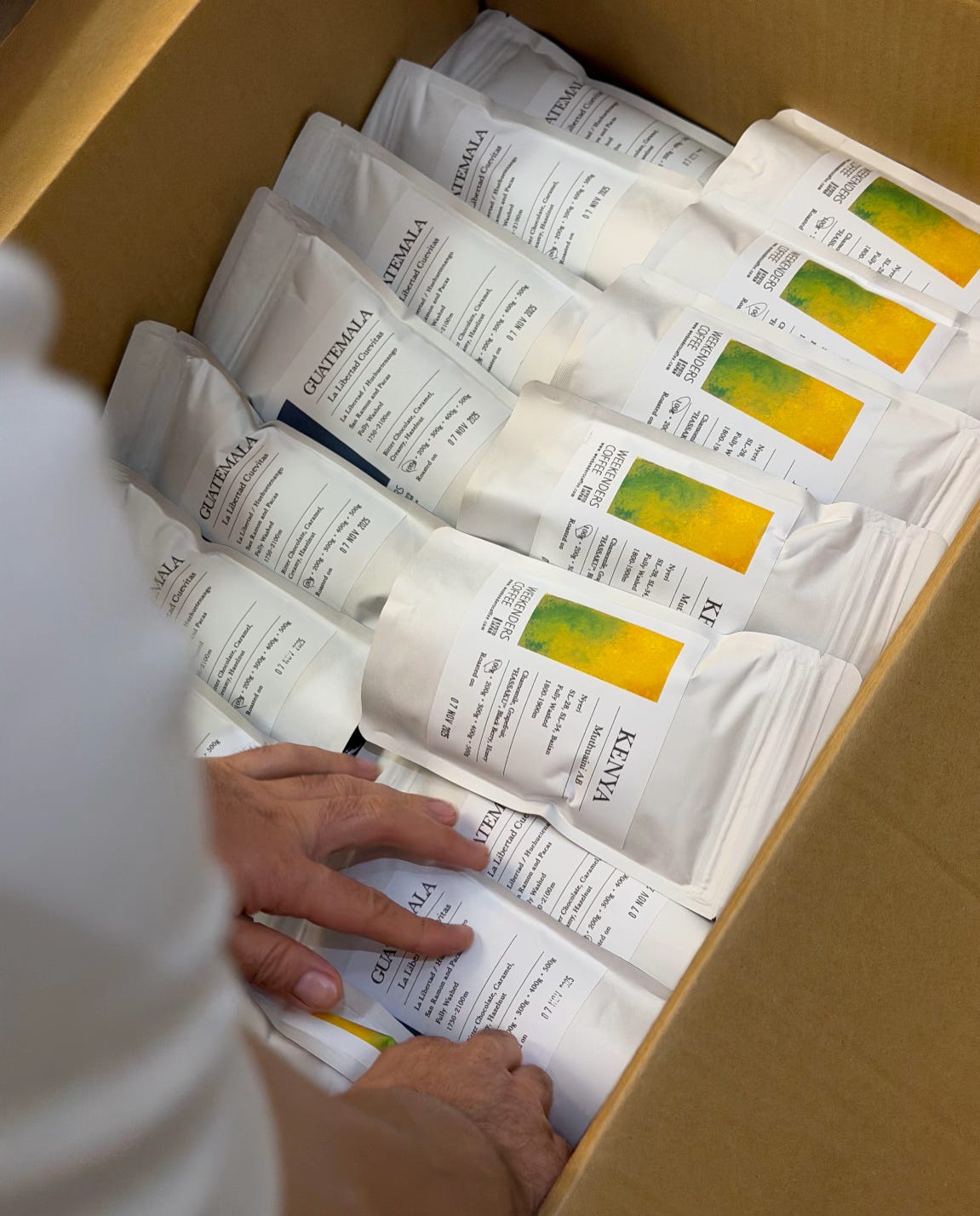
As a result, the “screened” popular brands tend to enjoy very high reputations — for example, the U.S.’s SEY, the Japan’s Weekenders, the Netherlands’ Friedhat / DAK, Norway’s Tim Wendelboe, the U.K.’s Special Guest, Australia’s ONA / Cold black and etc…..👇
Increasingly, overseas players not only export roasted beans but open stores and even roast domestically — a sign of long‑term belief in China’s growth (Australia’s Stitch, Japan’s Kurasu, and Korea’s ULT 👇 have already entered the Chinese market with their physical stores).
The uniqueness of Chinese roasting industry
Key point — China’s market structurally differs from mature markets, and those differences drive both diversity and tolerance for many roast styles.
A large, still‑forming audience. Compared with Europe, Australia or the U.S., China’s specialty‑coffee consumer base is young: exposure is limited and preferences are not yet fixed. That makes consumers more open to novel flavors and easier to educate, so new styles can find an audience faster than in mature markets.
Cultural borrowing. Chinese practitioners actively import techniques and aesthetics from Japan, Korea, Europe, the U.S. and Australia, then rapidly localize them. The result is the simultaneous coexistence of ultra‑light Nordic‑style roasts, more balanced profile, Japanese‑influenced darker profiles, Korea’s clean & round‑clear articulations, Australian roasts for milk-based products, and etc….. — not random chaos, but cross‑pollination.
Small batches and low-cost stylistic experimentation. Because demand is malleable and distribution can be highly targeted (local shops, online drops, fan communities), roasters can trial competition‑grade, ultra‑light, direct‑fire or blend‑forward approaches with manageable risk. Those experiments accelerate learning and industry evolution — and this aligns with China’s current pattern of relatively low per‑capita coffee consumption.
IMO — taken together, these factors create “not exactly fragmentation” but a large‑scale, open‑ended social experiment in coffee sensory: multiple roast logics coexist, interact and iterate rapidly, producing the pluralistic ecosystem we see today.
Conclusion & outlook
China’s roasting landscape is multi‑layered: chains and national roasters deliver scale and stability; regional roasters build local moats on freshness and aesthetics; independent studios are the innovation and fan‑economy frontiers.
Future competition will hinge on five elements:
Green‑bean / origin understanding and management: traceable, stable, diverse supply is the long‑term differential; deep origin work is already happening and will continue.
Roasting craft and aesthetic fidelity: R&D and the ability to productize experiments matter equally.
Channels and logistics (freshness management): regional instant delivery and roast‑to‑cup timing are short‑term advantages.
Fan management and brand power: online‑first and hybrid players can monetize small‑batch models via communities.
Team learning and iteration speed: the ability to respond quickly and convert trends into durable offerings.
China’s “learning‑phase” market brings huge opportunity and risk: preferences and business models are still reshaping, and consumer taste can change quickly with education and marketing. For roasters aiming to win customer’s preferences or even scale nationally, whether you are a local or an overseas brand, the central challenge is to keep aesthetic and technical adaptability that can adapt to fast‑moving tastes.
Next Chapter…
Honestly, I’ve been hesitant to write a portrait of China’s independent cafés — because it’s hard. Cafés business in China are vastly larger and also super complex (assume there are ~200,000 cafés and a 50% chain rate, that’s at least 100,000 independent cafés in China — a staggering number), and their iteration cycles are very short, constantly changing, improving and failing — if you’ve followed Chinese specialty coffee for five or even ten years, you’ll find the cafés that survived several cycles are very few, despite the huge number of participants. So — Until I can form a clearer clue, I won’t rush a full cafés piece.
The top three Shanghai cafés (上海咖啡三巨头) that once drove China’s first wave of specialty coffee culture since 2011 — Seesaw (which has just announced bankruptcy), Mellow 麦隆 and Essence Café 质馆 — have all exited the game; Beijing’s OG cafe brand - SOE 八平方 - can no longer make money from café operations only either — this is shocking, and also an alarming for most cafe runners here.
Well — I don’t yet know what my next piece will be. Maybe, I just say maybe, it’ll cover.. cafe equipment or roasting machines trends? lousy coffee competitions or the craze for weird latte art? the boom in hand‑brewing or the special role of signature drinks in Chinese cafés? or……. why China has so many Q‑graders (amusingly, half of the world’s professional Q‑graders are in China today — can you imagine?).
I don’t know — stay tuned.
This was really interesting and insighful as to how the Chinese roasters market operates. Also quite sad that the specialty coffee OG cafés are very few. Hopefully, to your point, with younger generations open to trying new coffee origins and drinks, these specialty coffee shops will outlast us.
I just came to China and found that cafes are everywhere – and the coffee is generally pretty good. The only problem is, espresso is hard to find.