

👏🙋Hello, hello! Thanks for reading The Momentum — an independent publication without ads or affiliate links. Feel free to subscribe to receive new posts and support my work!

I want to add some context here. I’ve noticed that few in the media ever clearly explain the origins and evolution of these concepts such as “DTC” and “New Consumer Brand” within China context.
In China, “DTC” and the “New Consumer Brand” concept appeared almost simultaneously, around 2018. DTC was a concept created in the US and introduced into China around that time, while the local “New Consumer Brand” concept emerged almost in the same period. Definitions of a New Consumer Brand vary, but the broad consensus is: new demographics, new marketing, new design, new products — basically everything is new. Here, DTC is primarily about model innovation, whereas the New Consumer Brand implies a more comprehensive brand upgrade.
This kind of terminology game always lags behind. The earliest group of consumer-focused investors and founders were already thinking deeply about consumer issues around 2015 — though, of course, that was already many years after the DTC wave in the US.
Today, the New Consumer Brand concept has essentially run its course, because China has gone through a full awakening of brand consciousness. While absorbing Western brand theory, local companies have also figured out their own playbook.( I will talk more about it the near future)
Moreover, many brands that have been seriously learning how to build a true brand have been at it for nearly a decade now — they are no longer “new.”
However, the concept of DTC is still alive; it has always existed within organizations, merely manifesting in different forms and holding varying strategic weight depending on the brand stage.
For startups, it is still a tactical weapon for digital arbitrage — maybe mainstream e-commerce traffic has become very expensive, but social commerce still presents many opportunities — anyway, there are always pockets of low-cost traffic. While for established corporations, it has evolved into either a strategic imperative to stay close to the consumer — building powerful offline spaces and community marketing is, in essence, a closer and better way to communicate with consumers — or a revolutionary model for end-to-end digital integration, breaking down the silos between supply chains and user data.
Think about it: no one can completely detach from a DTC perspective when looking at problems; after all, in a market of oversupply, understanding and meeting consumer needs is the top priority.
NIKE
Nike China will terminate all online sales authorizations next year
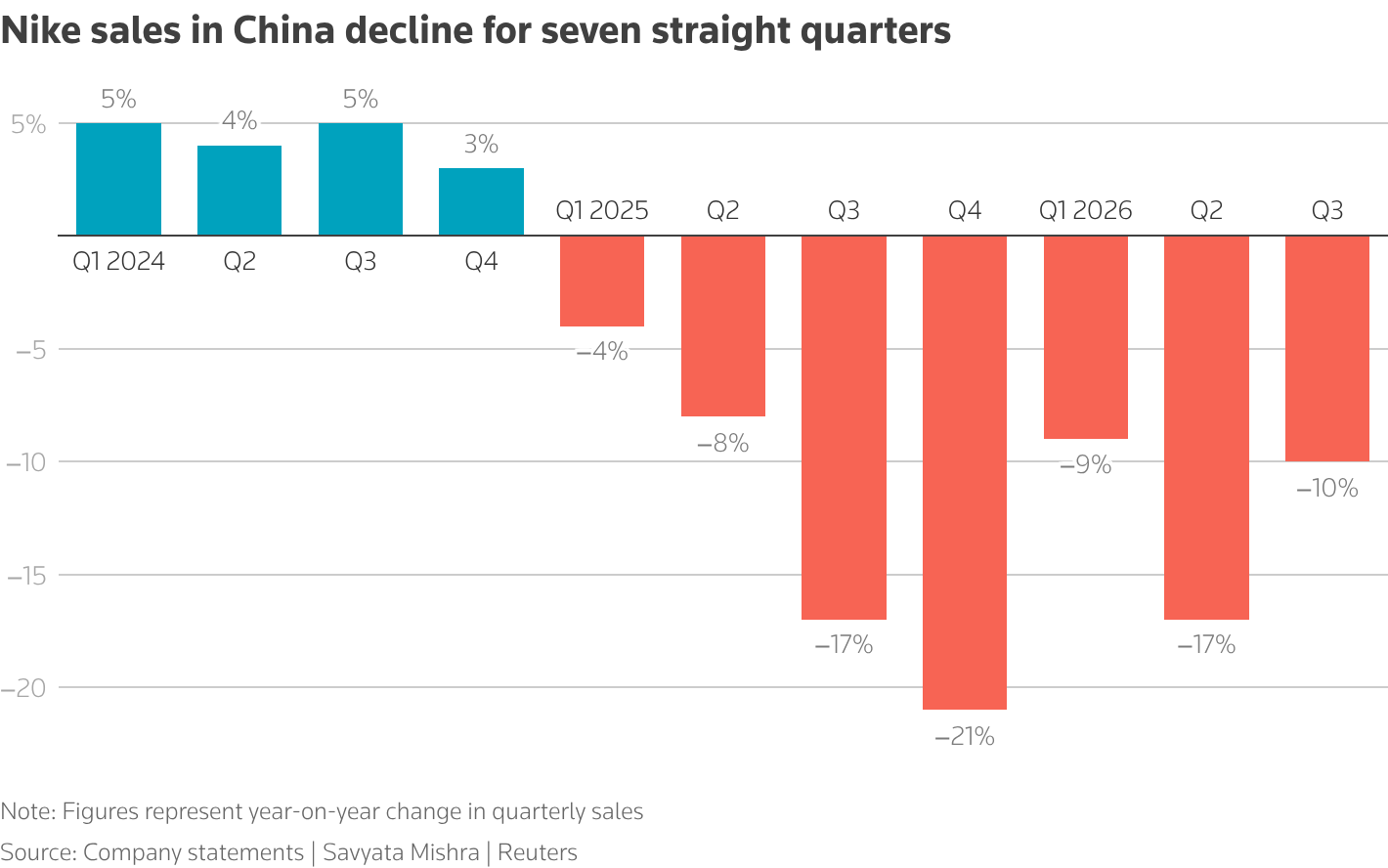
It is said that Nike has completely terminated all online sales authorizations for its distributors in the China market next year. That means its entire online business is now under unified control, and the DTC share is estimated to surge to around 50%, roughly on par with Anta’s main brand.
Topsports, Nike’s distribution partner, soon began liquidating inventory at a discount and its stock price tanked. Pou Sheng, another distributor, was also forced to restructure its business.
Nike officially says it’s to avoid channel fragmentation; distributors guess it’s for price control — and honestly, both make sense. When channels are fragmented and pricing gets chaotic, it really hurts a brand’s ability to stay premium.
But, much like LV, this argument gets zero support in the court of public opinion. You talk about controlling prices, but customers just think your prices aren’t worth it in the first place — so what exactly are you controlling?
In fact — Topsports was using its offline wholesale agreements to run online stores, and never had a formal online distribution authorization from Nike headquarters. In the early days, Nike turned a blind eye. It’s only in the last couple of years that they’ve started to clamp down.
What can I say? I've been lucky enough to work with the marketing teams at Nike, Adidas, and other major sportswear brands numerous times, and Nike's organizational culture is my favorite — simple, professional, and straightforward. So, I don't believe Nike has any malicious intent. Business is business.
But here’s the brutal truth: Nike’s product in China is now a real problem — just like Starbucks and the NBA. When the ideological halo fades ( This not only means that US universal values have a very limited market, but they may even face skepticism and criticism ), local brands are catching up, it’s painfully clear that their products are simply not as appealing as they used to be. IMO — Even if they successfully take back control of online operations, it will likely do very little to address the broader issue of product competitiveness in the short term.
Further Reading 👇

Moutai
Moutai’s late push into DTC won’t be smooth sailing.
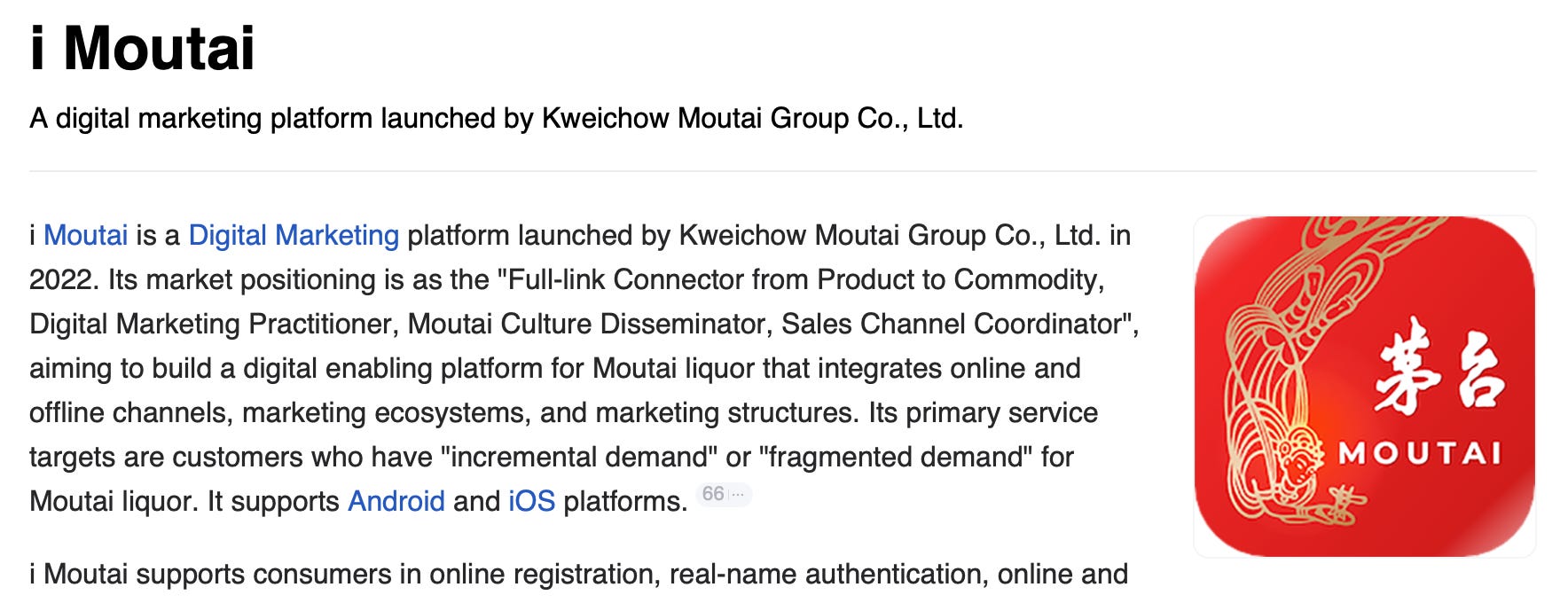
Moutai’s DTC share currently sits around 40-45%, which puts it in a league of its own in the baijiu industry, where Wuliangye and Luzhou Laojiao are still languishing in the 20-30% range.
Its instrument is the “i Moutai” self-operated platform. I remember back then they launched and promoted it very quietly since 2022, cutting traditional distributor quotas year after year, imperceptibly, while holding all the incremental supply firmly in their own hands. The objective was crystal clear: the MSRP of a bottle of Feitian Moutai cannot remain a decorative number forever.
The massive revenue in the channel are not what Moutai is truly worried about. Just like Nike, what concerns them is pricing power. I think I’ve mentioned this in one of my earlier posts: since when does a premium brand have to operate and pricing based on the mood of its distributors? What a joke.
Of course, Moutai is actually one of the better cases. For other baijiu brands, the distributors are practically the brand's sugar daddies.
Beyond online DTC, restructuring offline distributor channels, especially the multi-layer sellers, is essential to regaining price control — and unsurprisingly, Moutai’s greatest hurdle is corruption. The web of ties between top executives and distributors is complex that reform is brutally hard.
Further Reading 👇
Luckin
Beyond the TikTok-style algorithm, this is essentially the SHEIN model applied to the broader physical world.
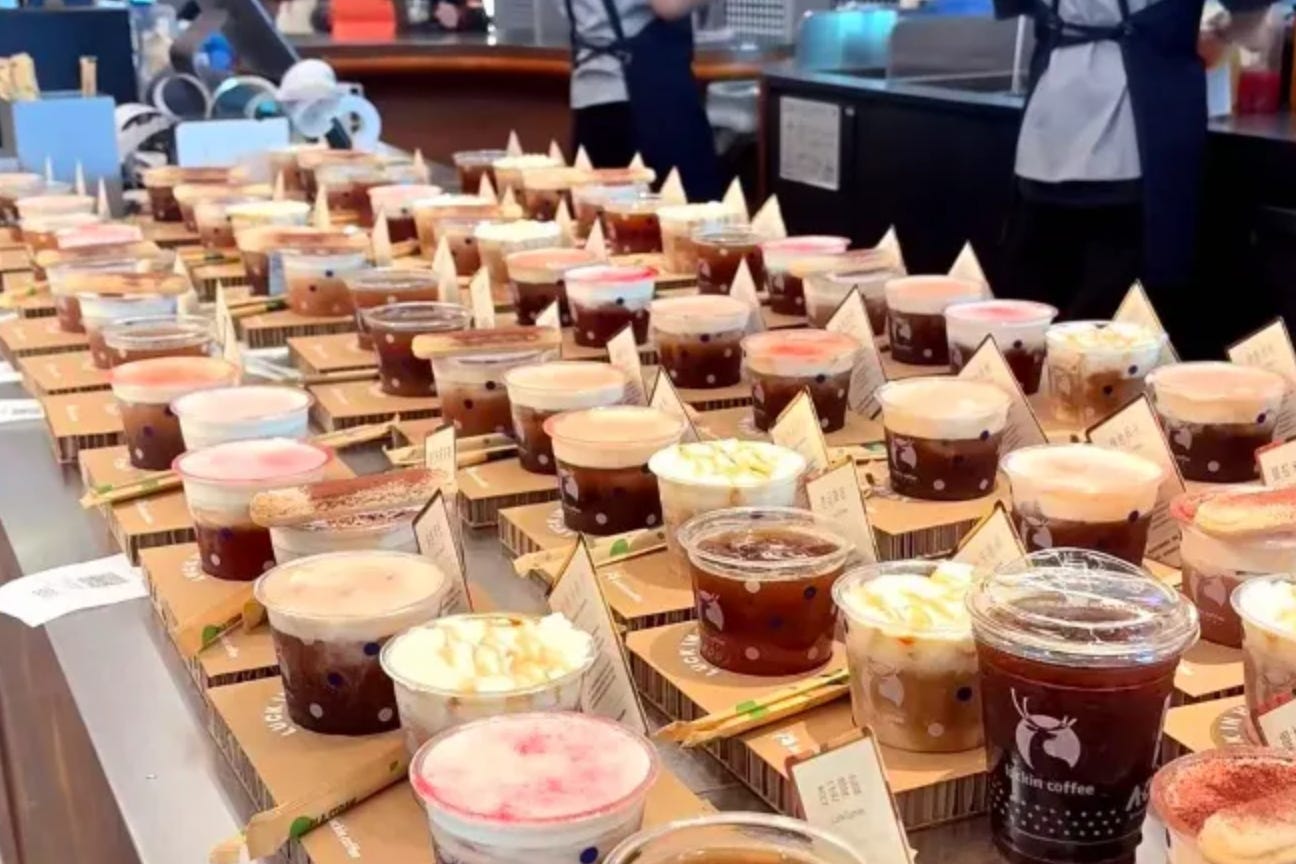
I used to see Luckin as very similar to TikTok. Now, I increasingly see it as SHEIN.
SHEIN’s playbook is well known: data-driven small-batch rapid response, massive SKU testing, vertically integrated supply chain, and turning upstream suppliers into “cloud factories” that obey algorithms entirely. The brand doesn’t rely on any buyers or distributors; it talks to consumers directly using only its own data and algorithms. This is DTC in fast fashion taken to its ultimate form.
And Luckin has simply moved that exact same logic into offline coffee retail. SHEIN’s online storefront is replaced by Luckin’s physical stores, but the core is identical — brand, supply chain, product, pricing, data are highly controlled by the brand; the terminal is only responsible for execution.
The store structure is 65% directly operated and 35% partnership stores.
On the surface, there seems to be a portion of “franchisees,” but in reality, beyond site selection and handing over authorized fees partners have very few authority. No cash, all data is collected by the HQ, no decision power of any product promotion and pricing — basically, everything is digitally managed. Headquarters’ control goes down to the pores. To put it bluntly, a partner is just a hired hand wearing a “co-owner” coat.
Moreover, Luckin’s grip on the value chain is the same as Starbucks’, or even more extreme. From coffee bean cultivation (with its own bases in Yunnan and Africa) to roasting, warehousing, logistics, all the way to in-store fulfillment and user data flowing back — they grab hold of everything. This highly digitized, algorithm-driven new product launch, fully self-controlled supply chain model is exactly what SHEIN does in fashion.
SHEIN proved you can dominate a market without relying on any external channels. Luckin is proving you can do the same, even when you have to open tens of thousands of physical stores.
one premise for Luckin’s physical DTC being so extreme is that its product has low added value. For a 9.9 RMB cup of coffee, customers don’t expect the barista to tell a story, don’t expect latte art, don’t expect much emotional value. The staff are robots, the franchisee bosses are robots too — they don’t even need to use their brains; just ship the order according to system commands.
When the product itself requires no emotional interaction, physical DTC operates very much like online — the DTC concept we usually referred to - users click and quickly purchase and receive delivery. Nike and Moutai, on the other hand, have huge brand premiums and therefore cannot handle everything with a cold commerce; they need real physical-world experiential interaction.
Further Reading 👇
