

👏🙋 Hello, hello! Thanks for reading The Momentum — an independent publication without ads or affiliate links. Feel free to subscribe to receive new posts and support my work!

Nike
Nike’s China sales decline for sixth consecutive quarter — (business insider)
As I’ve mentioned thousands of times, in China, with the rise of national self-awareness and the significant weakening of past sentiments of worshipping foreign things, many Western brands have lost the values and narrative advantages they once enjoyed — Nike is no exception.
Today’s Nike China cannot influence Chinese customers through its “cult-like cultural values,” and those once-inspiring stories of typical American individualism are now being rejected by the Chinese. In this market that rejects Western values, Nike’s most crucial leverage is the product itself. consecutive sales declines have exposed their product weakness—lack of innovation, relying on past glory, mediocre design, and severely insufficient attention to segmented market needs, leaving space for competitors.
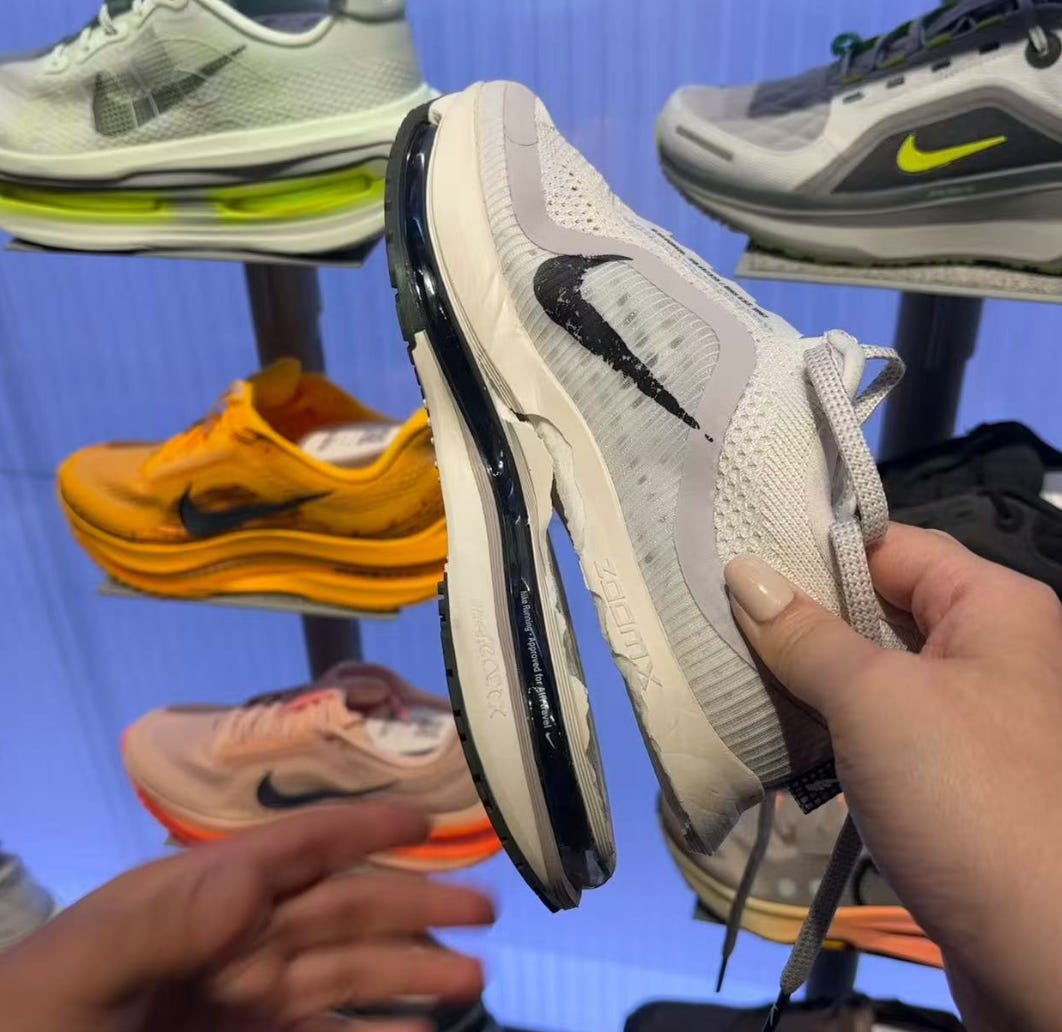
Most importantly, I think Nike fans worldwide would agree with me—Nike’s quality keeps getting worse, unable to support its premium status anymore.
Chinese consumers often joke about Nike, saying “if you buy a pair of Nikes today with great quality, those must be fake ones produced by Chinese factories. Instead, the ones that come unglued after two days of wear are the authentic Nikes.”
ANTA
ANTA accelerates globalization (Bloomberg; Vogue)
ANTA’s model now mirrors Nike’s almost in reverse — Nike abandons DTC, ANTA doubles down on DTC; Nike leaves China’s supply chain, ANTA relies on China’s supply chain; Nike maintains a single brand, ANTA deploys multiple brands to target segmented markets; Nike tells American stories, ANTA tells Chinese stories. Nike gave up signing Kyrie Irving, ANTA directly invited Irving to become Chief Creative Officer.
This should be no coincidence; ANTA’s leveraging a strategic framework benchmarking Nike, but more innovative and bold than Nike, while discovering Nike’s mistakes and immediately attacking without mercy.
Obviously, ANTA’s strategy has already achieved results — it has become the world’s third-largest sports brand, trailing only Nike and Adidas. Its global expansion will certainly allow more audiences to experience ANTA’s product appeal — I’m not bragging, but many of their shoe designs are bolder than Nike’s, and the quality is even better than Nike’s👇
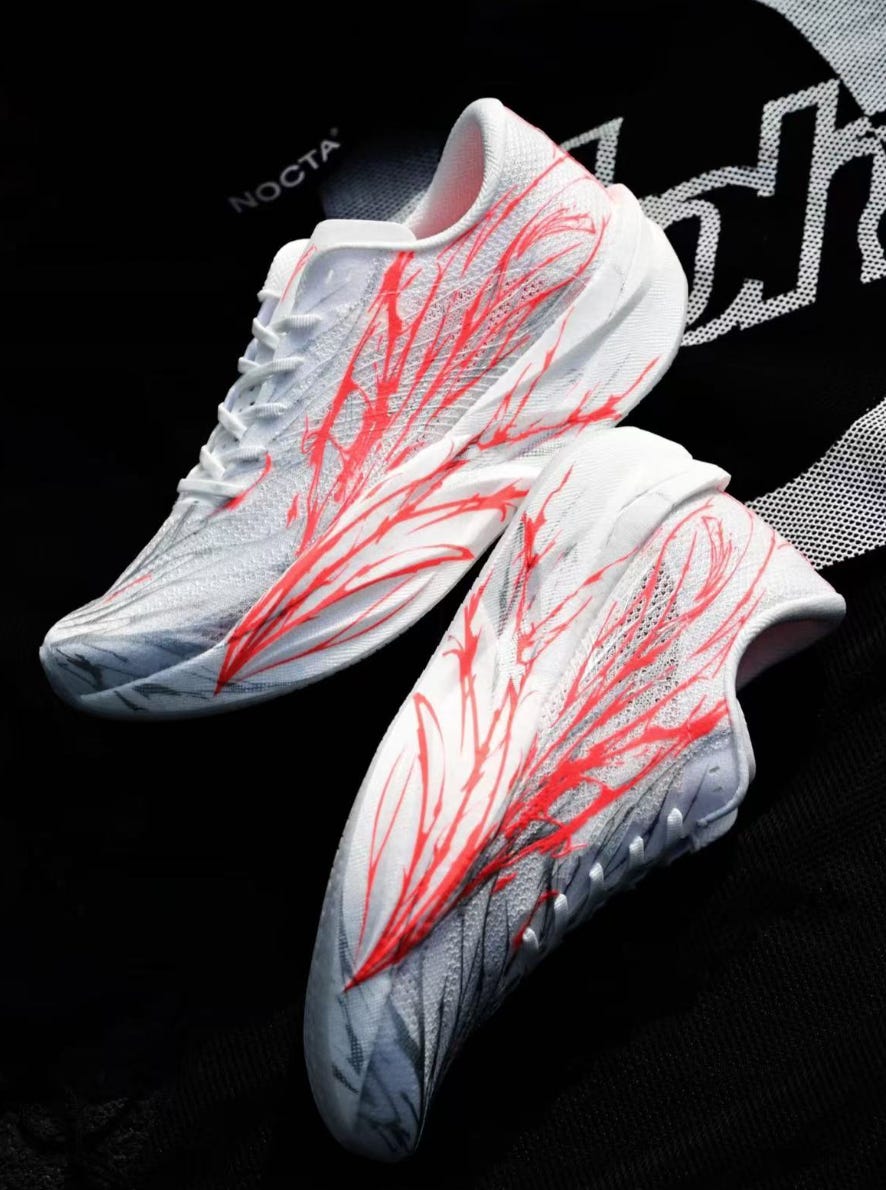
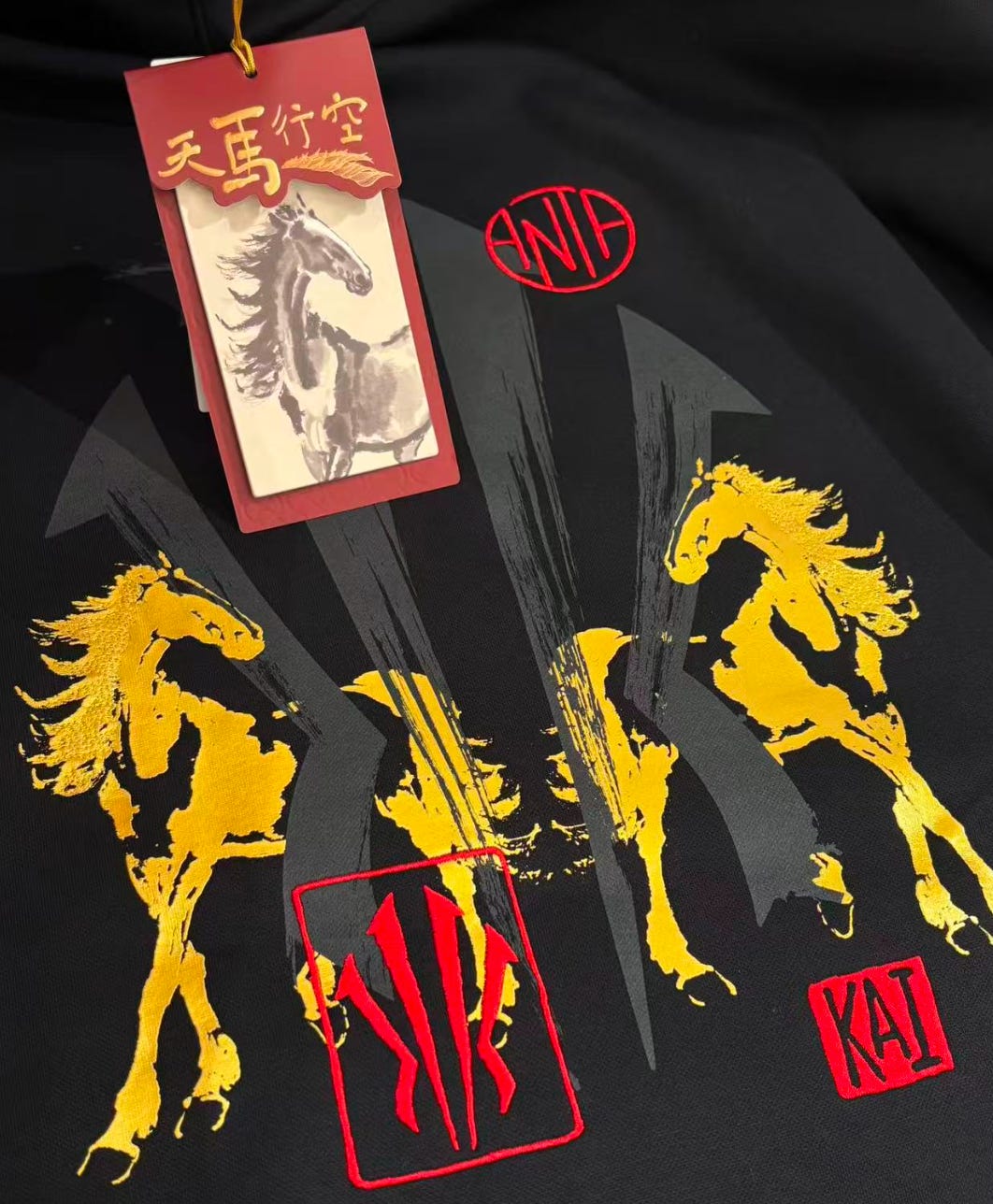
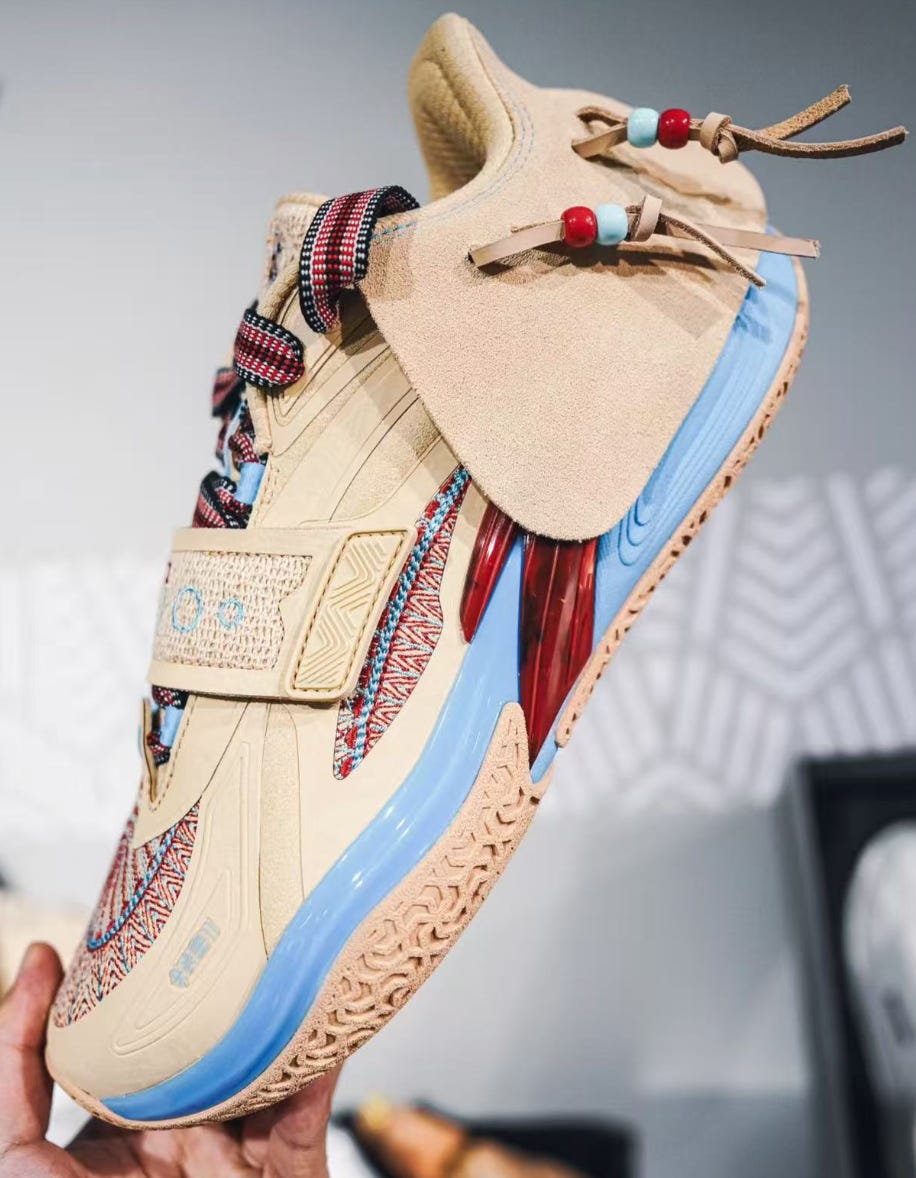
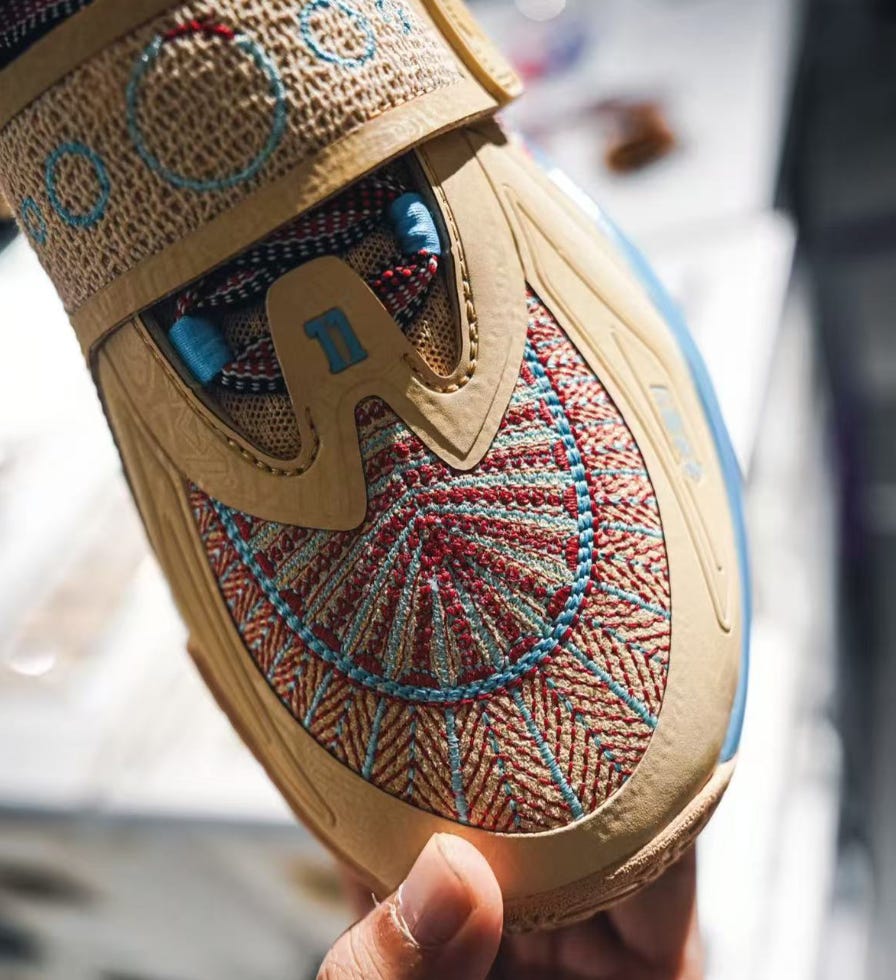
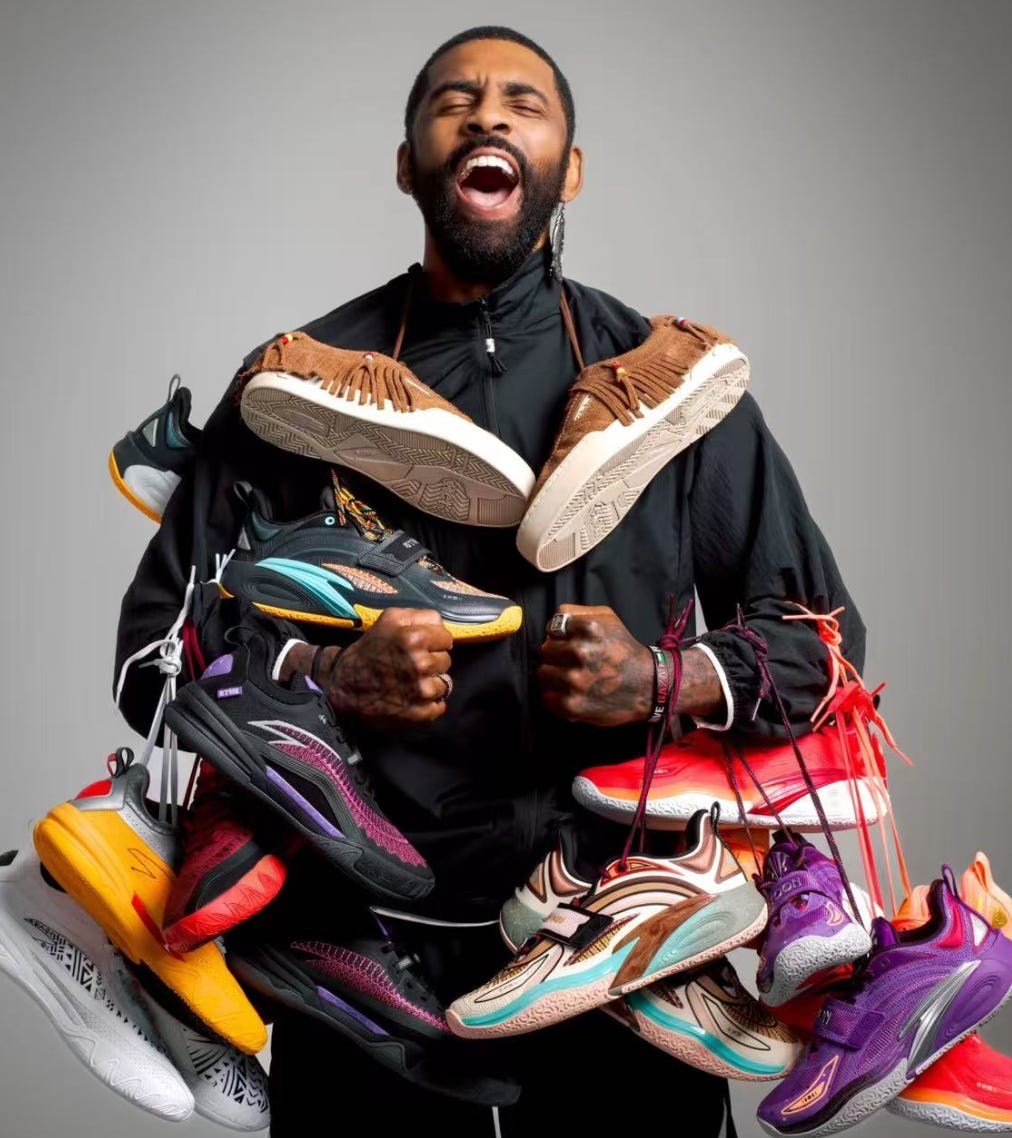
However, ANTA's weaknesses are equally clear—the product line and brand matrix is overly complex and chaotic, diluting brand recognition and creating unclear positioning. To this day, I still don't understand who is ANTA and what ANTA stands for. If ANTA hasn't clarified this domestically, imagine how challenging it will be to communicate with international consumers.
lululemon
China now serves as a major growth engine for lulu, offsetting slower sales in the Americas (lululemon)
As I mentioned in my previous posts, lulu's success in the Chinese market stems from establishing a near-monopoly product experience, fitting into the outdoor sports trend, and penetrating consumers outside big cities. However, there's one key point I missed—the rise in the status of Chinese women. This shift provided lululemon with a huge and growing target customer base, purchasing power, and cultural foundation.on.
(Perhaps many could argue that there are very few women among the top leadership at national political arena or state owned enterprises, but it is undeniable that in broader social spheres, women's status has been rising rapidly)
Big picture - the rise in Chinese women’s status is uneven—in coastal areas, women’s status is already very high, but inland regions are still in a very conservative state — this gives lululemon enormous room for continued growth in China— let’s see what’s next.