

A Drama
In 2020, Dewu (Poizon 得物, Men’s Xiaohongshu in China ) launched its “Star Brand” incubation program, and sneaker brand called FOOT INDUSTRY (足下工业) —then nearly a decade old founded in Tokyo but founder is Chinese —became its first footwear investee. At that moment, the brand was widely seen as a representative of rising domestic sneaker labels 👇
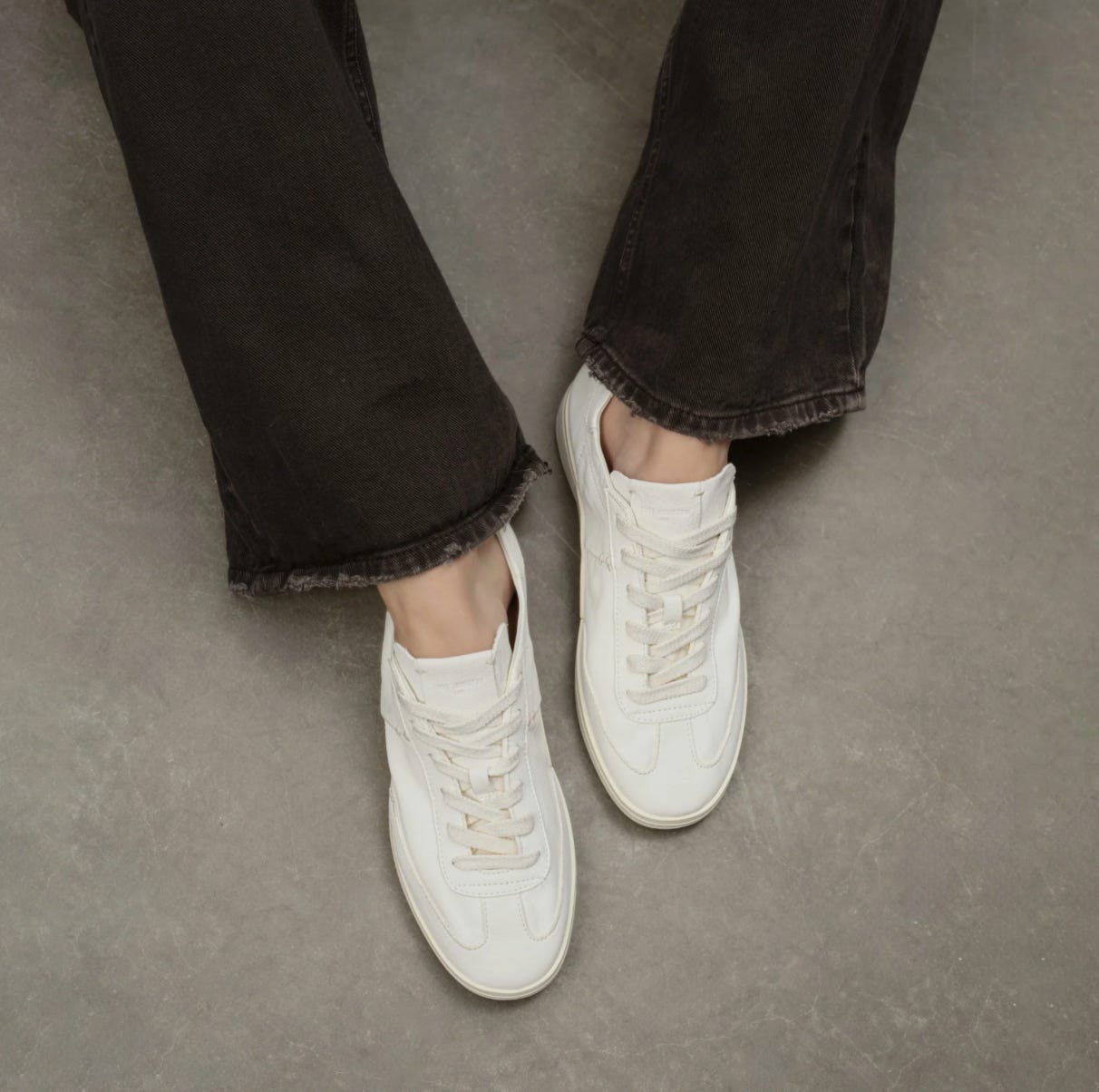
Just a few years later, PANE — a Shanghai-based brand founded in 2022 — swept the top three spots on Tmall's German Army Trainer (GAT) bestseller list. It not merely gained traction abroad but also becoming a hit back home, with nearly every store packed and long lines at the door — its popularity is now on par with Songmont 👇.
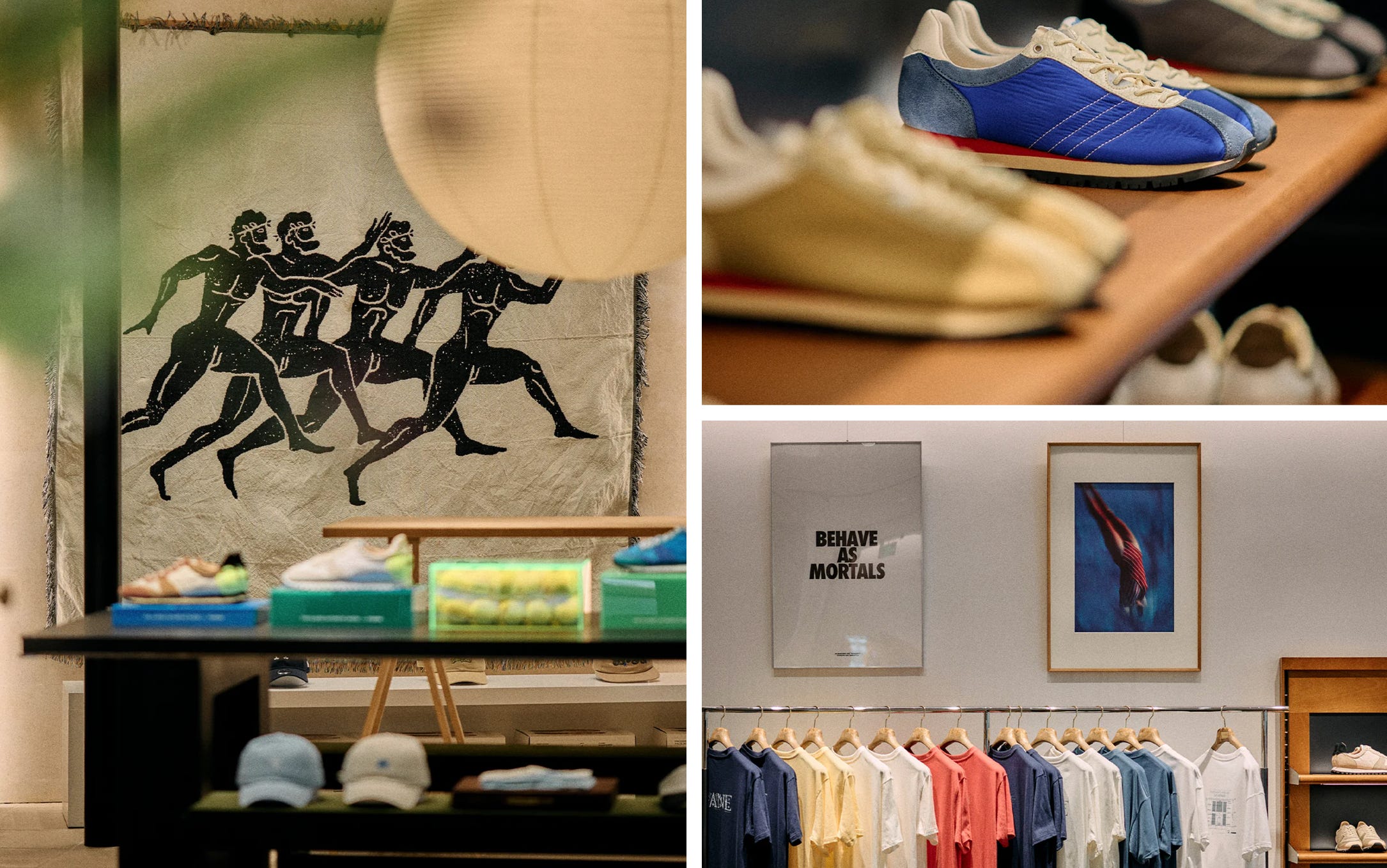
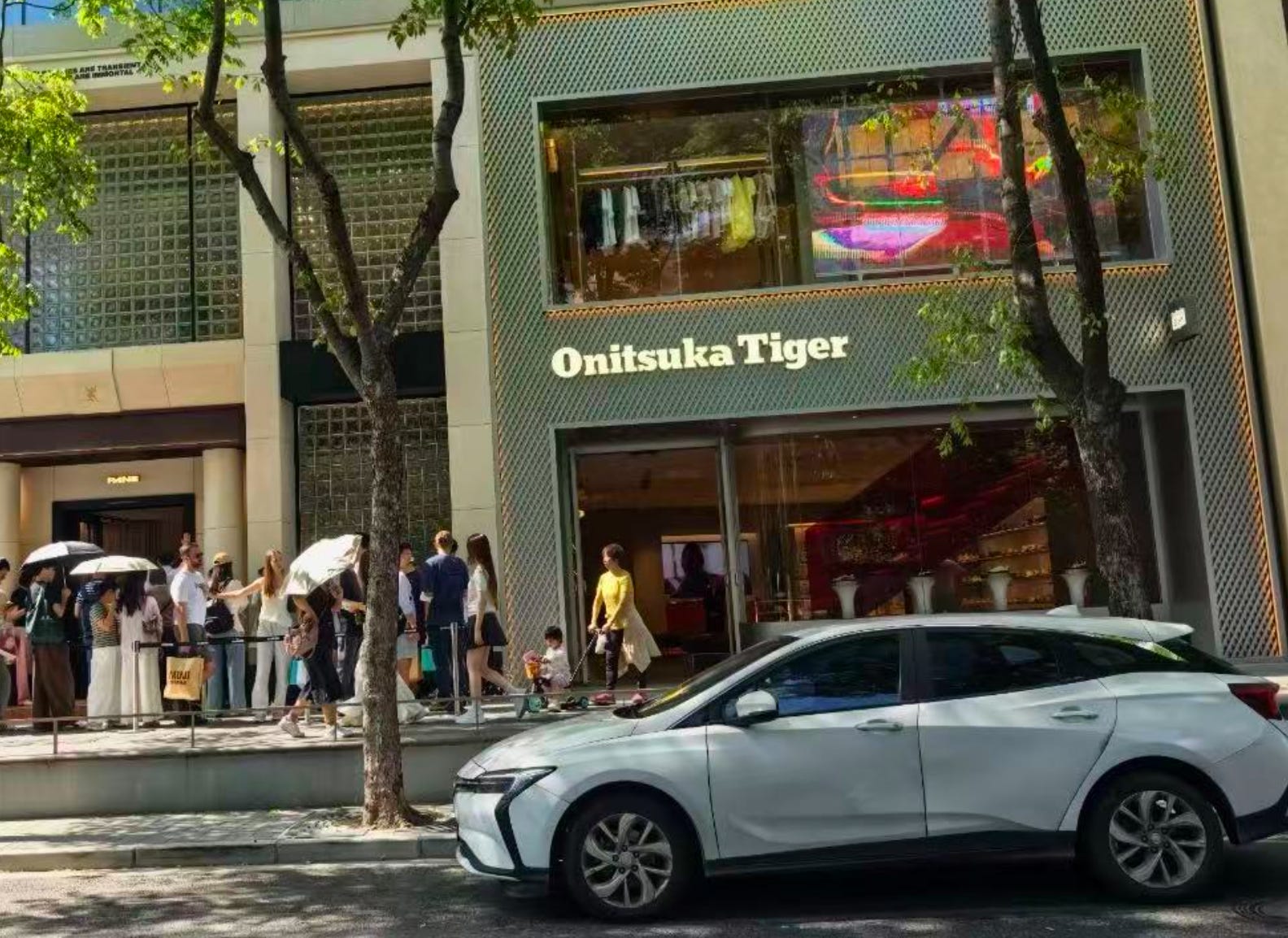
Interestingly — the former brand had spent twelve years building its foundation with capital and collaboration resources; the latter entered the market just a few years ago with no outside funding — but became an instant sensation.
Many people now like to compare these two brands, and although product reviews are mixed, in terms of heat, the late comer — PANE — already seems to have surpassed the similarly positioned FOOT INDUSTRY in both online visibility and offline buzz.
What a drama.
But How?
FOOT INDUSTRY once built its credibility through material quality, craftsmanship, clean & minimalist aesthetic, aligning closely with Japanese streetwear culture, even securing an adidas Originals collaboration.
However, the brand has yet to establish a stable offline retail presence. This prolonged lack of reliable physical touchpoints has kept the brand’s value largely confined to a niche audience, limited its ability to reach a broader consumer base, left the brand’s visibility and recognition persistently blurred, and prevented it from building a truly complete experience loop.
A more serious shift lies in the brand’s identity strategy.
FOOT INDUSTRY registered its company in Tokyo and adopted a de-localized communication approach in its early days, using its overseas association to gain market trust and facilitate international entry.
However, as Chinese consumers have grown more confident in their own culture and more demanding of transparency, that strategy has gradually shifted from an advantage to a liability.
The brand now faces questions from both sides: domestic consumers ask why it registered abroad and positioned itself as a typical Japanese-rooted company, while international audiences ask where it truly comes from and why it does not seem proud of its own origin. This identity confusion is no longer a plus—it has become a barrier to building brand recognition and winning trust.
PANE has taken a different path.
PANE identified a price band around 800 yuan in the athleisure footwear category where there were no strong competitors — neither not-big-enough Foot Industry nor the major sportswear giants — and smartly used the widely recognized German Army Trainer (GAT) as its hero product and category anchor, quickly capturing consumer mindshare.
Go deeper — PANE’s competitive edge can be understood through 3 dimensions,
Aesthetics, emotional connection and lifestyle — offering universal urban customers a sense of “quiet confidence.”
PANE’s design is grounded in three principles: timelessness, motion, and authenticity.
Rooted in Shanghai, the brand speaks a globally legible visual language—drawing on retro references, Greek-inspired forms, and contemporary fashion—without overtly signaling its Chinese identity, neither hiding nor twisting it; the product itself conveys quality and cultural relevance.
Founder Chen Ning, leveraging a decade in premium menswear, applies a refined understanding of proportion, comfort, and consumer behavior to create everyday footwear that feels effortlessly right: comfortable, elegant, and true to itself.
Positioned between traditional heels and performance-driven athletic shoes, PANE combines technical construction with understated elegance to deliver a sense of quiet confidence to urban customers.
Though initially conceived for women, this aesthetic proved unexpectedly compelling to men—early Instagram followers were 70–80% male—showing the brand’s appeal lies beyond gender, in a shared desire for functional, distinctive, and quietly refined footwear.
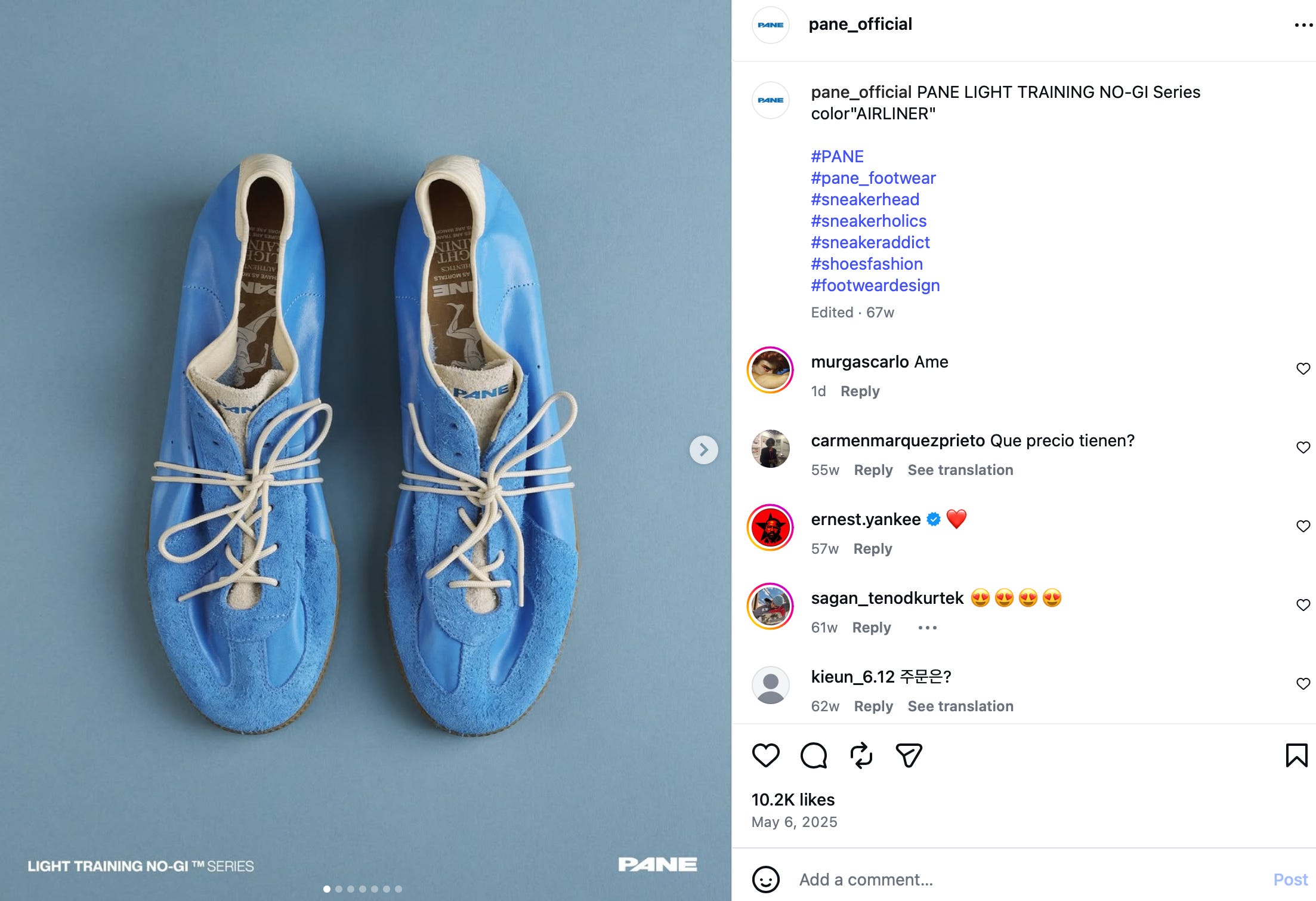
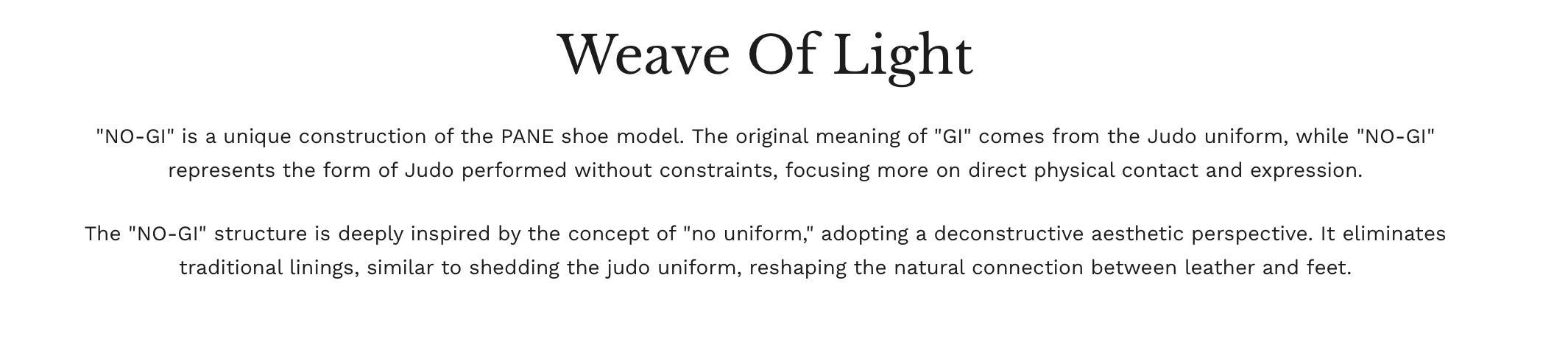
Simply put, PANE subtly reimagines the GAT with an unique aesthetics, and champions “effortless elegance” as a lifestyle for the urban middle class 👇.
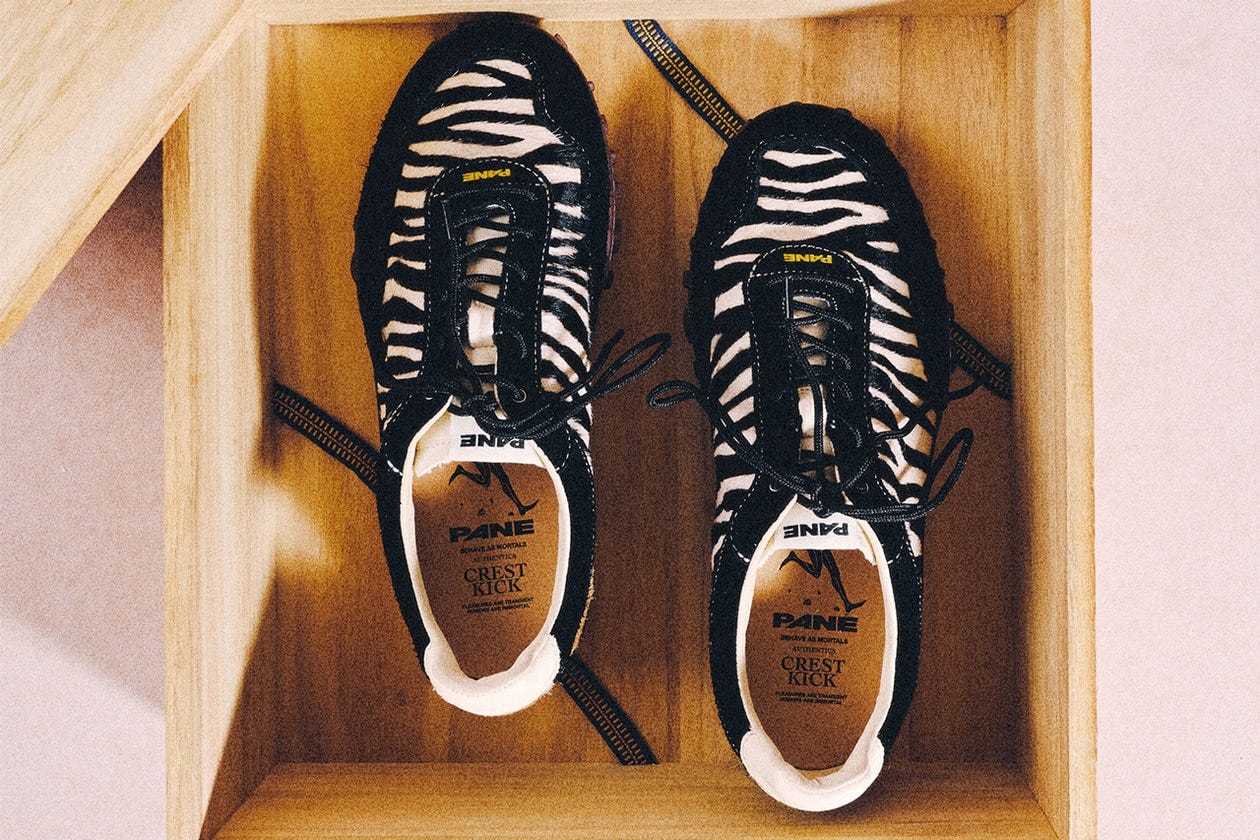
Offline experience— one store, one design.
Since opening its first flagship store in Shanghai in mid-2024, the brand has expanded to eight locations across Beijing, Guangzhou, and Shenzhen—all situated in prime, non-standard projects in first-tier cities. Each store carries its own theme—from “PANE PLAZA” to “Urban Window” to “Endless Vacation”—while sharing a consistent architectural language that blends Greek Revival elements with modern minimalism. This “one store, one design” approach turns every physical space into an extension of the brand’s narrative, rather than a cookie-cutter sales terminal.
Brand momentum as a strategic upgrade—overseas endorsement, scarcity marketing, and reverse flow back to China.
PANE was pursuing a new form of “export-to-domestic” growth (出口转内销), similar to Songmont’s approach: building credibility within overseas fashion circle, then converting that recognition into domestic demand.
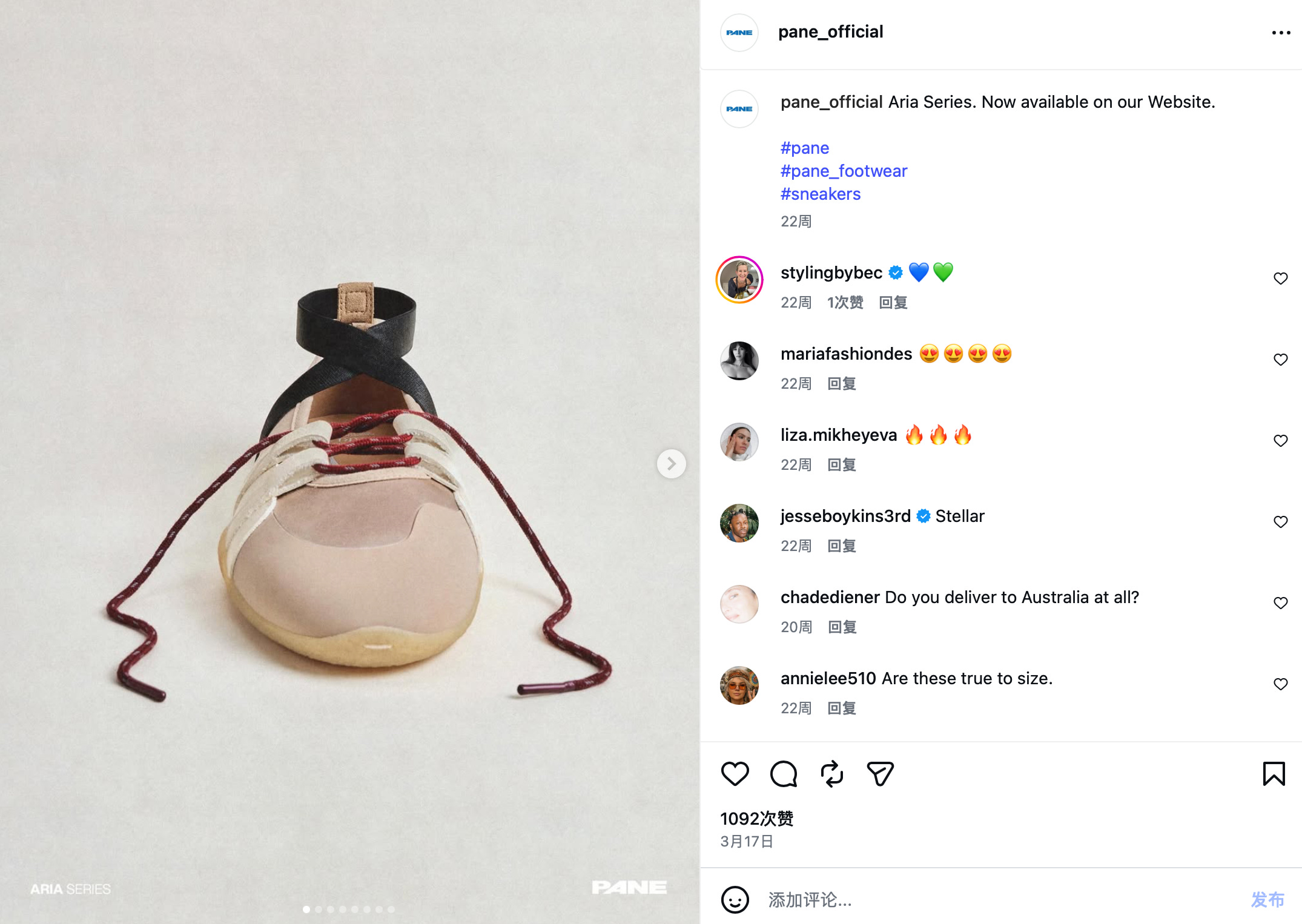
By accumulating visibility on platforms such as Instagram—where it has nearly 200,000 followers—and creating impact and a sense of scarcity through a deliberate strategy of “seeding influencers while making the product very difficult to buy overseas,” PANE turns limited availability into part of its desirability.
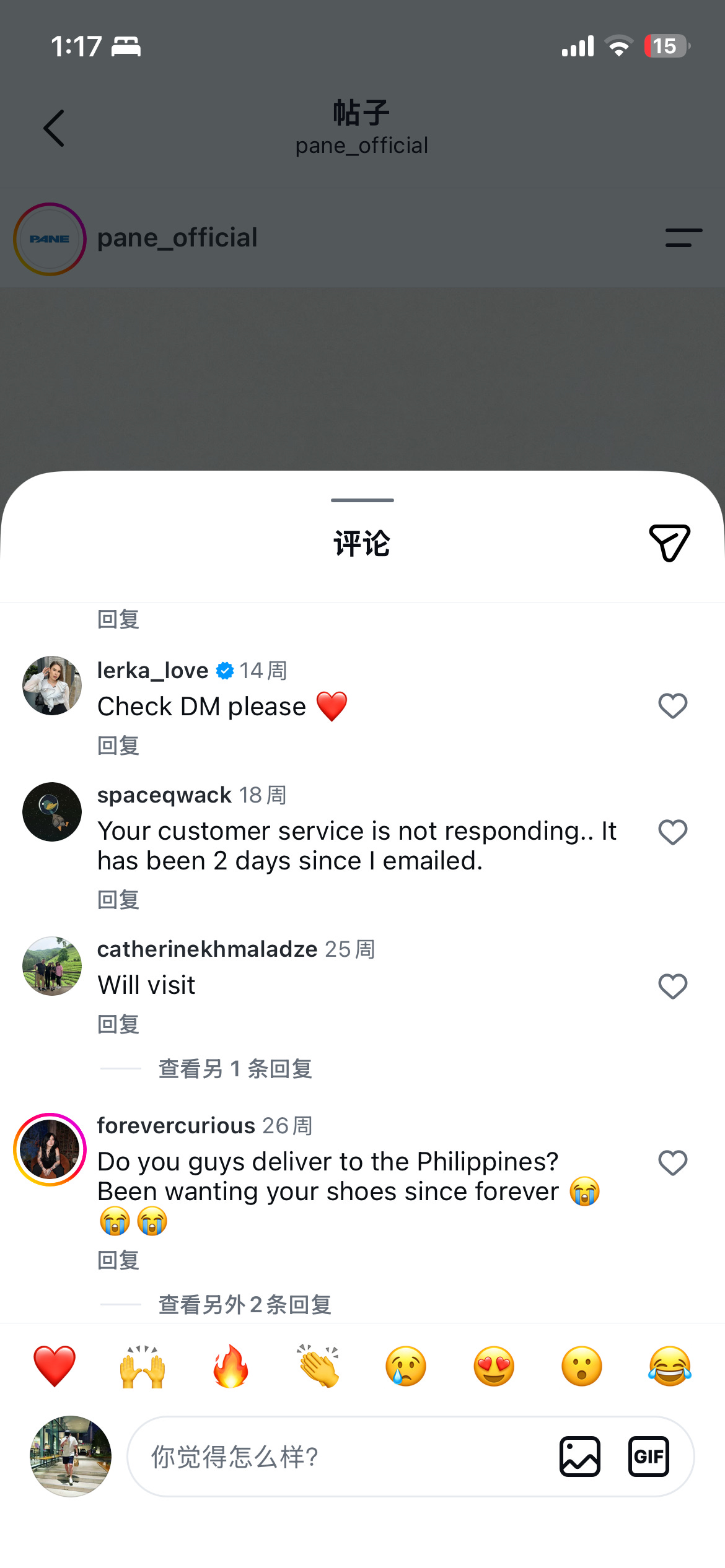
That overseas momentum is then brought back to China through a form of “reverse daigou.反向代购 ” When a pair of shoes that is difficult to purchase abroad returns home in a traveler’s suitcase, it becomes more than a product — it becomes a story of international approval and hard-won access.
In the end - PANE’s combination of overseas credibility, controlled scarcity, and reverse daigou ultimately fuels discussion across both Chinese and the west social platforms 👇
Right now, the followers on Instagram—five times its following within RedNote in China. So it’s fair to say that it is far more popular overseas than at home. Add to that the fact that it is almost impossible to buy overseas, and if we measure its performance using the now-popular metric of “consumer desirability,” it would score very high.
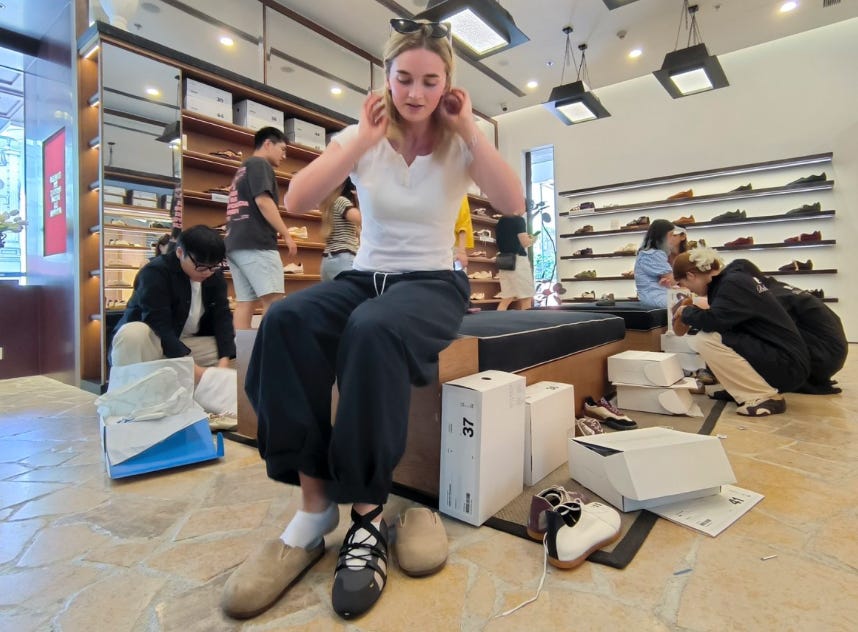
The game is far from over.
To rebuild trust and drive growth, FOOT INDUSTRY appears to be downplaying and recontextualizing its Japanese identity in the domestic market, though the effectiveness of this shift remains unclear. That said, the brand still retains genuine product expertise, a distinctive design language, deep ties to Chinese culture, and a growing capacity to deliver a premium in-store experience. Whether it can carve out its own path, however, ultimately depends on what it does next. 👇
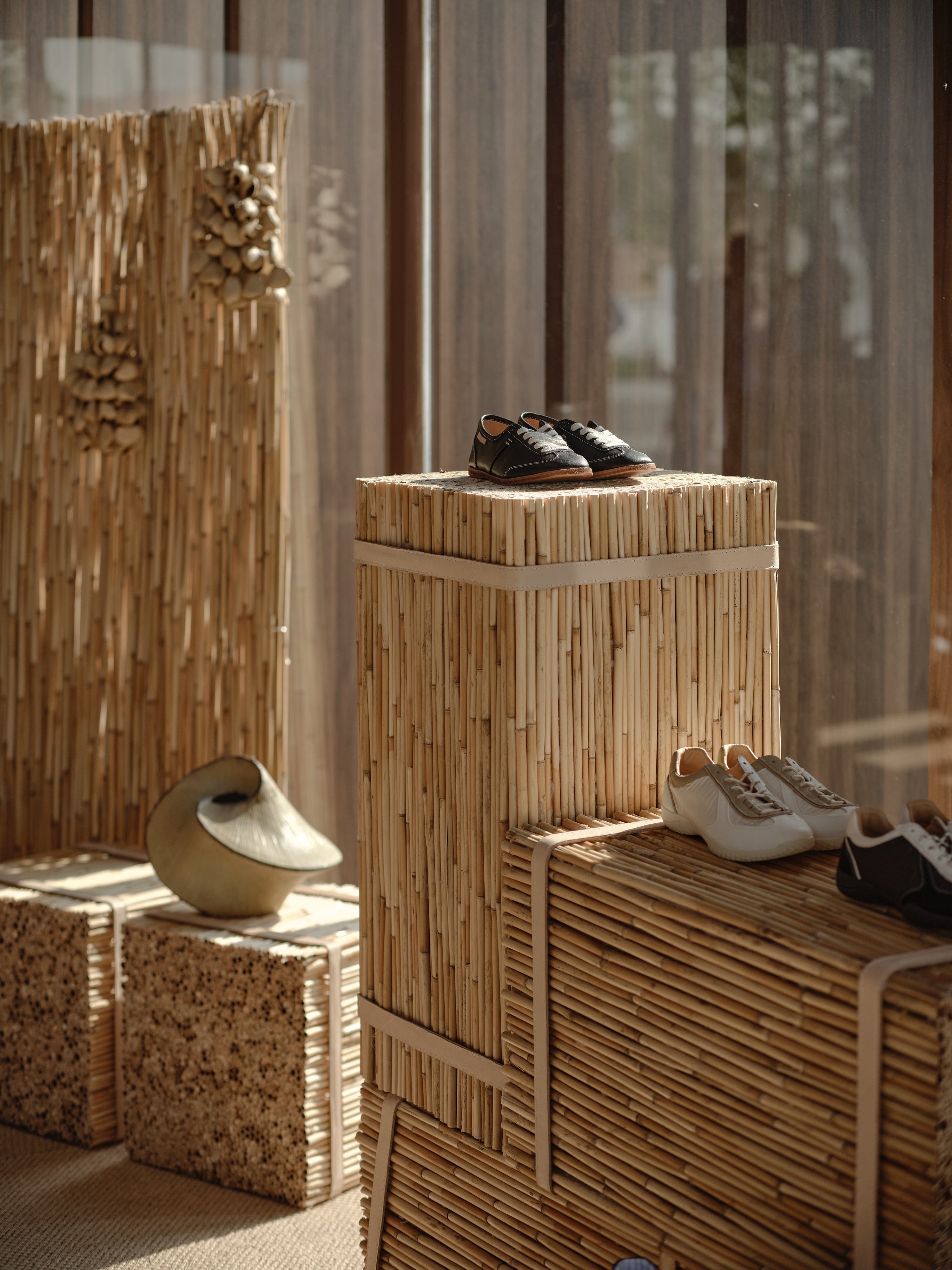
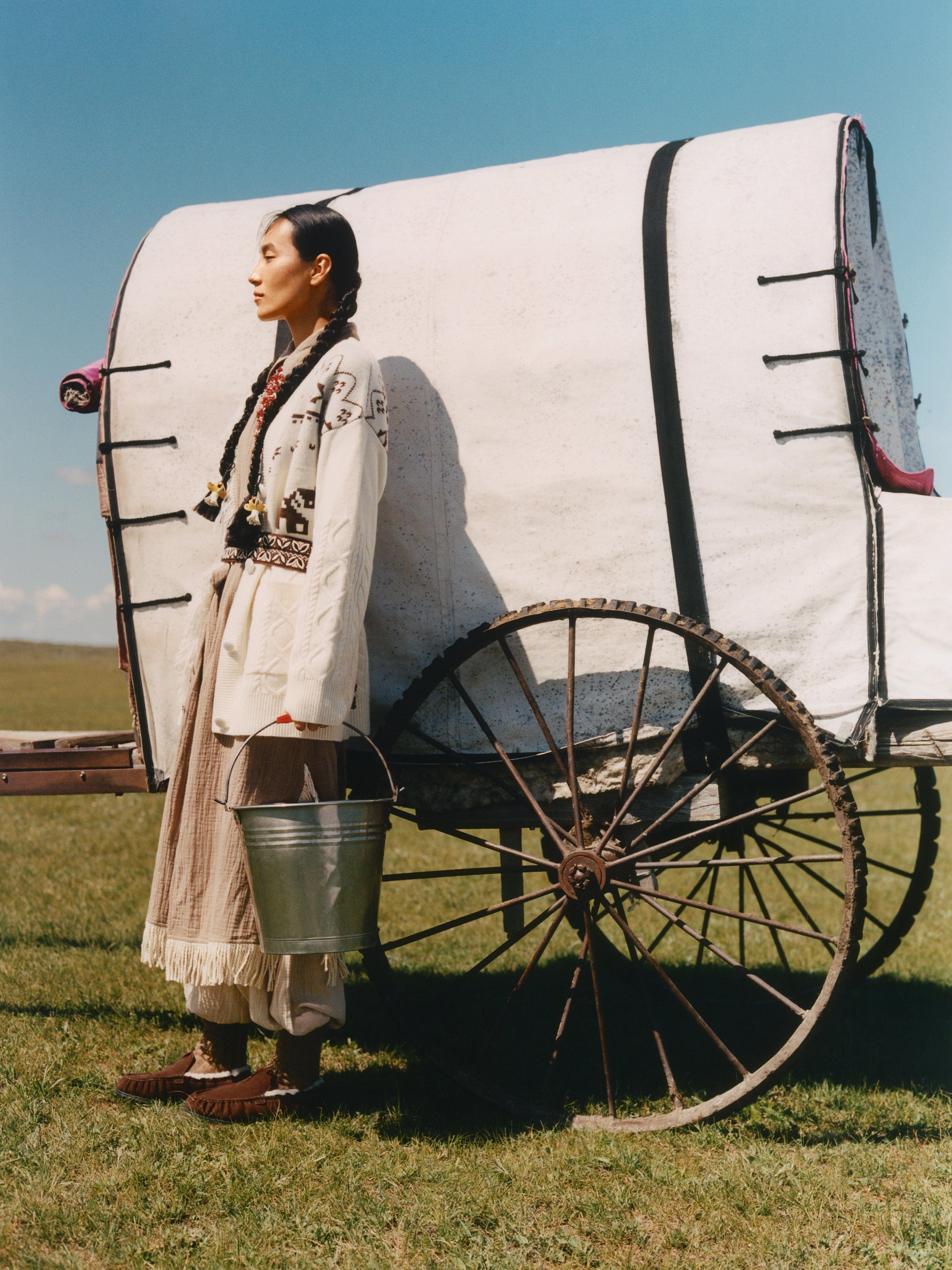
PANE, on the other hand, must continue to prove that its growth is more than a short-lived aesthetic trend. Needless to say, competitors are already catching up, so PANE needs to continually evolve and strengthen its brand equity.
Ultimately — in China, nothing is certain — everything is changing fast. Late entrants can win, and laggards can reverse the tide — this vast system is playing its role — constantly giving rise to outstanding talent and companies through a process of survival of the fittest.
Further Reading
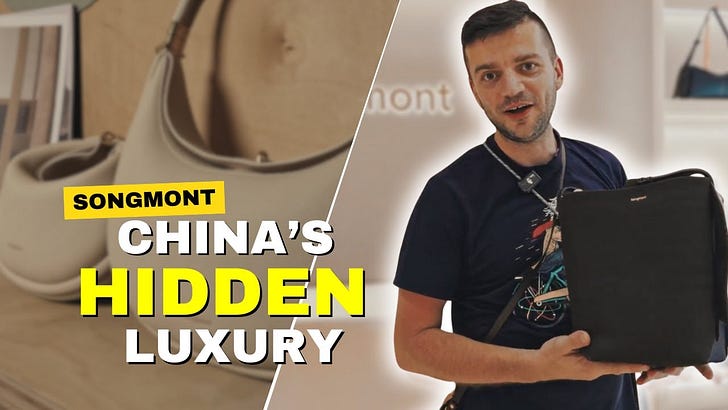

It shows that design is a real game-changer.