

👏🙋Hello, hello! Thanks for reading The Momentum — an independent publication without ads or affiliate links. Feel free to subscribe to receive new posts and support my work!

China’s retail scene in 2026 is consolidating around: AI-enabled commerce (Alibaba); supply-chain-driven retail models expanding into lower-tier markets and community operations (Hema, Meituan, Walmart, ALDI); vertical distribution at scale (Busy Ming, Wancheng); and legacy players seeking breakthroughs through quality improvements, operational upgrades, and channel diversification (Yonghui, Three Squirrels, and East Buy). In short: smarter tech, tighter supply chains, and more nuanced offline–online combos—plus a few casualties and restructurings along the way 👇
Alibaba
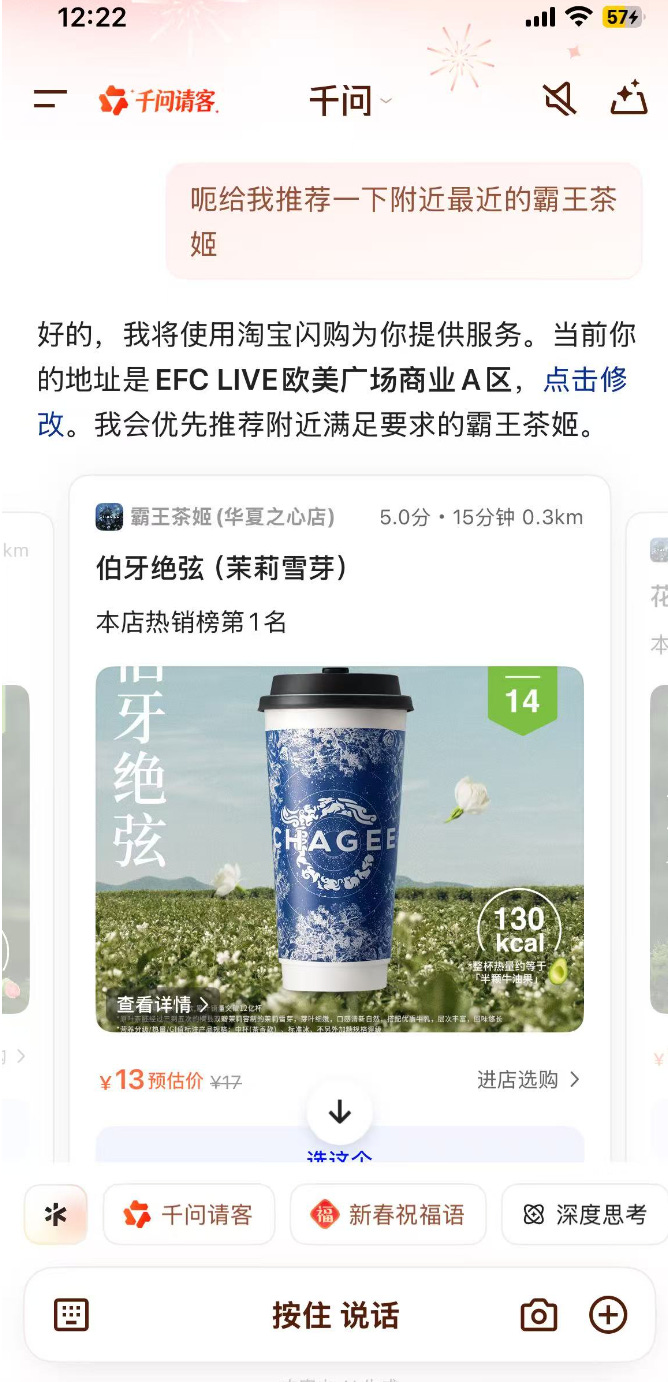
Qwen AI in commerce > On January 15, 2026, Qwen integrated with Taobao Flash Sale and Alipay AI Pay, launching a natural language ordering feature (consumers can directly voice “给我点一杯奶茶” to get delivery). Chinese consumers placed over 120 million orders through Alibaba‘s Qwen app in six days. Plus, Qwen has now integrated with Amap and other Alibaba services, positioning itself as a new consumer search gateway—challenging not only e-commerce platforms but also search engines.
Hema (Freshippo) > 2026 strategy centers on “dual-wheel synergy,” targeting “premium quality” and “downmarket penetration.” Hema Fresh positions itself for mid-to-high-end urban families, offering high-quality fresh products and 30-minute instant delivery; Super Hema NB targets community hard discount, achieving extreme value-for-money through streamlined SKUs and direct sourcing.
Meituan
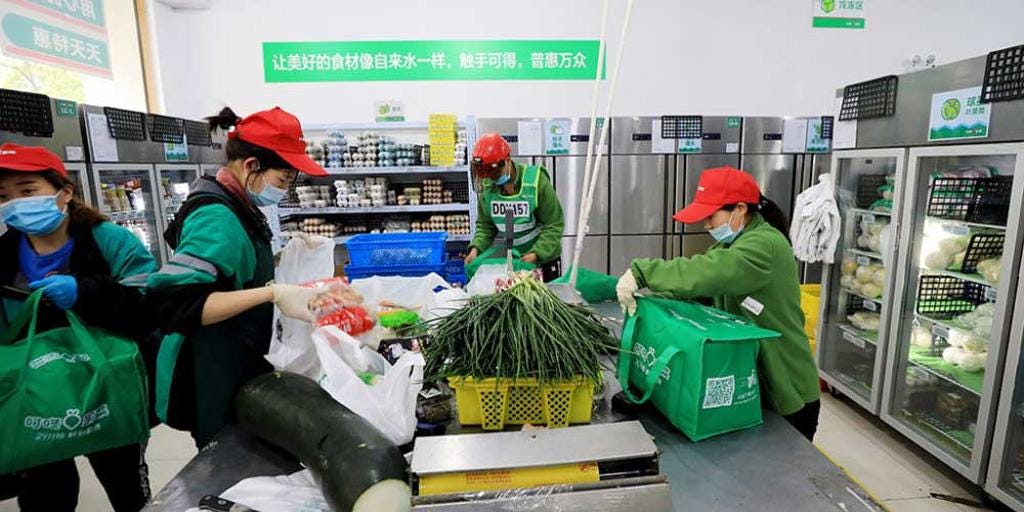
Acquisition of Dingdong Macao (叮咚买菜)> On February 5, Meituan announced it would acquire 100% of Dingdong Maicai’s China operations for an initial consideration of about USD 717 million.
Xiaoxiang Supermarket > Opening physical stores (Beijing Dec 2025, Ningbo Jan 2026) fills online fulfillment gaps and supports Meituan Flash Sale—stores act as fulfillment nodes, enable pickup, in-store experience, and online purchase.
Taking Shanghai as an example, in the fresh food e-commerce front-warehouse and store-warehouse integrated models, Hema and Sam’s Club each hold around 30% market share, while Dingdong Maicai holds 20%, and Meituan’s Xiaoxiang Supermarket only around 10%. After the merger, their combined market share reaches approximately 30%, enabling them to compete directly with Hema and Sam’s Club, rather than “burning money” to expand market share.
Walmart > Since 2025 Walmart has piloted a community-store pivot in Shenzhen with 500 m² shops, 30% private-label mix; plans 150 new stores in 2026 focused on mature communities in Tier-1/2 cities.
ALDI > Q1 2026 store count will exceed 100 in East China
Busy Ming (physical snack chain)> IPO in Hong Kong: Listed 2026-01-28. In the first nine months of 2025, Chinese top snack retailer Busy Ming ( the giant brand formed after the merger of Busy For You and Zhao Yiming) reported rapid expansion with revenue of 46.4 billion yuan (approx. S$8.4 billion) and a net profit estimated to be at least 2.3 billion yuan for the full year 2025. Revenue surged by 75% compared to the same period in 2024, supported by a network of over 19,500 stores by September 2025. (exceeded 20,000 stores by January 2026)

Wancheng Group (physical snack chain)> According to the company’s latest financial report, Wancheng Group recorded RMB 36.56 billion (USD 5.1 billion) in revenue for the first three quarters of 2025, up 77.37% year-on-year. Net profit reached RMB 855 million (USD 119.7 million), a staggering 917.04% increase. The latest store count stands over 19,000.
Three Squirrels (the former snack king who excelled in e-commerce) > 2025 profit warning (2026-01-29): In the first three quarters of 2025, Three Squirrels reported an operating revenue of 7.759 billion yuan, marking a year-on-year increase of 8.22%. However, net profit attributable to shareholders decreased by 52.91% year-on-year to 161 million yuan.
To counter declining performance, Three Squirrels—a brand that excels in e-commerce—has embraced an omnichannel model to reach consumers more efficiently. The company is achieving full-channel coverage of “online + offline + distribution” through offline distribution network expansion, full-category lifestyle store deployment, integrated supply chain support, and organizational management optimization. The goal: balanced revenue of RMB 10 billion each for online and offline in 2026, becoming a “full-category, omnichannel, manufacturing-based private-label retailer.”
Pangdonglai > Founder Yu Donglai announced retirement from operational duties on 2026-02-11, moving to an advisory role; daily operations and strategy now run by a Pangdonglai Decision Committee—marking a move from founder-driven to institutional governance.
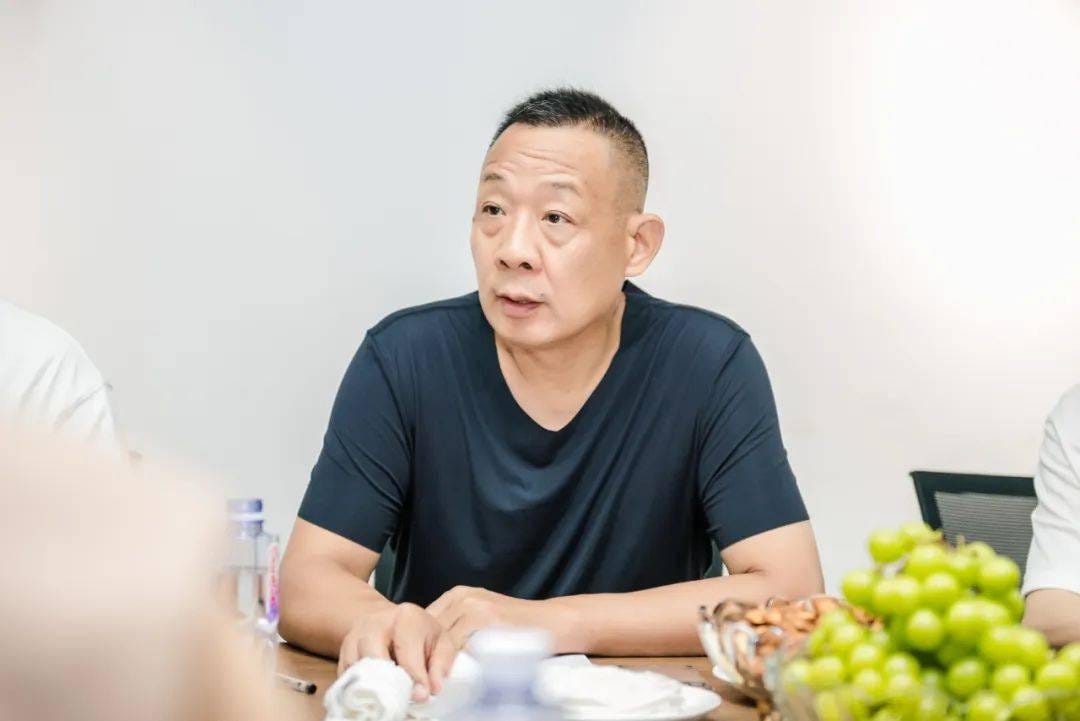
Yonghui > Continues struggling with a transformation—shifting from traditional format to an experience level nearly matching Pangdonglai—that brings financial strain. 2025 preliminary results (2026-01-20) show net loss to shareholders of ~RMB 2.14 billion (45.6% worse YoY) and adjusted net loss of ~RMB 2.94 billion. This marks the fifth consecutive year of losses, with cumulative five-year losses exceeding RMB 10 billion.
To learn more about grocery wars in China, please read this post👇

East Buy > After losing star anchors like Dong Yuhui, the brand accelerated a Douyin (TikTok China) account matrix, and offline stores tests. Opened a 400 m² flagship in Zhongguancun, Beijing — quick-serve cafe to create “shop + hangout + meet” experiences for well-paid crowds. Store finishing late 2025, slated to open Mar–Apr 2026.
To learn more about the drama between star anchor Dong Yuhui and East Buy, please read the following article I wrote 2 years ago 👇
