

Summer in 2026 — SHEIN, the Chinese fast‑fashion brand born in 2008, is back in the global business glare.
In May, the fast‑fashion giant stunned the industry by buying the U.S. sustainable‑fashion benchmark Everlane from L Catterton (an LVMH‑affiliated private equity fund) for est. $100 million.
Then on July 10, China’s securities regulator approved SHEIN to issue up to 342 million overseas ordinary shares for a Hong Kong listing, with a target valuation in the $40–50 billion range.
Hurun’s 2026 Global Unicorn list still ranks SHEIN ninth worldwide at about RMB 456 billion, but its IPO valuation would be far below the $100 billion peak seen in 2022 — roughly cut in half.
Those few events have pulled this controversial brand back into the limelight. Much has been said—and argued—about SHEIN’s “small‑batch quick‑turn” supply chain, its labor and environmental record, the Xinjiang cotton allegations, not to mention its roller‑coaster valuation and geopolitical headwinds. I have no intention of rehashing those discussions here.
Rather, I want to revive a question that has been shelved for too long: Who is the next Shein?
That question was one of the hottest topics in China’s consumer‑goods investment circles between 2019 and 2022. It was the peak of consumer investment: dollar funds and yuan funds hunting for the “Chinese ZARA” or the “next SHEIN.”
Money poured in, valuations soared — it felt like everything was on fire.
Then the tide went out. Consumer investment cooled down, trade frictions intensified, Western regulators tightened oversight, and cross‑border small‑parcel tariff policies changed.
For a while, the question went quiet. No one was asking about the “next SHEIN” — because even SHEIN’s own fate seemed far from certain — tied to China’s national fortunes — overwhelmed by political headwinds.
Now that SHEIN is finally moving toward a Hong Kong IPO — is the party really starting up again? I’m not sure.
But it does feel like the right moment to reopen the question: after SHEIN, who’s still in the race? At the very least, we can check in on those would‑be competitors to see how they’ve been doing.
Of course, I admit this is a question that concerns Chinese more — because I certainly don't spend all days thinking about how to stop SHEIN's growth.
But at the same time, I firmly believe that any responsible brand must operate in compliance with ethics, regulations, and the interests of multiple stakeholders — and even take on the mission of shaping a better world. And that includes all Chinese brands — SHEIN is no exception.
Cider: probably the most similar successor
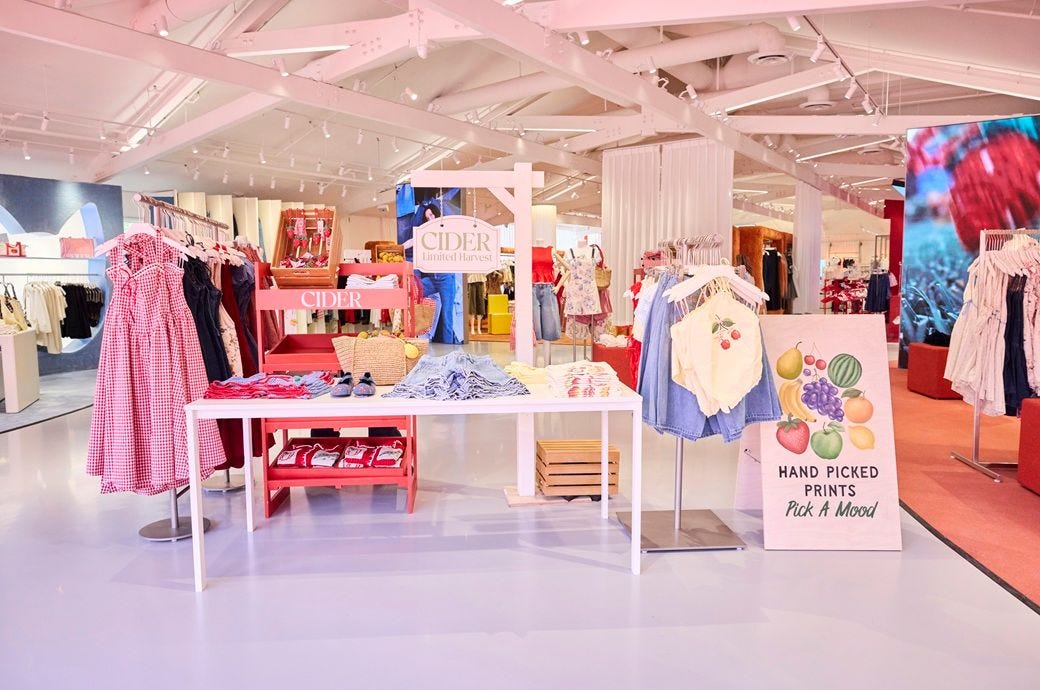
Among the candidates people talk about as “the next SHEIN,” Cider is probably the closest in spirit.
Founded in 2020, Cider’s founder Wang Zhan worked in several big internet firms. The company raised four rounds quickly, totaling over $130 million in early years.
Cider entered Gen‑Z women’s fashion with a “Pick a Mood” approach, used a TikTok multi‑account funnel to drive traffic to its standalone site, reached a $1 billion valuation within two years, reported annual revenues in the hundreds of millions, and had over 15 million registered users. On the supply‑chain side, Cider also runs a “small‑batch quick‑turn” model, compressing new‑product cycles to about seven days.
But Cider has deliberately differentiated itself from SHEIN from the start. SHEIN chases rock‑bottom prices; Cider prices most items at $15–$50, clearly above SHEIN’s $5–$20 range. SHEIN organizes by category; Cider organizes by “mood” — people buy more than clothes, they buy identity and emotional resonance. SHEIN is broad across age groups; Cider targets Gen‑Z precisely (about 70% of users are 18–24), leaning into Y2K and vintage aesthetics.
In April 2026, Cider opened its first global flagship in Los Angeles, about 7,800 sq ft, with a store layout built around six emotional style pillars like “elegant,” “cool,” “sweet,” and “free.” It runs weekly “Cider Sundays” community events, and a second store in San Jose was announced for summer.
Clearly, Cider is shifting from being an online sprinter to building long‑term omnichannel retail capability — it’s not trying to be a cheaper SHEIN; it aims to be a more stylish Cider
Urbanic: a model sidesteps competition by expanding into regions its rivals struggle in

If Cider is confronting SHEIN head‑on in Western markets, Urbanic chose a different path.
Founded in 2019, headquartered in London with operations in Hangzhou, Urbanic’s founder Xue Chi previously worked at Google and cofounder Deng Qiulin came from Alibaba’s strategy team.
Rather than fighting SHEIN in the US and Europe, Urbanic targeted markets SHEIN had been pushed out of — notably India — and emerging markets like Brazil and Mexico.
This is a very smart “dislocation” strategy.
After the 2017–2018 China‑India border tensions, the Indian government banned dozens of Chinese apps, including SHEIN. SHEIN left a massive market with hundreds of millions under age 25.
Urbanic entered under a “London brand” identity and quickly became India’s leading DTC fast‑fashion player.
By July 2025 it had delivered over 30 million orders in India and was profitable. Annual revenue rose from RMB 2 billion in 2024 to RMB 2.8 billion in 2025. In November 2023 it closed a $150 million Series C, bringing total funding above $200 million.
Urbanic’s core is a data‑driven supply chain. It aims not just for “small‑batch quick‑turn” but for something near “zero inventory” — using AI and psychographic data to predict demand and treating each week like a micro‑season, with algorithms deciding what to produce and where to store it. It also uses AIGC tools to systemically generate designs and claims it can hold inventory waste to under 1%.
And, Urbanic’s next moves show bigger ambitions.
In June 2025 it launched Savana in India, a sub‑brand targeting Gen‑Z women with lower price points (mostly under INR 1,000, about $12), trendier styles, and faster turn. The Gurgaon warehouse processes 600k–1M items weekly.
Seemingly — Urbanic aims to cover both SHEIN’s price band and Cider’s aesthetic in the regional market: “SHEIN’s efficiency + Cider’s style” at the same time.
However, the brand’s largest risk isn’t competition but geopolitics.
How long can its “London brand” cover last, given political sensitivities?
SHEIN’s ban in India is a clear warning — any renewed border friction could wipe out Urbanic and Savana’s investments in an instant. The deeper Savana goes in India, the larger the political exposure. This is a structural problem, not just a commercial one.
PatPat, Halara and Cupshe — Vertical specialists
Another path is deep focus on a single vertical and squeezing supply‑chain efficiency there.
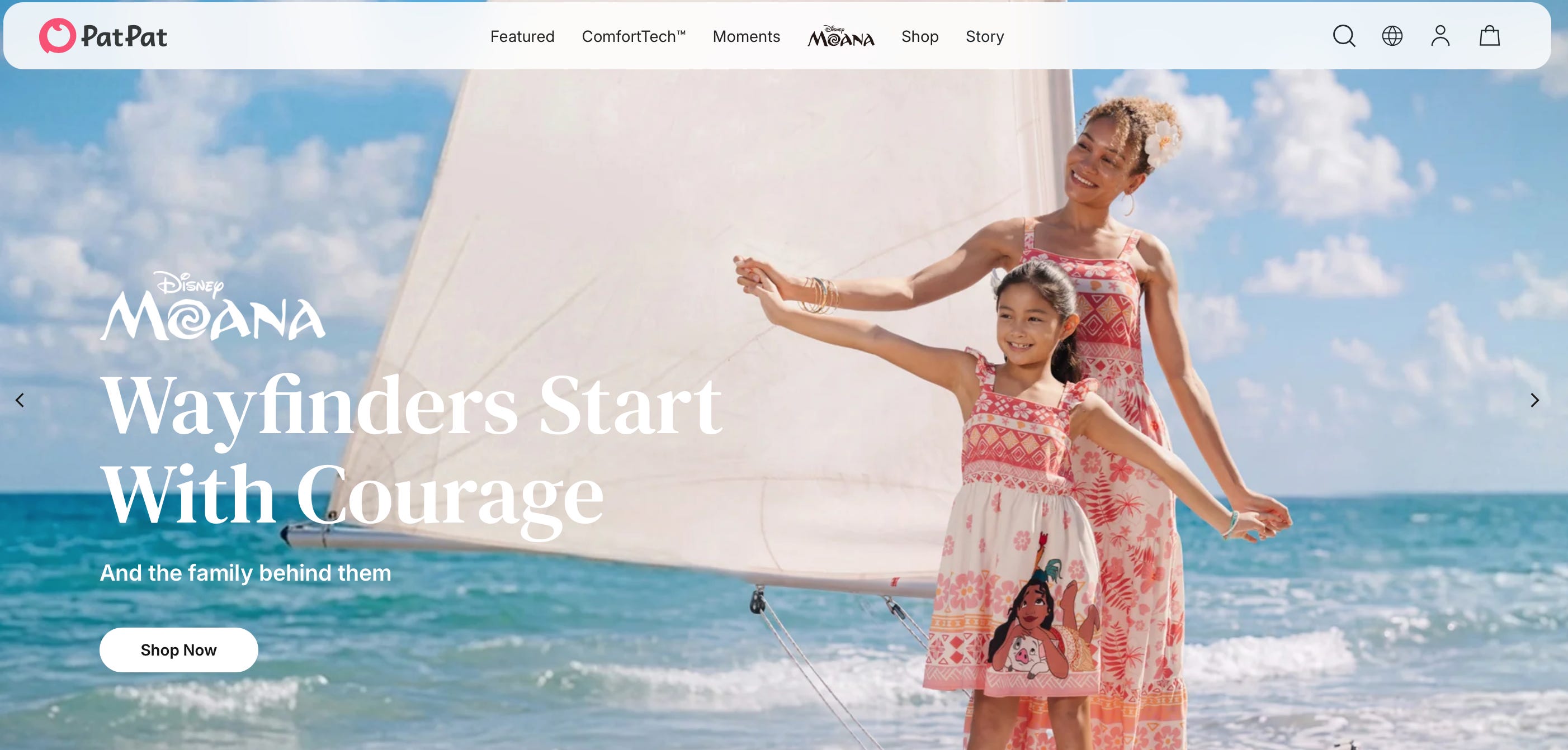
PatPat, founded in 2014, is a mother‑and‑baby DTC brand focused on 0–6 year apparel. It raised a $510 million C round in 2021 and reached a RMB 21 billion valuation in 2025. But the mother‑and‑baby category has a natural ceiling: short user lifecycles force constant high‑cost customer acquisition. Online sales fell 20–50% year‑over‑year in 2025, and the company is still navigating a tough transition.
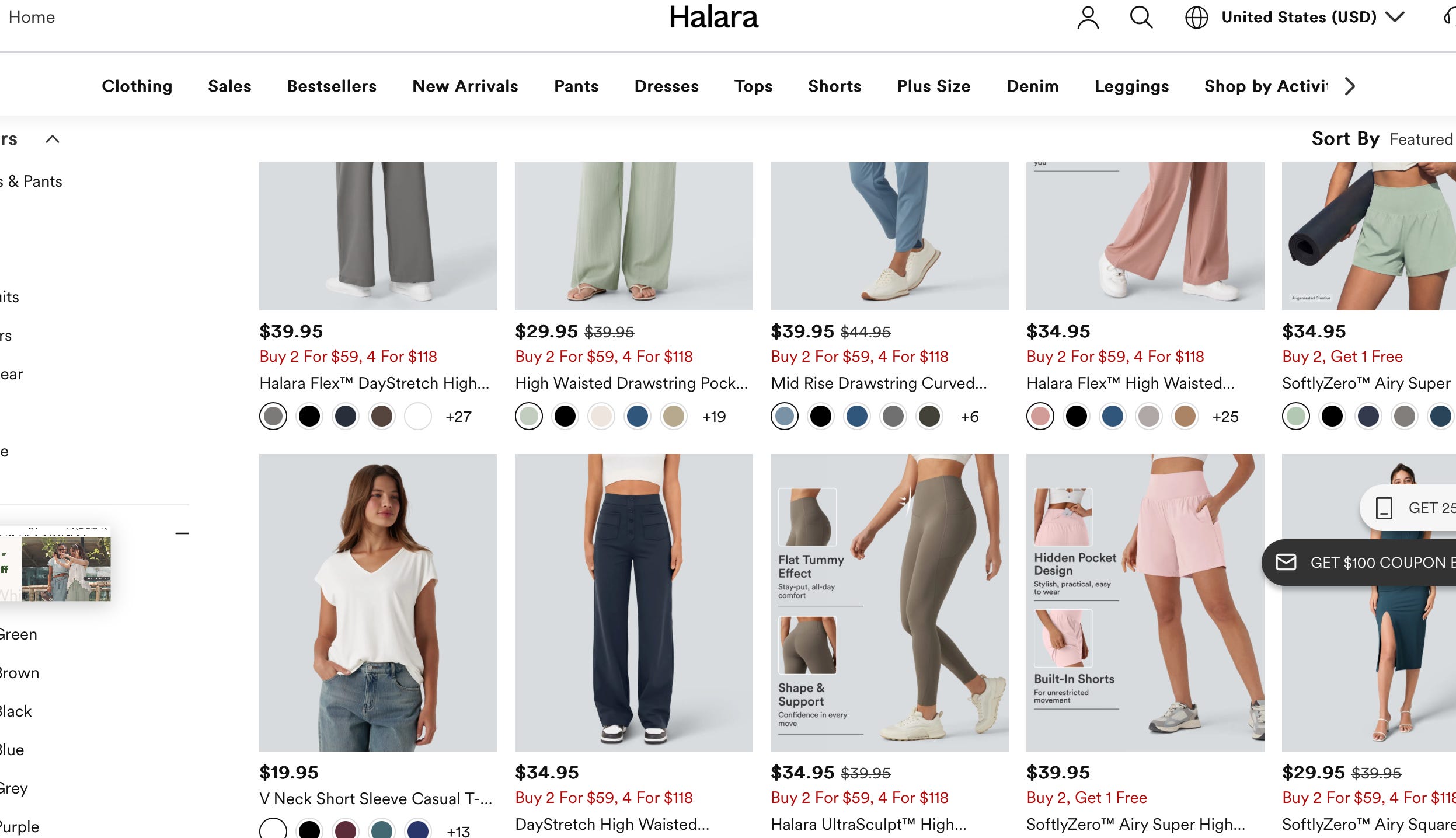
Halara, founded in 2021, is an athleisure brand known for “high‑value yoga pants.” — rival of lululemon. Its omnichannel revenue hit about $313 million in 2024, and GMV surpassed $1 billion. Founder Zhang Xiaopei graduated from Tsinghua in computer science and was formerly VP at Hulu. But Halara’s supply‑chain depth is far shallower than SHEIN’s — fewer SKUs, slower replenishment. It looks more like a content‑savvy DTC brand than a supply‑chain driven fast‑fashion company.
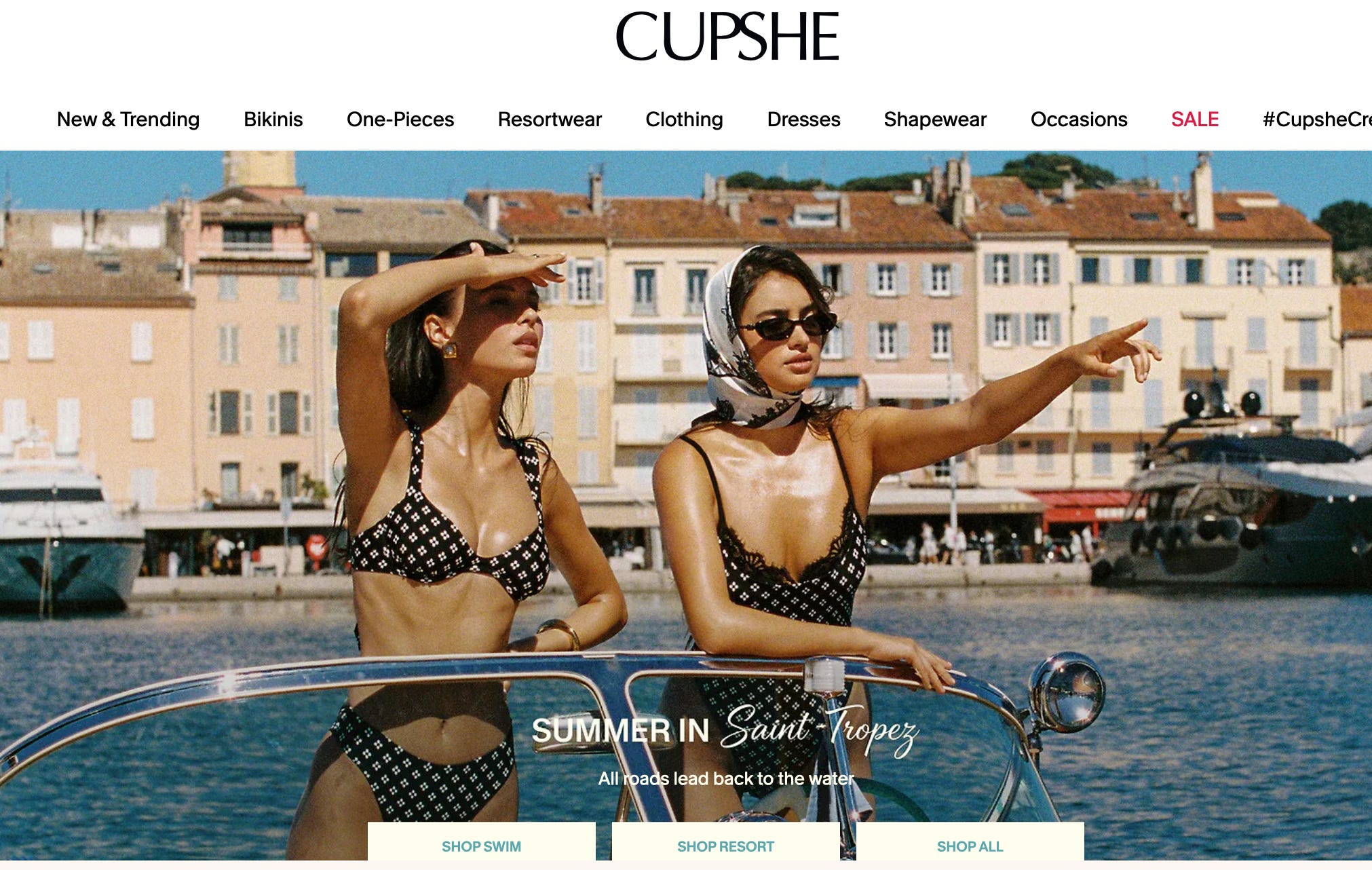
Cupshe succeeded by making a decisive move—subtracting rather than adding. Founded in 2015, it initially tried to follow SHEIN's full‑category fast‑fashion playbook, but after a full year of going nowhere, it made a drastic pivot in 2016: it cut every category and went all‑in on swimwear. That decision proved to be a masterstroke.
By 2017, Cupshe had become the No.1 online swimwear brand in North America. Today, its own‑site annual sales stand at roughly $220 million, with total online GMV estimated at around $420 million.
Well, even though the vertical model works, the ceiling is clear. SHEIN diluted customer‑acquisition costs across many categories; vertical brands must finely balance lifetime value against acquisition cost.
Zaful — A Great Beginning, a Bitter Ending

You can’t talk about “the next SHEIN” without mentioning Zaful — once paired with SHEIN as a poster child for cross‑border fashion, today it stands as a bankruptcy caution.
Zaful launched in 2014 under a cross‑border group and rose alongside SHEIN. By 2018 it reported over RMB 2 billion in revenue and was seen as a strong competitor. But around 2020 the paths diverged. SHEIN double‑downed on supply‑chain and data systems; Zaful pursued a “capital‑fueled” strategy: heavy ad spending, big celebrity endorsements, week control over the supply chain and broad category expansion.
When the 2021 Amazon “account suspension wave” hit, Zaful’s standalone site traffic and conversion collapsed. It sold brand assets in 2023 and was declared bankrupt in January 2026 with liabilities of RMB 813 million and negative net assets of RMB 735 million.
Zaful’s story is a brutal footnote: capital can buy traffic but not supply‑chain moats; you can buy exposure but not customer loyalty. When the money leaves, those without underlying operational strength are exposed.
In the end, maybe the question itself needs to be rethought
The question “Who is the next SHEIN?” assumes something that may be wrong — that SHEIN’s model is meaningfully replicable.
But the world doesn’t need a second SHEIN.
(Even if they wanted to, other brands can’t fully copy Shein — Shein was founded nearly a decade earlier over them, and that deep accumulation makes it almost impossible for later entrants to replicate.)
Cider’s “emotion space” stores, Urbanic’s Savana in India, and PatPat’s persistence in mother‑and‑baby — these moves aren’t about producing a SHEIN clone. They show different routes.
The “next” after SHEIN may not be a single brand that looks like SHEIN; it may be a cluster of brands that go overseas in different ways, across different categories — beauty, home, consumer electronics — and into different markets — Southeast Asia, Latin America, the Middle East — using different and even more creative models.
