

Let’s face it — over the last few years, “wellness” has become impossible to escape. More and more get‑together now turns into a mini health conference — some suddenly an expert on supplements, sleep trackers, biohacking, and whatever the latest AI health gadget is.
And honestly, it’s not hard to see why.
Health is shaping up to be the next big money maker—right after beauty and food, and easily hitting trillion‑yuan territory.
Take China: the wellness economy hit 10 trillion yuan in 2025, with nearly 500 million people actively using platforms like Tmall Health and JD Health. And guess who’s leading the charge? The post‑95s—they already account for 35% of supplement spending. Tmall Health alone reportedly has close to 300 million annual active users (though that number still needs a solid source). Even more striking: post‑95s and post‑00s are said to buy about a third of all melatonin sold. Lutein, liver‑support pills, and fish oil? They’ve gone from occasional buys to everyday essentials for many young people.
But here’s where China puts its own spin on wellness — It’s not just personal discipline, tracking every step, or keeping your body in a perfect working order. It also taps into the old wisdom of yangsheng 养生 —the art of “nurturing life”—which somehow promises both instant fixes and slow, long‑term benefits, even if that promise is sometimes just a beautiful fantasy.
Just look at the shelves.
L’Oréal-owned Vichy is betting on “beauty from within” with ingestible collagen supplements. Korea’s Olive Young has incubated Olive Better as a one-stop K-wellness platform, while Japan’s DHC brings skincare, health foods, and pet nutrition under one broader umbrella. Pechoin has expanded from beauty into medical aesthetics and broader health-related categories, while Guyu has launched Sishi Youfang, an oral nutrition line. In food and beverages, Nayuki’s ejiao milk tea, Haoxiangni’s freeze-dried red-date and tremella snacks, Chunfeng’s herbal “late-night water,” and WonderLab’s portable probiotics all turn traditional or medicalized ideas of wellness into products that are easier to drink, eat, carry, and share.
Different brands, same vibe: health can’t be so clinical, heavy, or intimidating anymore. It has to be something you can grab, sip, swallow, and toss in your bag like a daily essential—to keep up with the hectic pace of modern life. Bottom line: beauty goes health, health goes snackable, and TCM slips into modern formulas with sleek packaging.
But who actually needs this new wellness wave the most?
It sounds like China’s elders are the perfect fit for such remedies — but that’s not what is really happening. Older folks, cushioned by pensions and state support, are often seen as living their best lives in retirement.
The ones who look like they’re really struggling? The answer is — the young.
There’s a joke going around China: the elderly are full of energy, while the young are barely holding it together.
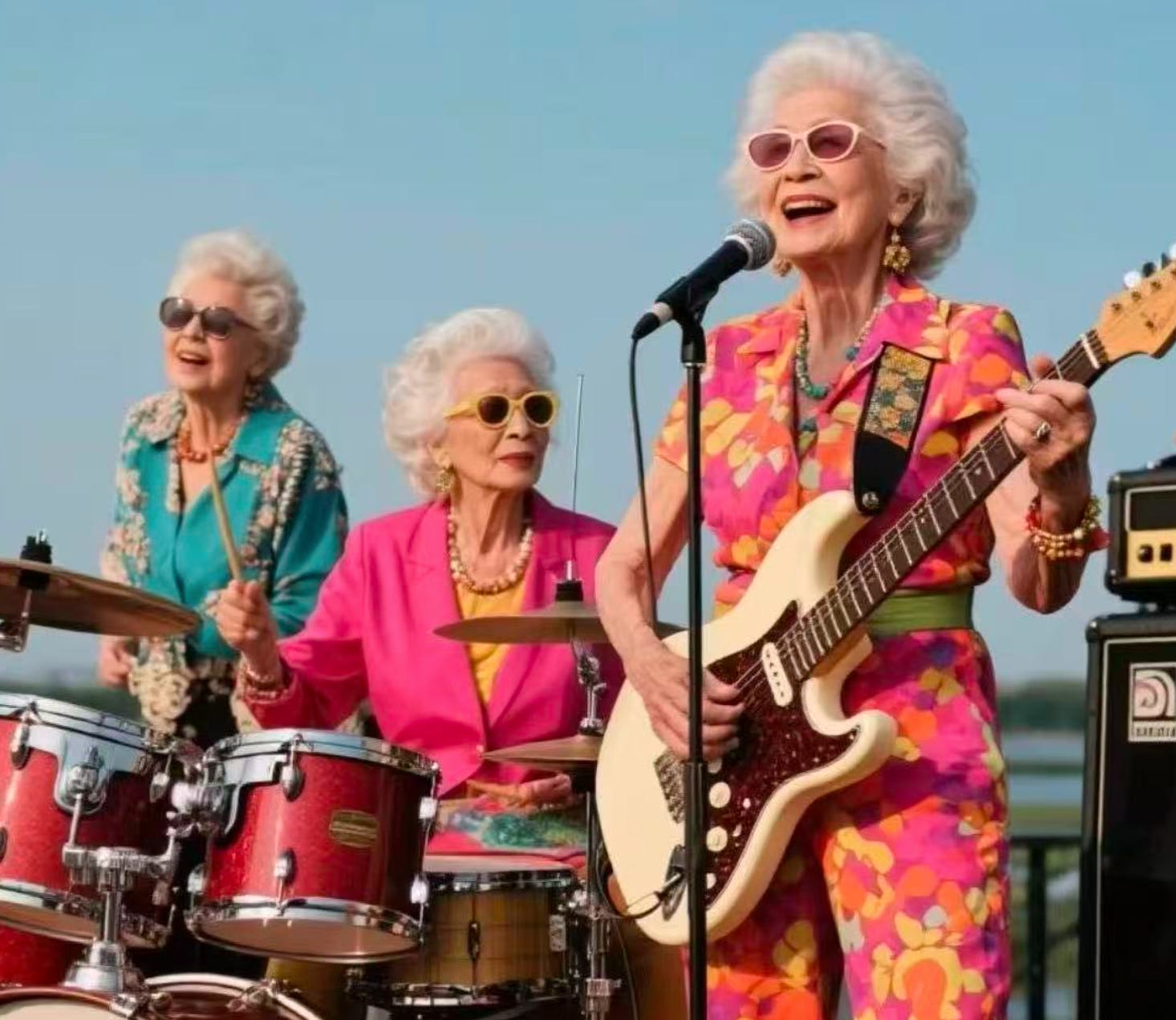
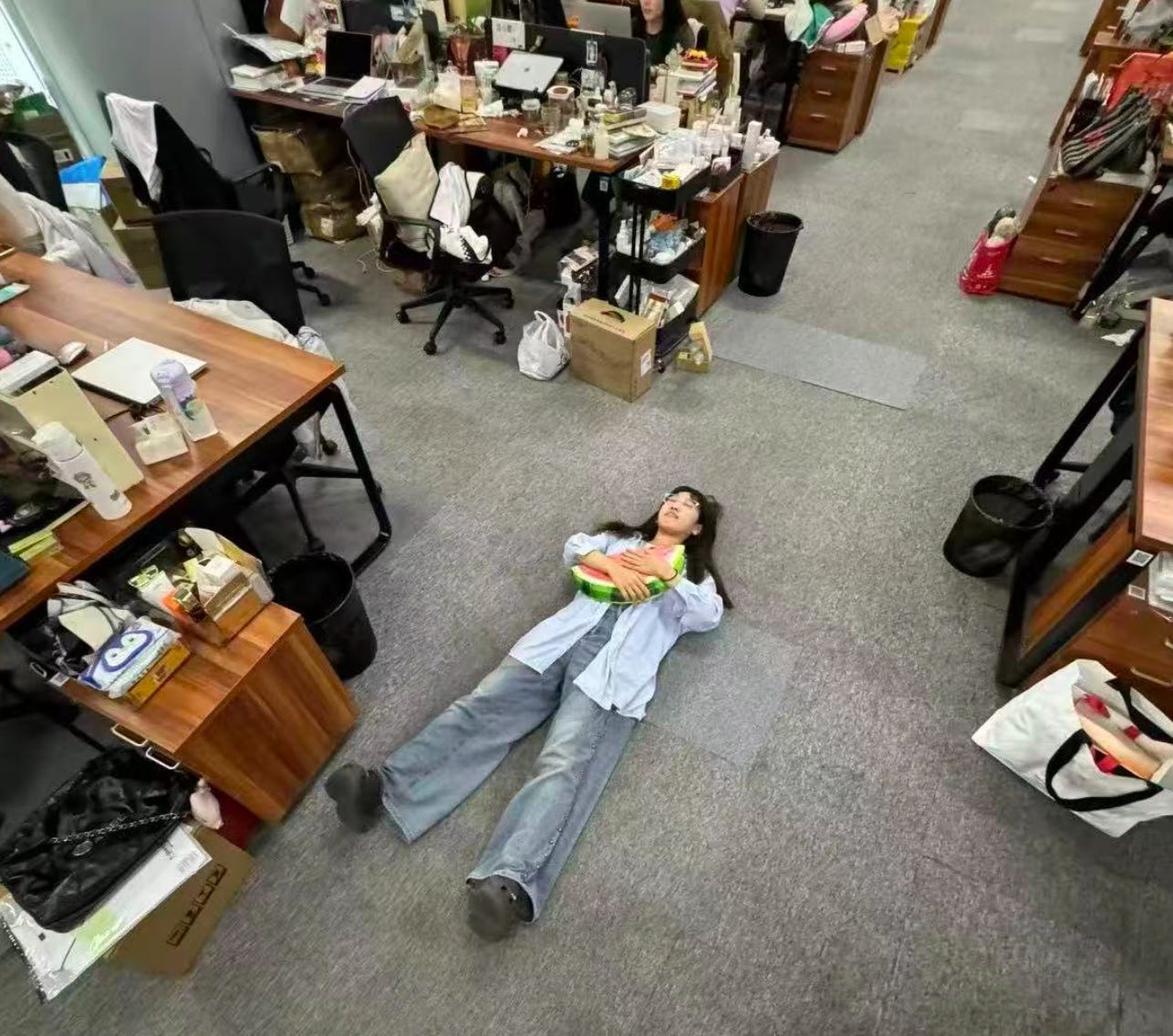
It sounds exaggerated — until you look at the lifestyle of today’s urban youth.
A typical day for a busy-urban youth might — begin with a jolt of coffee, followed by a sugar-loaded milk tea. After work comes a late-night workout or a fitness livestream. Before bed, vitamins are popped to keep the body going, liver-support supplements are swallowed as penance, a candle is lit for emotional balance, and a few collectible figurines are arranged like tiny psychological bandages — then sleep is tracked.
On weekends, apart from having to be on call for work, one can find brief pleasures in various hobbies, gatherings, and consumption — and, to lose weight but with limited time? maybe semaglutide as a short-cut.
It seems to be a perfect loop: stimulation, exhaustion, compensation, and consumption — the peculiar wellness logic for many, who burn out during the week and then buy recovery rituals in their scattered spare time.
Clearly, life doesn’t easily lend itself to relaxation or happiness for such busy white-collars — which is precisely why so many brands have advocated this wellness concept, given its vast market potential. The one might win such urbanism is whoever can turn those health warnings into reassurance, provide a moment of tranquility, or simply sell the fleeting happiness or healing promise that improvement is possible without disrupting the daily grind.
That may explain why some intellectuals, facing the gig economy, see “flexible employment (or non-employment) as a form of welfare” — they’re likely using such stressed lifestyle as their reference point for comparison. Well - I can’t really judge, because I don’t know whether this comparison method is truly rigorous or scientific, but I guess that’s probably how she thought about it at the time.
Of course, that is not the whole picture.
Shift your gaze away from fast-paced cities like Shanghai and toward the cozy towns—or even county seats—that make you breathe a little easier, and you will find young people living at something closer to 0.5× speed. It is not that competition and comparison have disappeared. Rather, consumers in these slower, less pressured places approach wellness brands from a distinct perspective—one shaped less by the urgency to recover and more by the desire to preserve a comfortable way of life. They may occasionally follow the latest trends or borrow a slice of big-city life, but what they value more deeply is something gentler and more sustainable: a way of staying well that fits the rhythm of everyday life.