

The global art toy market is experiencing rapid growth. According to industry research, the global art toy market is projected to grow from $6.94 billion in 2026 to $14.97 billion by 2033. These figures suggest that art toys are no longer a niche collectible category, but an increasingly significant market bridging consumer goods, culture, and creative industries.
With the rise of Pop Mart, China's art toy market has expanded quickly, drawing in a growing number of brands and entrepreneurs. Yet as Pop Mart's success model has been widely adopted, signs of homogenization have become apparent: similar IP characters, comparable gameplay mechanics, and converging visual languages have led to a certain degree of aesthetic fatigue in this fast-growing market, and raised questions about the long-term sustainability of the industry.
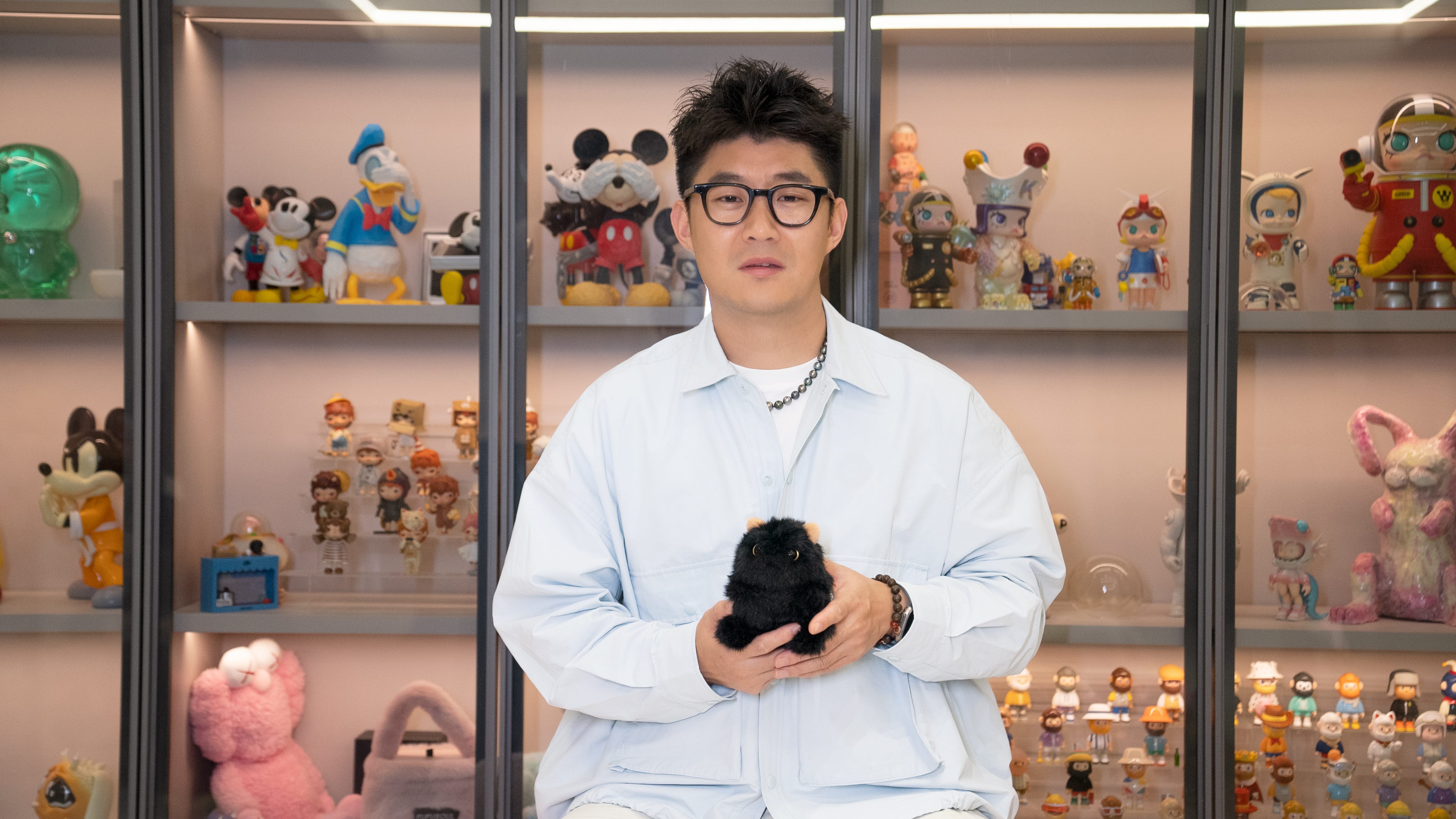
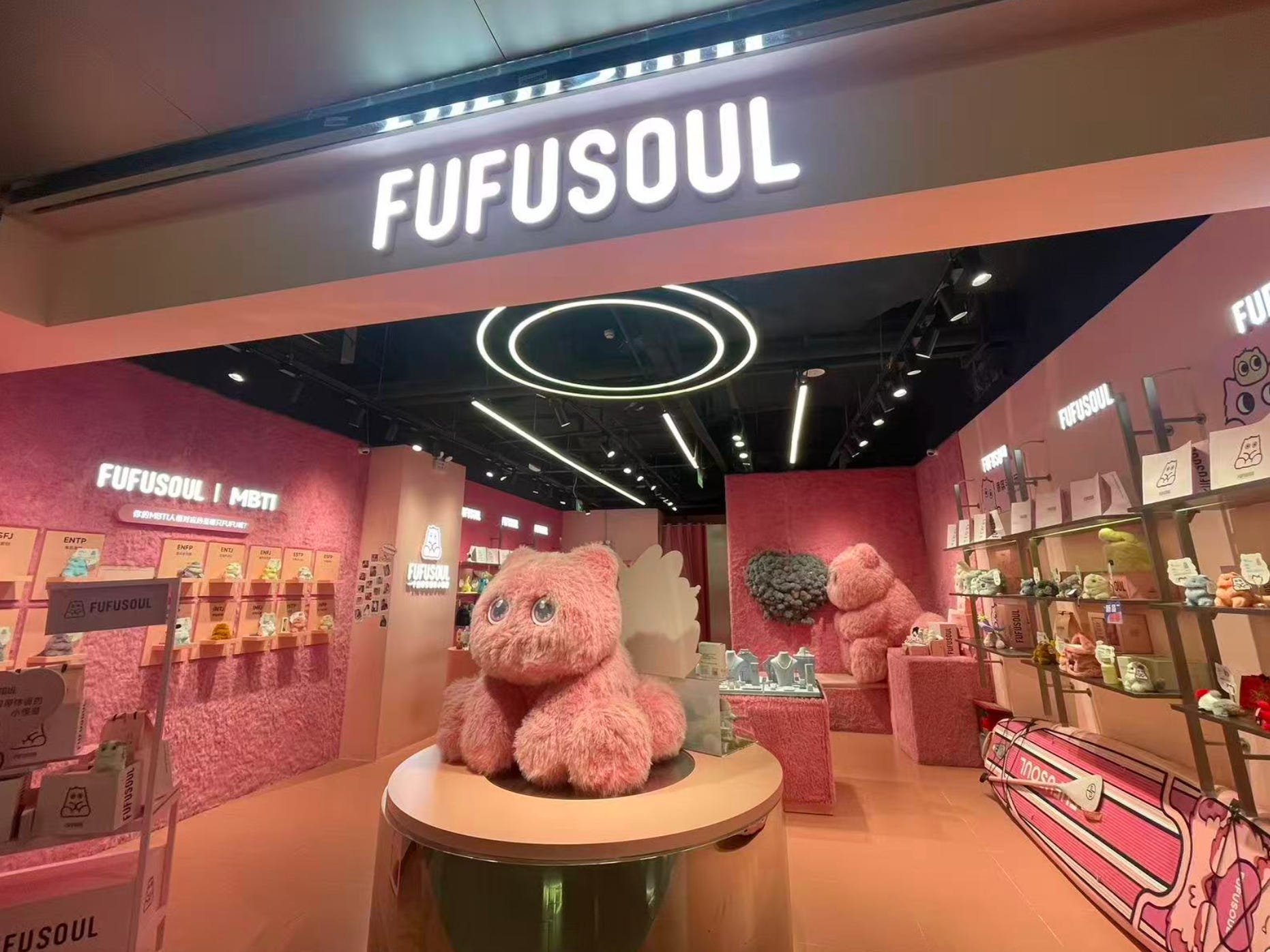
Against this backdrop, one brand has stood out to me: fufusoul. With over 40 offline stores and experiential spaces worldwide, it has built something that feels different from the typical IP-toy playbook. I've always been drawn to their spaces and oversized pink toys, and I find myself genuinely curious: why would a grown man decide to build a pink toy brand — and more importantly, how can he and his team continue to grow in such a fiercely competitive sector?
Why did you think of creating such a brand? A mature man creating a pink-themed toy universe —that piques my curiosity. What was the initial spark?
It all began with a simple conversation with my daughter. She described a little creature that would stay by her side, “eat”her unhappiness, and give off a lovely scent.
That moment stopped me in my tracks. It made me wonder: why does a child—my child—feel drawn to such a companion?
Its appeal, I realized, goes far beyond a cute face or a tangible object. It’s about emotional healing and the quiet reassurance of presence. As a father, my first instinct was to turn her imagination into reality. So I started sketching the prototype of fufu, based entirely on her vision. And as I worked, the seed of a brand began to grow.
Over time, it dawned on me that this longing isn’t limited to children. Adults, too, crave something that can hold their feelings, process their silent struggles, and offer comfort without judgment. What began as a daughter’s fantasy thus became the soul of fufusoul.
When it came to color, pink was our natural choice—our “visual hammer.”
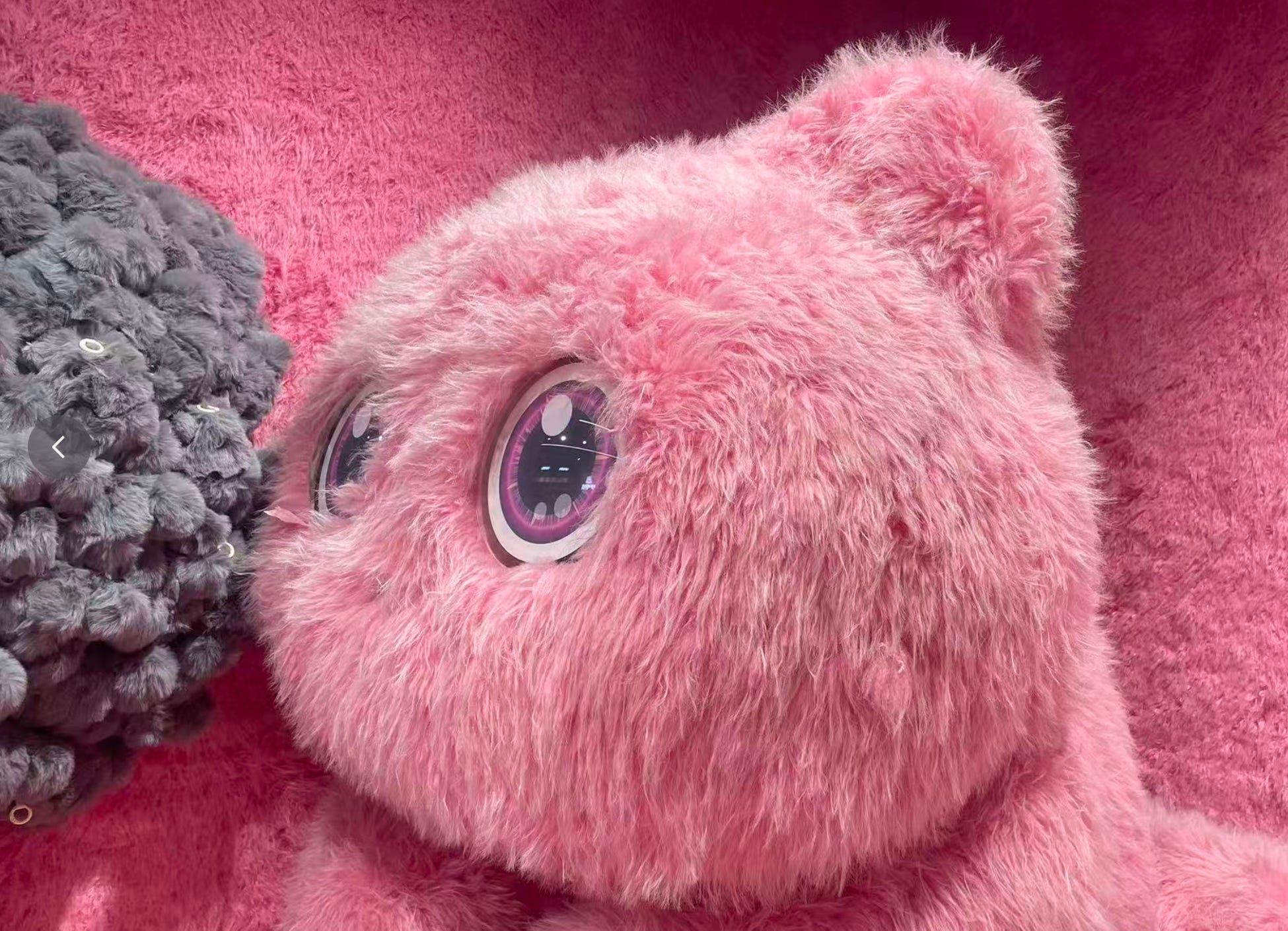
You’ll find it everywhere: in our spaces, our packaging, and our hero product. At first, it was simply because my daughter loves pink. But as I reflected deeper, I understood that pink carries a powerful emotional resonance for many women—our primary audience. In everyday culture and aesthetics, pink evokes warmth, tenderness, beauty, confidence, and affection. It’s more than a color; it’s a visual language that speaks directly to the heart, forging an emotional bond between the brand and those who encounter it.
So romantic, but was there any rational thinking involved?
I think deep down, most marketers probably harbor a dream of building a brand, and I’m no exception.
For me, my daughter was a huge inspiration and the source of the brand’s idea. My years of work experience, on the other hand, gave me the capability to turn that idea into reality.
I’m very grateful for my time at Alibaba. There, I wasn’t just exposed to marketing; I also got involved in and understood aspects like supply chain and product design. I gradually built the ability to think from multiple dimensions, including user needs, product logic, and operational execution.
These experiences not only laid a rational foundation for building the brand but also gave me the confidence to transform a romantic wish into a real, sustainable product and brand.
You seem to often refer to fufusoul as a “healing” brand in other settings. What does “healing” specifically mean to you?
“Healing” might not be about grand narratives.
Most of the time, it responds to simple, genuine needs in daily life: making people feel safe when anxious, relaxed when tired; bringing warmth and joy when feeling down; and allowing them to feel love even when alone, not lonely, and accepted.
The name fufusoul itself contains our understanding of “healing.” Our Chinese brand name, “福馥” (Fú Fù), takes meaning from the associations “fufu” evokes: “福” (Fú) represents happiness and blessing, while “馥” (Fù) brings to mind lightness, softness, and a rich fragrance. “Soul” points towards one’s inner emotions and spiritual world. We hope that an image as soft, cute, and fragrant as fufu can become a medium for carrying emotions and delivering joy and comfort.
Of course, we don’t want to define our products too narrowly. Our products are part of a “brand worldview about healing”: it could be a designer toy, it could be a moving little story. What matters isn’t just what it specifically is, but whether it can establish an emotional connection with people regarding healing and comfort.
The IP-toy market is developing very rapidly, while Pop Mart has had a huge impact on the industry. Many consider them unbeatable especially for a domestic latecomer. For a new brand, how much room is there left to break through?
Pop Mart is a pioneer in the industry. It helped the market establish many new standards and introduced more people to designer toys and trendy toys. They are incredibly strong across the board, making it difficult for latecomers to surpass them by playing the same game.
So, we don’t see “how to benchmark against Pop Mart, or any existing global IP toy brand” as our core issue. We focus more on whether we can create something different—even a different system—and meet needs that still unmet.
One point I want to make: outsiders might focus too much on blind boxes.
While blind boxes are an effective product or marketing mechanism, Pop Mart’s success isn’t really that tied to them—its popularity correlates more strongly with the boom in plush toys, not blind boxes.
In the post-pandemic era, including Jellycat and Disney, plush toys are generally very popular—because they possess a natural, tangible softness and comforting quality. This reflects a broader trend of “spiritual resonance consumption”—we humans generally lack security and a sense of belonging.
Stepping back, looking from the perspective of overall “emotional consumption,” new brands still have opportunities, and significant ones. Find a unique psychological desire for consumers and address it properly—that will set you apart from other players.
So, whether the “blind box” model’s sustainable or not is a pseudo-question.
Yes. Blind boxes can be a tool, but they shouldn’t be the core logic for running a business.
For fufusoul, we aim to establish a new IP product category centered around the “long plush + fragrance” experience. We want consumers to like it, not just because they pulled a specific figure or because it has collectible value, but because it genuinely brings healing and companionship.
You mentioned the category concept of “long-plush fragrance IP-toys.” It seems you are pioneering and defining this product category. I’m curious, as a design-driven brand, how do you achieve this through your product design?
Yes, the competition could be fierce, but I believe a unique category positioning allows us to stand out and stay away from direct competition.
In terms of design, we’ve been exploring a cross-sensory design language combining “scent + softness + cuteness.” This allows our toys’ visual cuteness, tactile softness, and olfactory fragrance to form a more complete and unique emotional experience together.
During product development, we simultaneously consider shape, material, feel, fragrance, and usage scenarios. Turning a concept into a tangible product requires many rounds of adjustments, debates, and coordination across design, prototyping, material testing, and supply chain.
We have a mature in-house design team; product designs are led internally. Because I have combined experience in marketing, product design, and supply chain, I can output ideas faster, judge their feasibility, and establish a more direct link between creativity and actual production. You could say we are likely one of the fastest teams in China to bring creative ideas to life.
Of course, while the product is the core carrier of the IP, it also includes other touch points—ultimately, it’s no longer just product design focused on a single sense; it’s more like a holistic experience design engaging all five senses, extendable to spaces, scents, stories, and maybe even a cup of coffee. We want consumers to generate some meaningful emotional connection at every moment they see, touch, smell, or even taste or hear fufusoul.
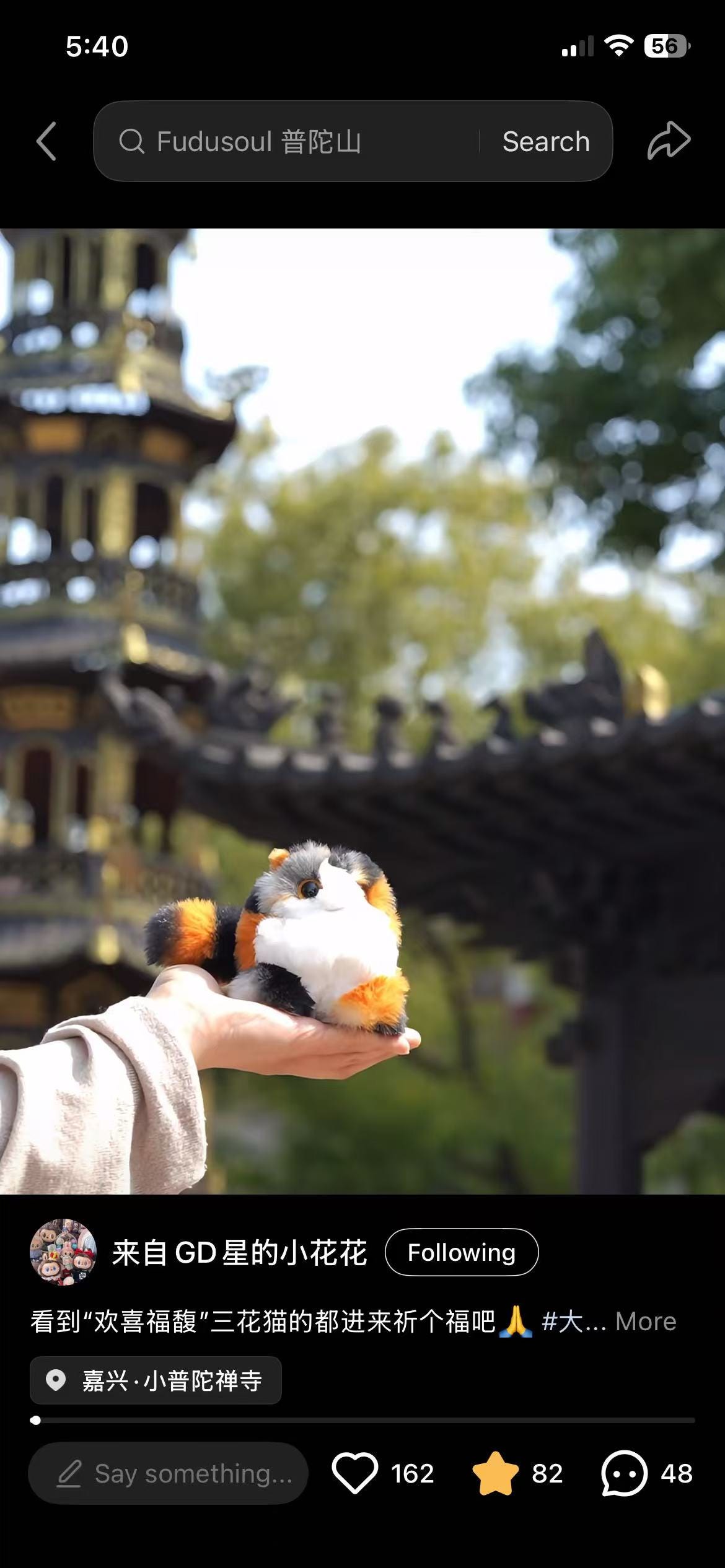
Many Chinese brands now like to integrate local culture into their brand universe. There are successes, but also many odd and ugly failures. But I see that your co-branded collection with Putuo Mountain 普陀山 has a very natural and seamless fusion. How do you approach this? Does your long-term art collecting help your sensitivity in this area?
I believe any design-driven work requires a strong belief in long-termism. Cultural exploration is no exception—you need to genuinely and deeply understand the culture you want to express.
Simply using some traditional Chinese patterns, symbols, or colors doesn’t necessarily mean you understand and can express that culture well. Specifically, many brands might just use cultural elements as “decoration” rather than a “language” resulting in superficial or strangely executed works.
Our approach is different: we strive to understand the culture’s underlying way of thinking, lifestyle, craft heritage, and history through smaller-granularity methods like experiencing the real-life details of the original place, asking advices from locals and collaborating with experts. Then we consider how it can naturally enter our brand and design domain.
Of course, my hobby of art collecting has had a huge impact because—well, I wouldn’t spend money on works that aren’t good enough, lol…..So, this long-term collecting has given me a certain accumulation of artistic and aesthetic samples, with traditional Chinese aesthetics being a significant part. This perhaps gives me an intuitive judgment ability that differs from others.
We’ve already made some very successful attempts, including collaborations with overseas artists and explorations in local cultural tourism and artist partnerships.
Recently, we also want to explore the possibility of collaborating with local Chinese craft artisans. China has a wealth of regional arts, and many details deserve serious attention and exploration.
In short, we don’t want to “use Chinese elements” for the sake of using them. We want these cultures to genuinely become part of our products and values, expressed in ways that contemporary consumers can understand. Brands like Songmont did this well, but the specific design logic varies by category and brand philosophy; we need to find our own path.


It seems you are also expanding globally. Did fufusoul have global aspirations from the very beginning?
Yes. From the start, we didn’t limit ourselves to being a brand only for the Chinese market. The desire for “healing” isn’t unique to one country or region. People in different places may speak different languages, have different cultures and habits, but they all need love, kindness, and companionship.
We’ve seen positive feedback in both Asia and the US. Consumer behavior might differ—perhaps American clients show more interest in artist collaborations—but ultimately, there is much common ground in people’s responses to healing concepts like softness, cuteness, fragrance, and companionship.
Once, a US customer sent us a DM on Instagram saying he wanted to buy three fufu toys in different colors for the three children of a neighbor who had suffered a family tragedy (an elderly relative passed away, and another relative has a terminal illness). We don’t know if the story was true, but we chose to believe it and decided to send the Fufusouls to the family for free. After Christmas, he sent us photos of the kids receiving the toys—they looked so happy. At that moment, our team felt their joy too.
These small moments make us more clearly realize that many inner spiritual needs of humanity are universal. People are naturally drawn together by emotional connections—kindness, love, and the reassuring feeling that someone cares—that’s the problem we want to address and solve.
These real stories and user feedback also give us more confidence that our design language can transcend cultures and languages. Through our products, experiences, and genuine customer relationships, we are able to create warmth and meaningful connections for people around the world.
fufusoul currently has over 40 stores globally. As the brand expands, how do you maintain the team’s creativity and organizational vitality?
I place importance on a “platform mindset.”
A company shouldn’t just be a place where employees complete fixed tasks; it should also be a platform that helps them grow. We want employees to build competence in their professional area while continuously expanding knowledge and experience in other fields.
This is the “1+X” culture I promote internally.
“1” represents a person’s foundational skills; we respect each employee’s unique talents and core values. “X” represents the other capabilities they can continuously develop. A designer can understand product and market; an operations person can understand users and content.
I advocate for this cross-disciplinary ability. It facilitates communication within the team, helps each person discover new possibilities, and maintains their sustainable value as the organization evolves and changes.
Beyond that, I value kindness, inclusiveness, and a collaborative culture.
A brand will inevitably face pressure and differing opinions as it grows. But without inclusiveness and goodwill among team members, it’s hard for the organization to sustain itself in the long run. Whether a person can be kind and inclusive towards their surroundings ultimately affects their ability to gain broader cooperation and support.
I believe these qualities will bring good fortune to each of us and the entire organization, and also spark unexpected inspiration. As a Buddhist text goes, “Do good and fortune will follow. 行善者多福. ”
Besides toy brands, are there any brands you particularly like?
Let me think... I am quite into Apple.
What impresses me about Apple isn’t just their powerful products, but their very complete product ecosystem. They consistently start from user needs, thinking about the relationships between products and whether the overall user experience is cohesive.
They also place high importance on details and standards, yet they continuously innovate. To me, this ability to maintain “rigor and innovation simultaneously” is very instructive. fufusoul is still in a growth phase, and we hope to gradually build our own ecosystem.
If you were to recommend one place in China to foreign friends traveling here, besides the must-visit Shanghai, where would you suggest?
I would recommend Guizhou.
For me, Guizhou isn’t just a single tourist destination; it’s also a place that allows for a better understanding of China’s regional cultures and lifestyles. It has unique cuisine, handicrafts, architecture, clothing, folk culture, and incredibly rich natural environments.
For those of us building brands and products, places like this offer observations and inspirations quite different from coasting urban consumer environments. Lately, I’ve been very interested in their embroidery techniques.
For overseas friends, Guizhou’s rich and unique elements are definitely worth experiencing and exploring. The coffee in Guiyang is especially great— you’ll love it.
Thanks for reading!
If you enjoyed this, please consider sharing it with others. Cheers!
Great work. I guess Pop Mart, Top Toys, and a cohort of other players are already leading the market, so it's tough for new entrants to grow. Fufusoul looks very smart, but it will still need a great deal of effort to break through. and I don't think the overseas market will be any easier—I'm really curious to see what they can achieve next.
Interesting brand—thanks for sharing. The product and overall aesthetic feel both cute and thoughtfully designed. What surprises me, yet also makes perfect sense, is that China—not just in tech, but also in consumer goods—has so many founders with both vision and execution.
That said, I imagine the category in China is already quite crowded. While category innovation is one route, I'm also very interested in seeing more creative alternatives—like distinctive narrative approaches or other brand-led initiatives that defy the usual playbook.