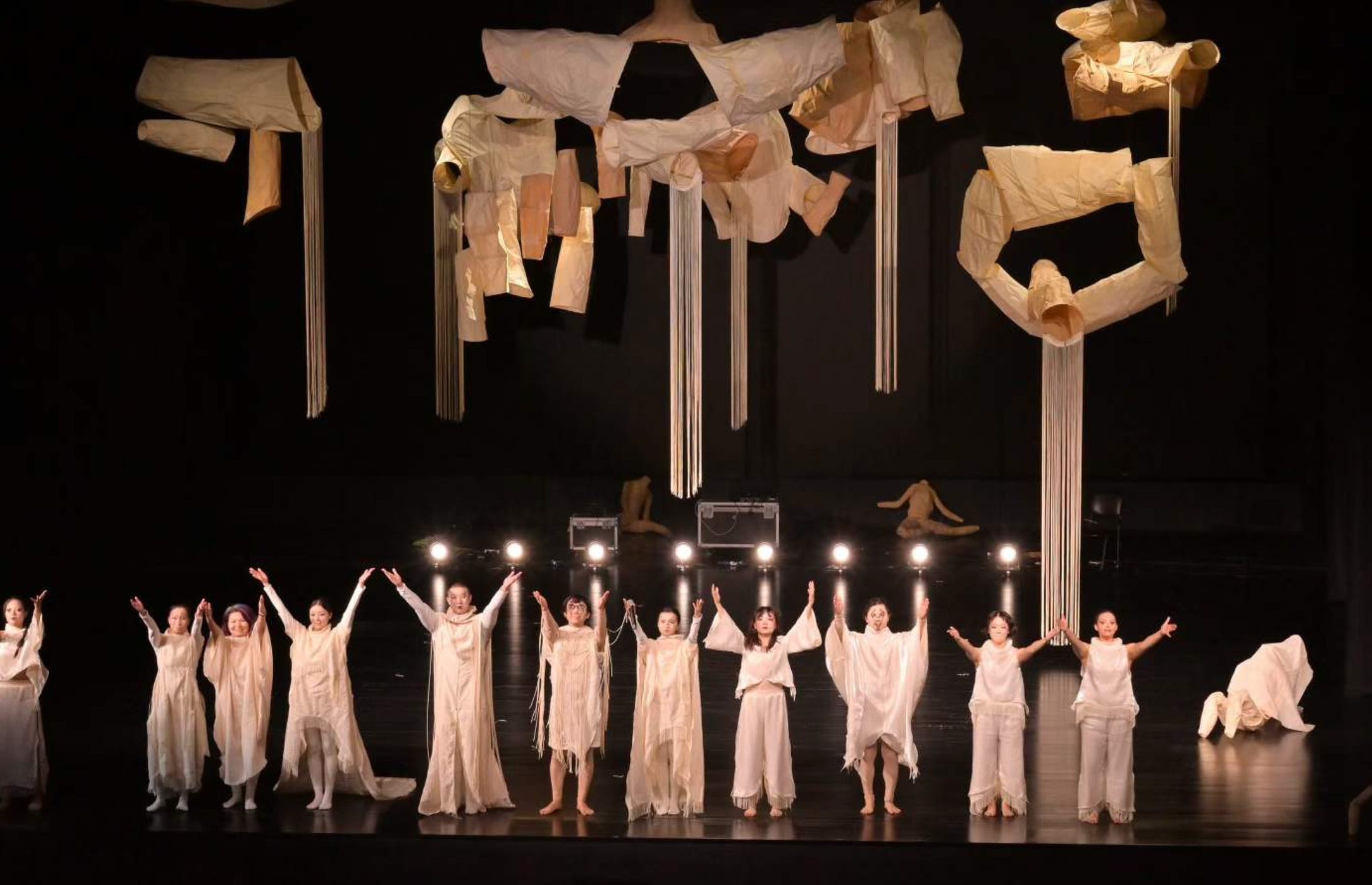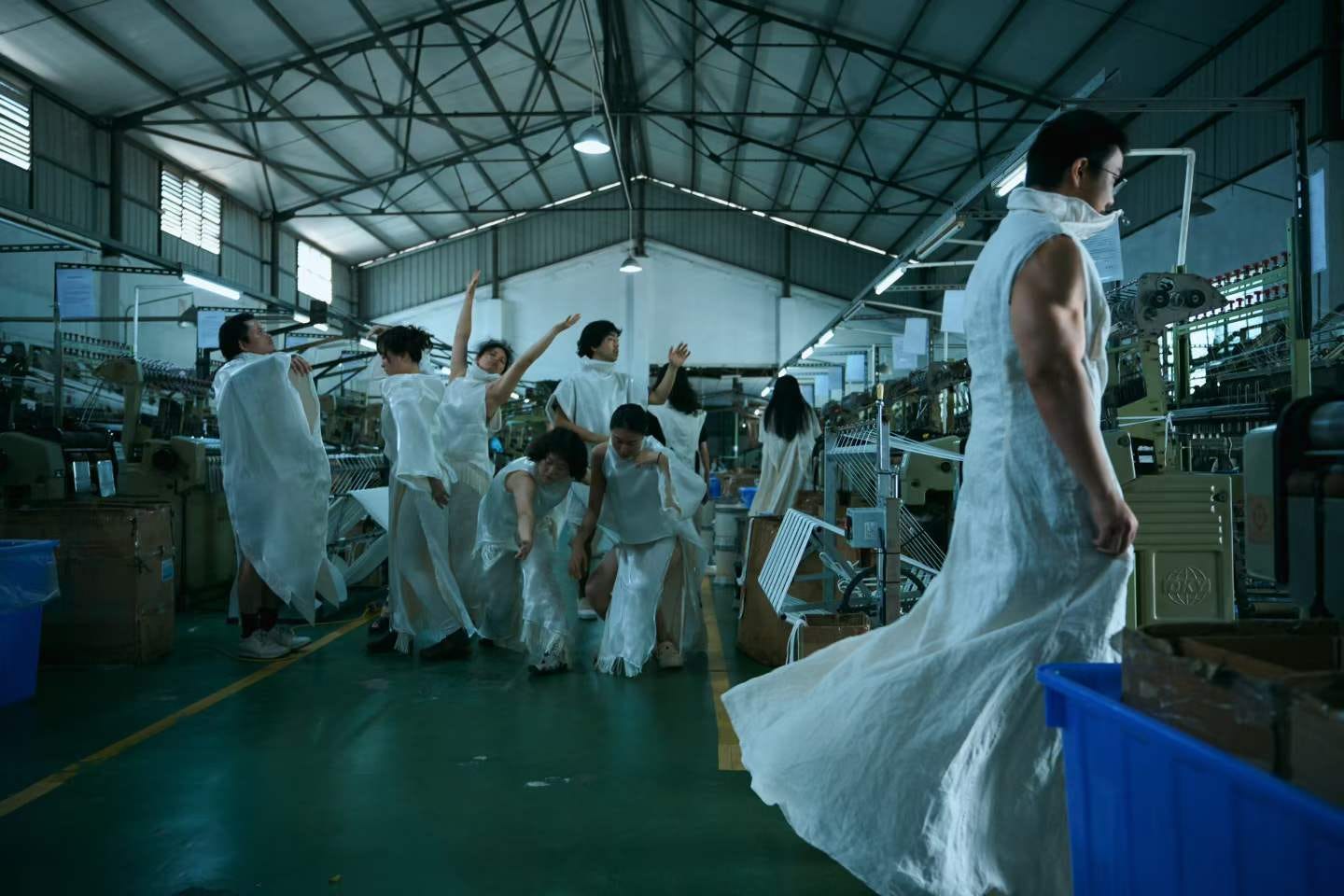
For many, Chinese factories are cold and closed-off places—associated with intense labor, rigid production systems, and the oppression and exploitation that may exist within them. But for Ya Shu, a contemporary dancer and the founder of “Zhouxin 宙心”, the factory is neither a cold, impersonal space nor separate from artistic life.
Ya is not an outside observer of the factory. She grew up in Foshan 佛山, a city shaped by a highly developed manufacturing culture. In her work, the factory and the workers whose labor sustains it are not pushed to the margins. Instead, they gradually become central to her creative practice.
She does not want to turn the factory into a visual symbol or an aesthetic backdrop. She wants workers to participate in the making of a poetic work of art—to become, at times, its co-authors and even performers.
This relationship with the factory is also connected to another central idea in Ya’s practice: the willingness to work with randomness and uncertainty.
Randomness
Ya is drawn to a certain kind of randomness. This sense of uncertainty is closely tied to the name of her cultural brand, “Zhouxin,” and is also an important part of her creative process.
Does “Zhouxin” mean “the center of the universe”? How did you come up with the name?
Ya:
The name actually came from a completely random moment.
One day, I was reading the Chinese translation of Plato’s The Republic. I opened the book at random and picked one character from that page: “心,” meaning “heart” or “mind.” Then I flipped to another random page and saw the character “宙,” meaning “universe” or “time.” I put the two characters together, and that became “宙心.”
I think you’re right that it can mean “the center of the universe,” but in reality, it can mean anything. To me, “Zhouxin” represents a random world that keeps growing and embraces diversity.
So you really like randomness and uncertainty?
Ya:
Yes. This “random” approach is a very important part of my creative practice.
I’m fascinated by Merce Cunningham’s way of working, especially his experiments with chance choreography and the methods he developed with John Cage, including using the I Ching to make random decisions. They made me realize that randomness doesn’t mean losing control. It can be a more open form of order.
You let different things come together first, and then see what they grow into. I don’t really like working backward from a fixed goal. Randomness without a specific purpose can be a way of breaking established patterns.
When I was studying contemporary dance in the London, my teachers also encouraged this way of thinking: anything was possible. You could work randomly, be abstract, and even challenge the consensus.
I actually started out studying Latin dance. Later, my partner suddenly stopped dancing, and that pushed me to consider contemporary dance instead — my life itself is always shaped by such impermanence and chance.
In practice, creativity doesn’t mean carrying out a plan that has already been carefully designed. It can also mean starting with a question and allowing the work to grow as you go.
What was the original question you want to solve, then? Or, to put it another way, what does “Zhouxin” want to achieve—or move away from?
Ya:
I want more audiences to experience a form of contemporary dance that is more open and inclusive—one that engages a broader range of participants and responds to wider social issues.
I believe that art should be accessible and inclusive. The issues my work responds to come from everyday life. Art should not be disconnected from ordinary experience, nor should it exist only for a particular group. It should be there for more people.
I also want my work to help audiences see Chinese factories in a different way—the workers, craftspeople, and cultures connected to them. These people are highly skilled, but they don’t always have the opportunity to express their creativity.
The People, Crafts, and Materials Behind the Work
To date, Zhouxin’s works have included “Canvas of Onerism”, “Doom Box”, “Doxa”, “ 途经- In Passing 1&2”, and “ 理想躯 - Ideal Body”. The team will soon present “
织 - Weave” at the opening ceremony of Beijing Science Week, followed by ”In Passing 3” at the Nanhai Earth Art Festival in Foshan.
For Ya, each performance is a new act of creation, deeply connected to the factory and to the processes of making. No work is ever simply repeated.
What does the factory mean to Zhouxin?
Ya
The factory raised me and supported me. I grew up there, and it helped shape who I am today. Many artists encounter factories from the position of observers, sometimes without having lived within that environment.
But the factory is not just a place I happened to pass through. It is my home, and the source of my creative work.
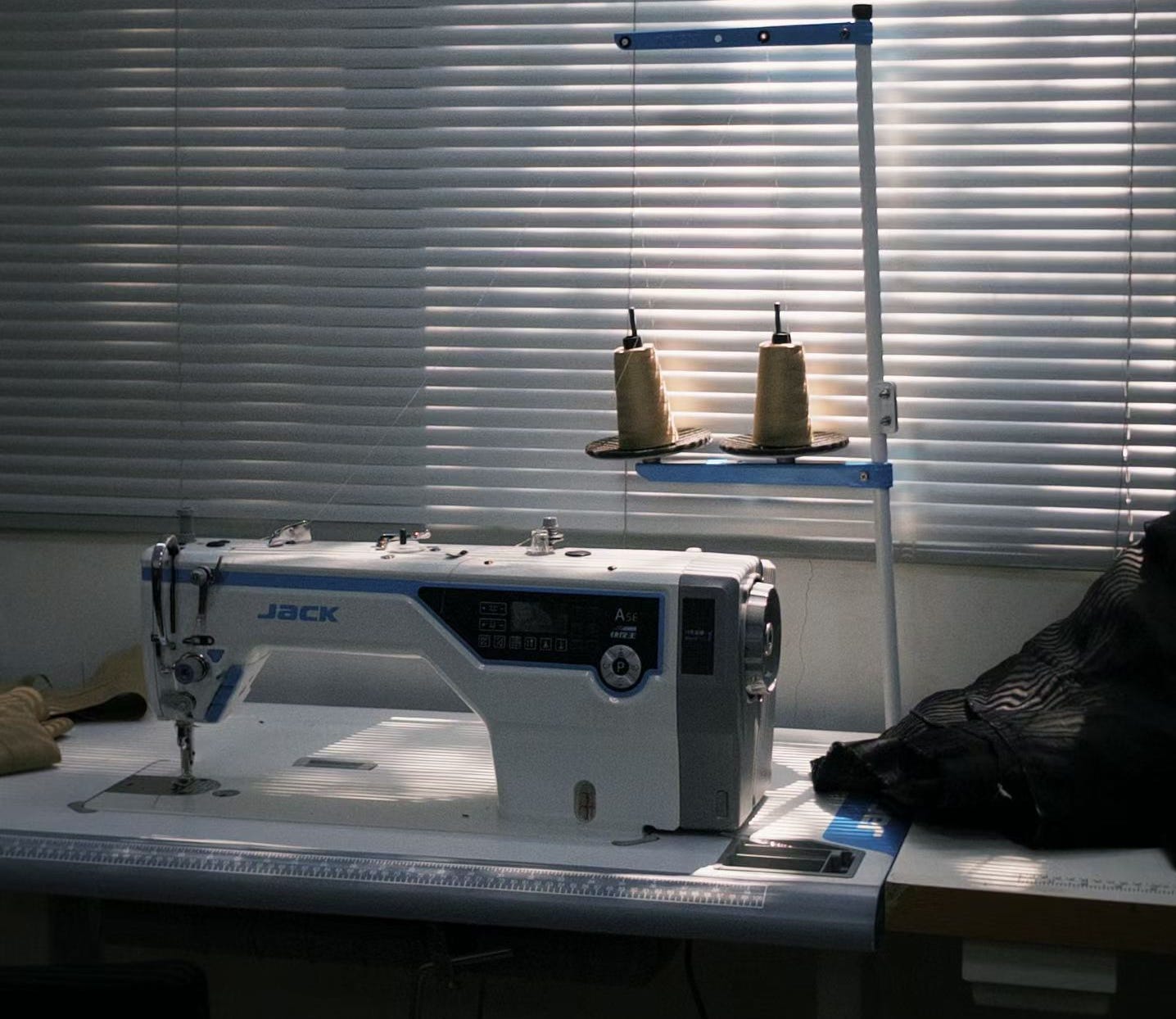
Our rehearsals, installations, costumes, and production all take place in the factory. As I lived there, I understand where its real strength lies. It is not in the seemingly all-powerful automated machines. It is in people’s hands. It is in their experience and their deep understanding of materials.This knowledge carries history. It has weight, substance, and beauty.
I want to bring it into the stage.
How does factory influence your creative process?
Ya,
In my earlier work, I usually started from personal feelings. But the factory operates according to a completely different way of thinking. It is a world built on experience.
Materials have their own personalities. Techniques have their limits. Some workers have stood on the production line for more than twenty years. Their judgment has grown out of their hands.
If you want to make something, you can’t solve the problem through imagination alone. Experience forces your ideas to become practical. The things created through that experience eventually appear in the visual language of the finished work.
There is another, subtler influence: the way we rehearse.
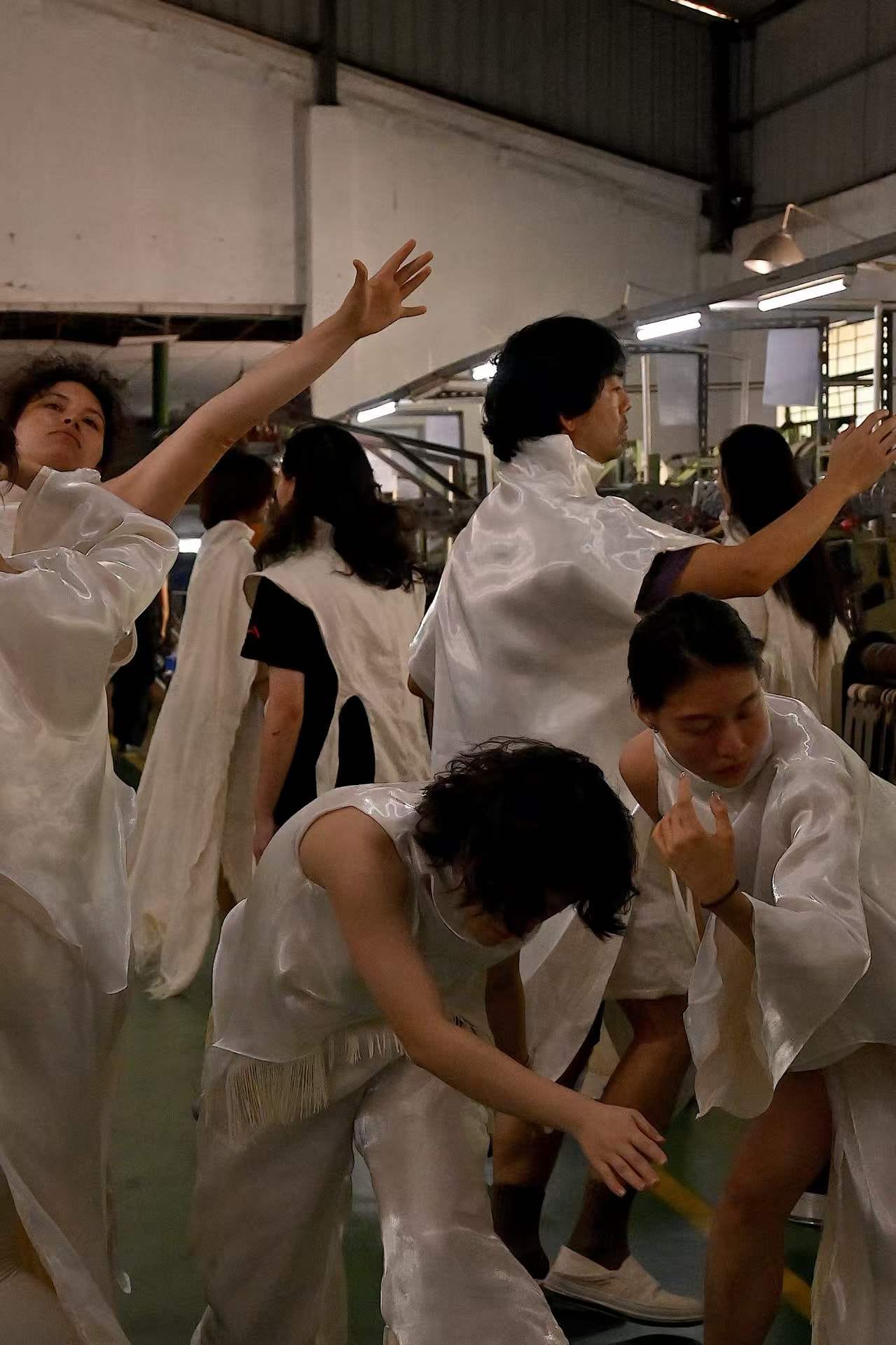
A production line has its own rhythm, and that rhythm can create a subtle connection with dance.
During the creative process, I invite dancers from different countries to spend extended periods of time living in the factory. They spend time alongside the machines and workers, allowing the rhythms of factory labor to enter their physical awareness and creative process.
This is not simply a symbolic exercise in “experiencing life.” It is another way of creating. The dancers find a physical state that is different from what they would develop through standard dance training. In that sense, it is a form of resident creation: the work grows out of some speical experience.
You seem especially fascinated by materials.
Ya
Perhaps people who work in factories are naturally sensitive to materials.
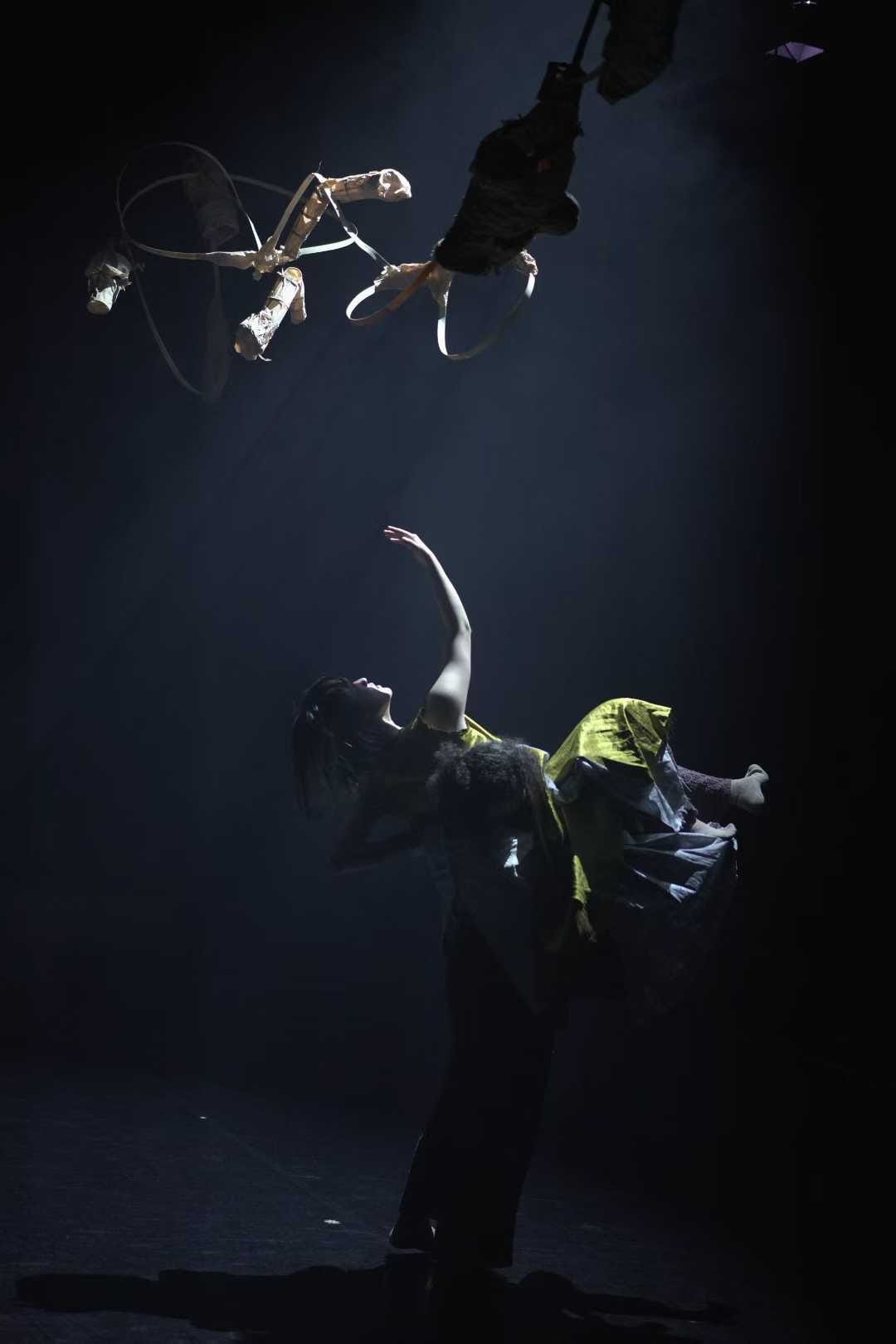
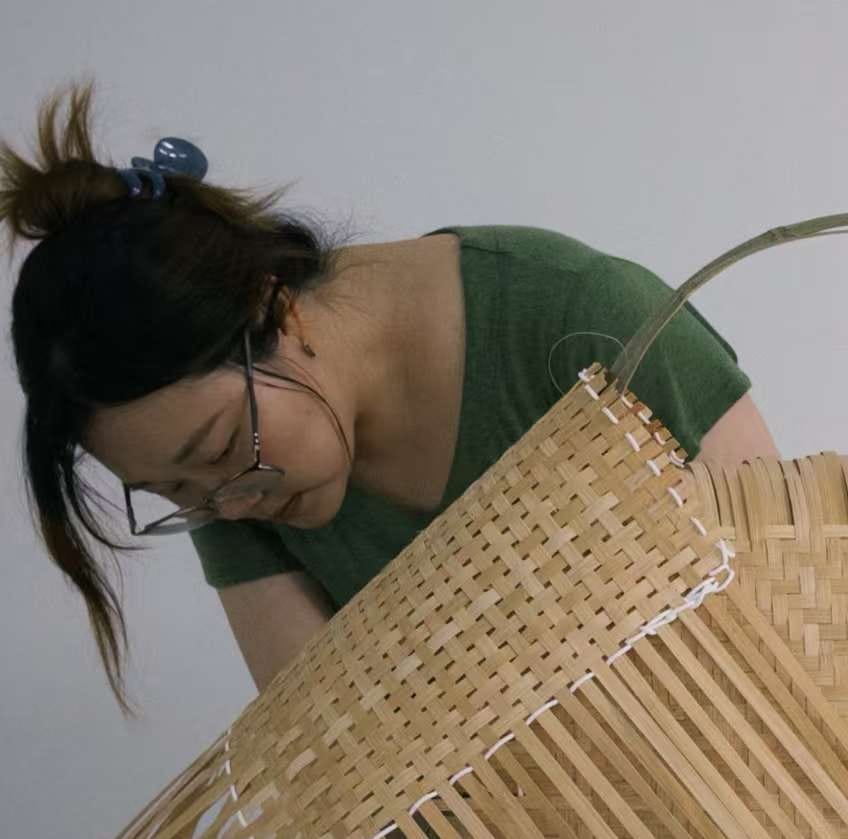
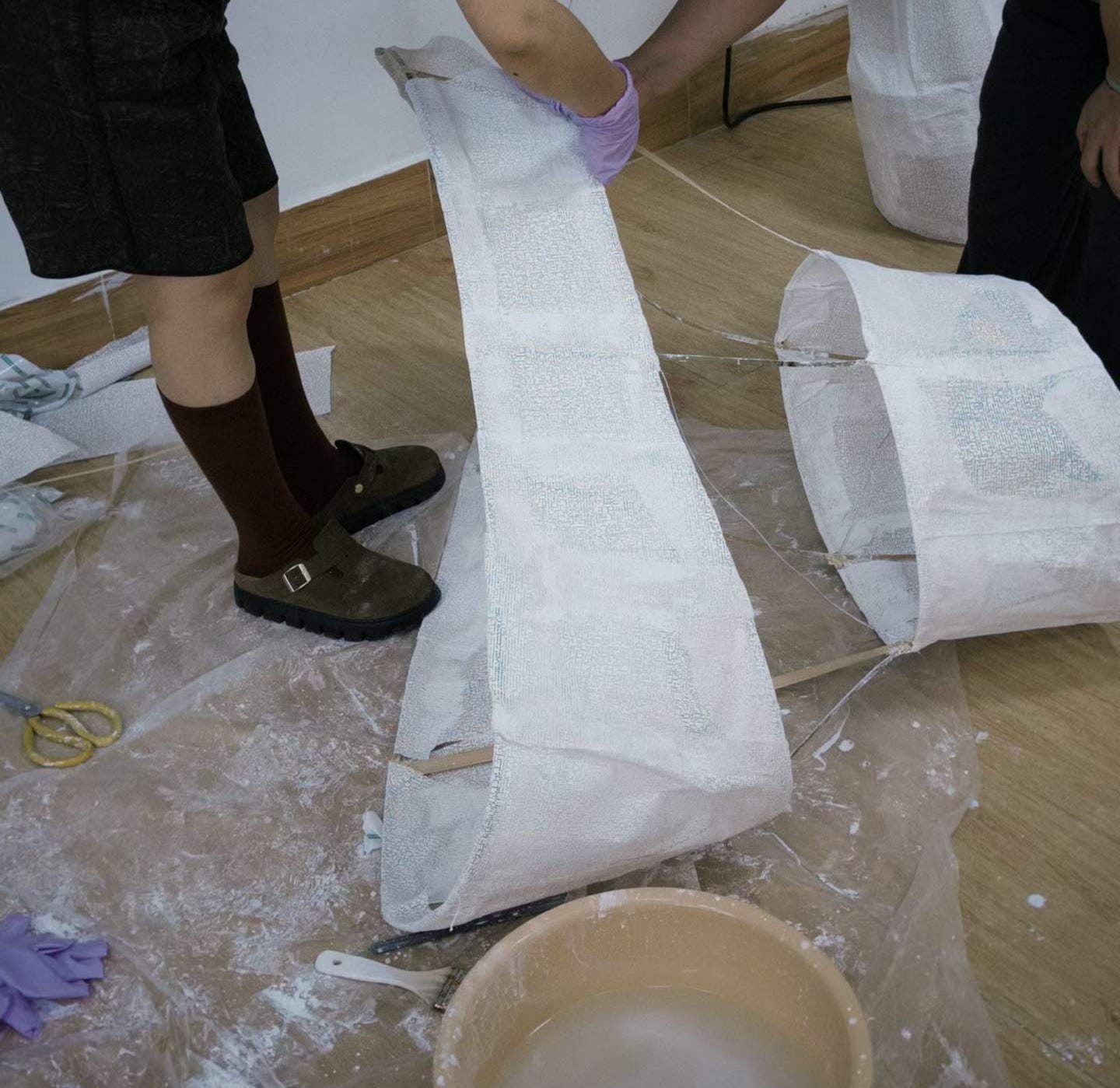
Materials carry their own histories. Bamboo and xuan paper, for example, can become structures, bodies, or parts of a space within a contemporary art context.
Recently, I’ve also been experimenting with other materials. I’ve been grinding Chinese medicinal herbs such as indigo root and honeysuckle into pulp, and studying their water resistance and strength to see whether they could be used in installations.
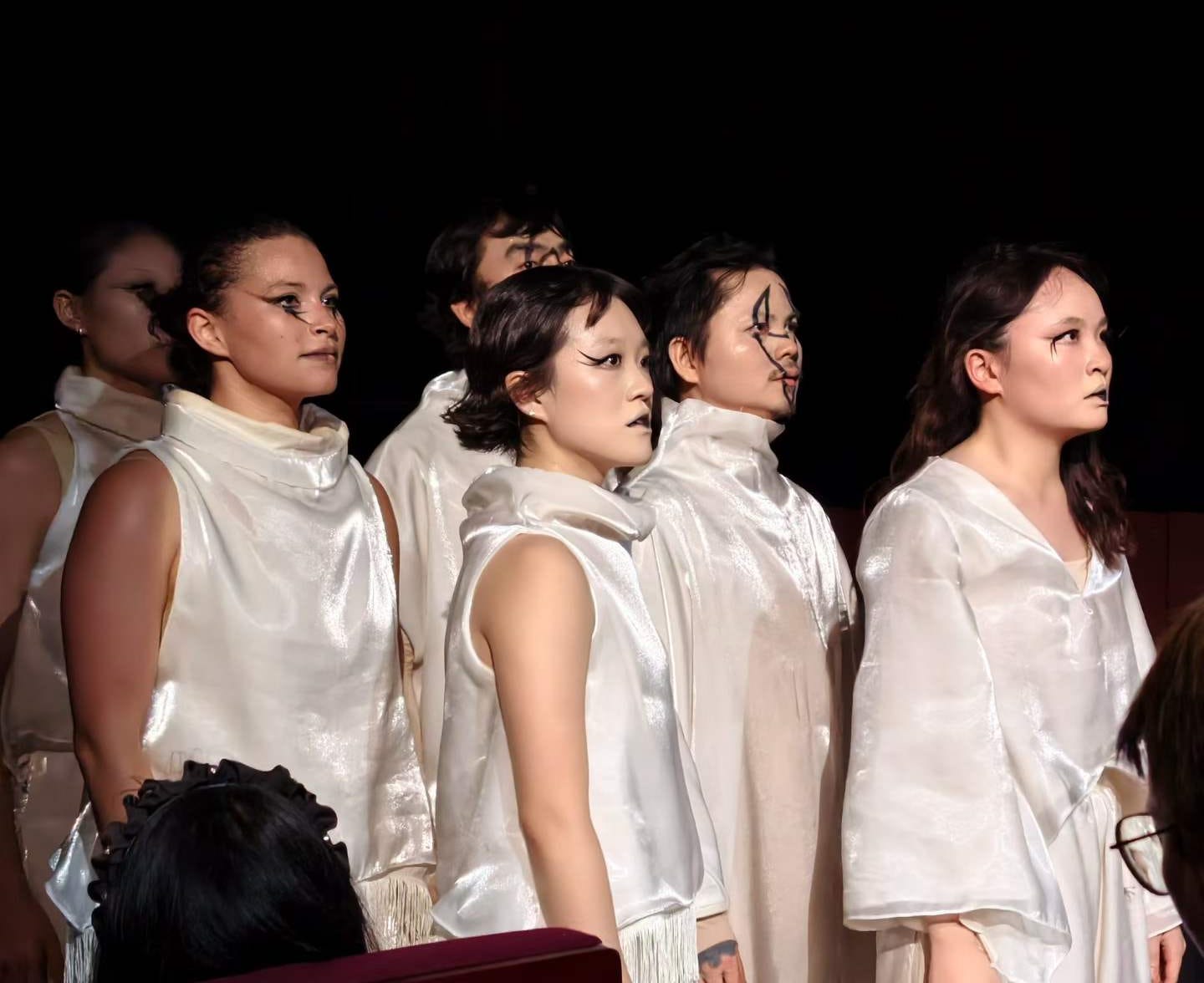
We also incorporate elements of traditional Chinese culture, such as Wing Chun Cantonese opera face painting and music instrument. But the important thing is not simply to attach the label “Chinese elements” to the work. What matters is whether these materials or forms can actually change the audience’s experience.
That’s why I don’t usually emphasize them deliberately. I leave it to the audience and the live performance.
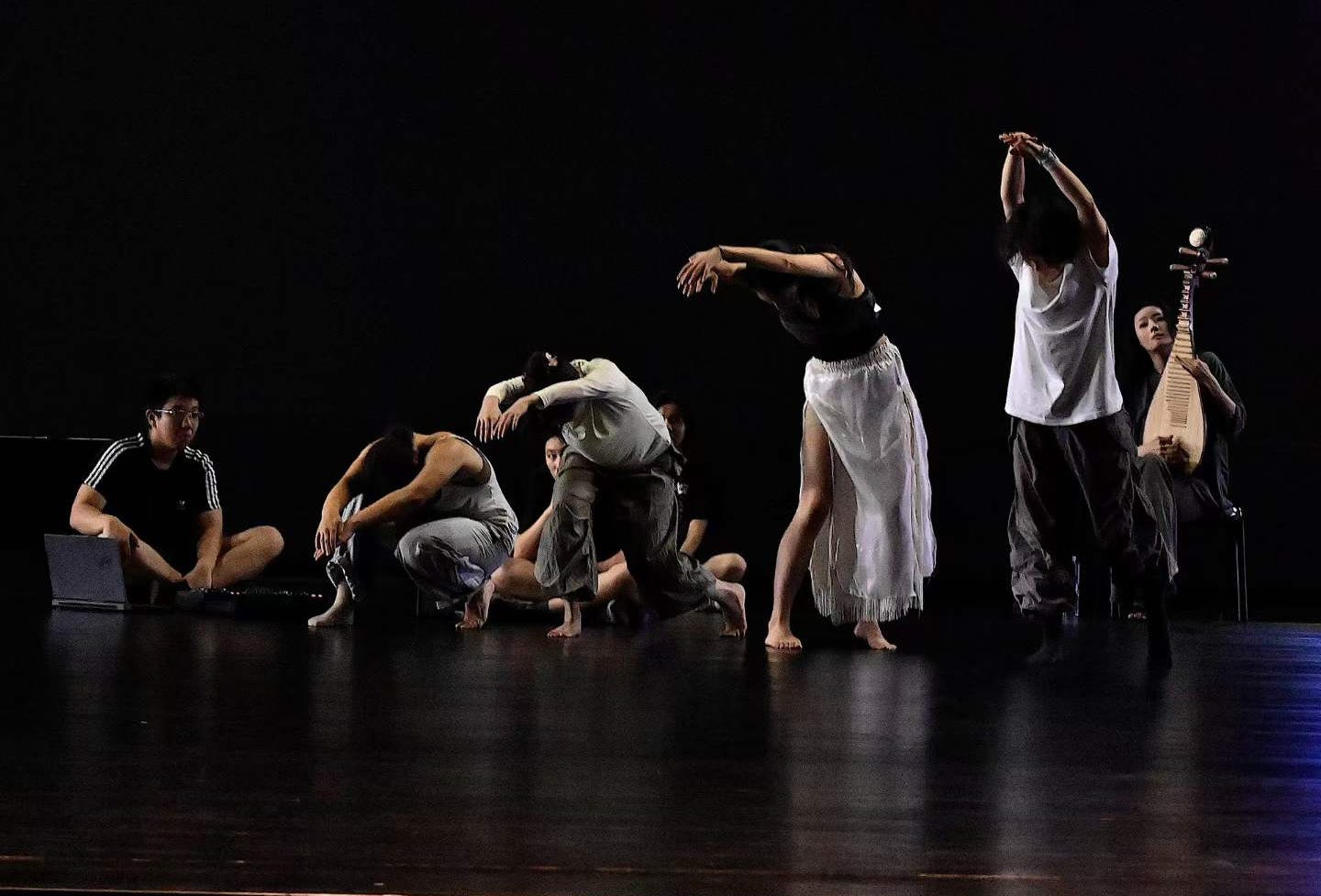
What role do the workers and craftsmen play in your work?
Ya
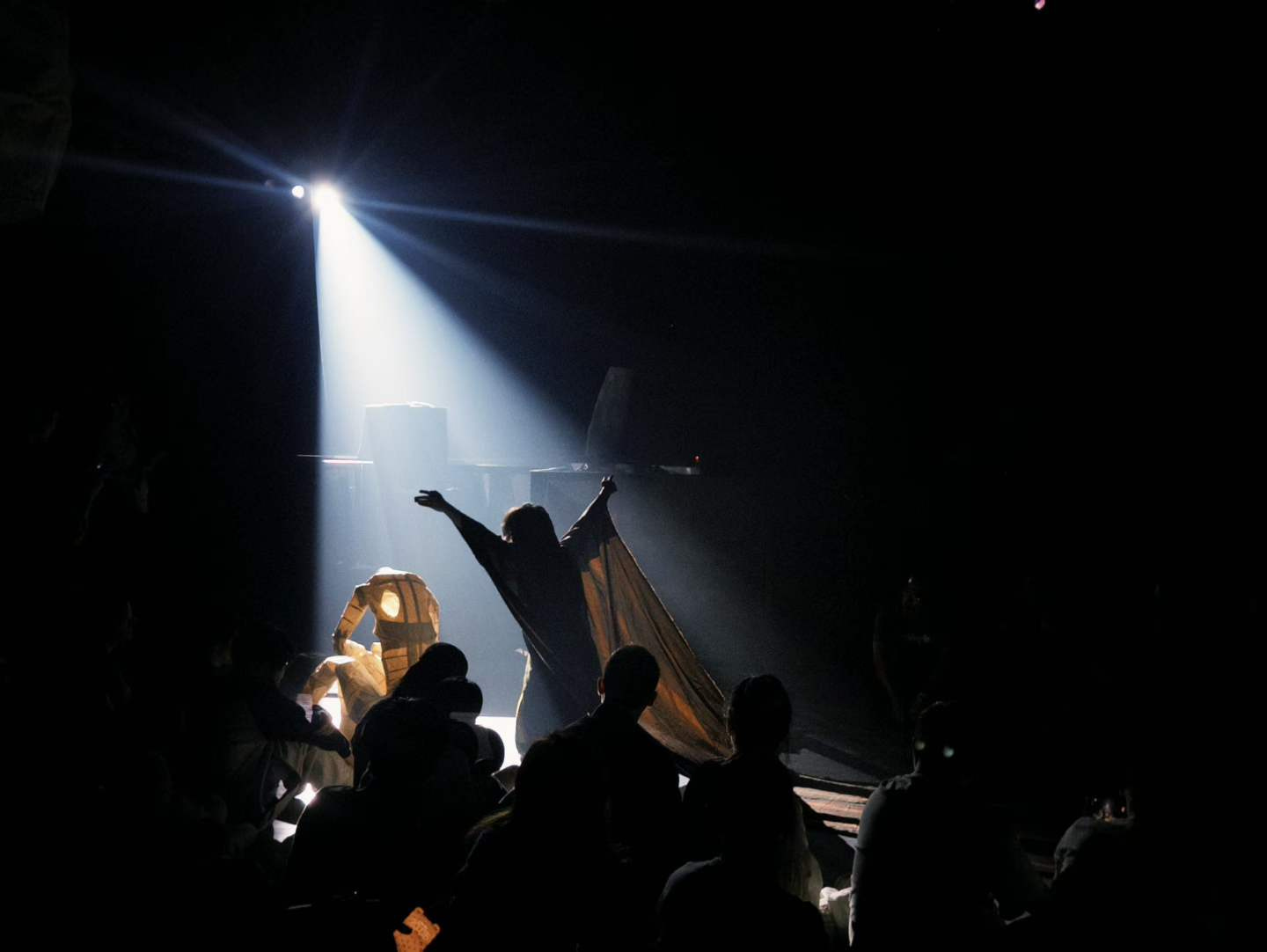
Have you seen our headless body? Its bones are made of bamboo strips, its skin is made of xuan paper, and the factory’s woven ribbons form its veins.
No matter how interesting my ideas are - but bringing it to life would have been impossible without the skill and care of the craftspeople and workers. My godmother does most of the pattern-making and sewing for the costumes. My cousin installs and welds the structures, while the workers on the production line operate the machinery.
To be honest, I’m constantly amazed by the precision of our craftsmenships. The accuracy they have developed through repetitive work is extraordinary. Their focus is exactly what gives them creative power.
Once, I wanted to create a curve with bamboo in a space. A worker who had spent more than ten years weaving bamboo looked at my sketch and immediately said, “That won’t work. It will crack after a few days.” He explained the direction of the bamboo grain and where the stress points would be, then suggested a completely different approach. It was much better than my initial idea.
Since then, they are not simply viewers but already the creators.
Doesn’t the standardized order of a factory conflict with the freedom of art?
Ya
No. I think the two can actually work together very closely.
I view order not as a restraint, but as a pillar for innovation. Here, I embrace the Japanese concept of Shu-Ha-Ri—a journey of mastery.
Shu (守) is about grounding my practice in the weight and history of 'factory knowledge.' Ha (破) allows us to challenge the limitations of that tradition. Ultimately, I strive for Ri (离): the creative freedom to transcend these labels and forge a unique, authentic language that integrates the past and present.
Q: What are your current works, such as “In Passing” and “Ideal Body”, trying to express?
Ya
“In Passing” is about the act of passing through. It explores encounters, near-misses, and goodbyes between people. Many things cannot be planned. They simply happen, and then they pass.
That is also how I create. I don’t work for a fixed goal. I let different elements come together and see what they grow into.
“Ideal Body” is concerned less with the body itself than with the act of looking—or gazing. How do we see something? From what position, and at what angle? The work explores the relationship between the gazing subject and the body being gazed upon.
The installation features a headless, expressionless body standing in the space while the audience moves around it. As viewers look at the body, they become aware that they, too, are being looked at.
All these works share the same underlying quality: uncertainty.
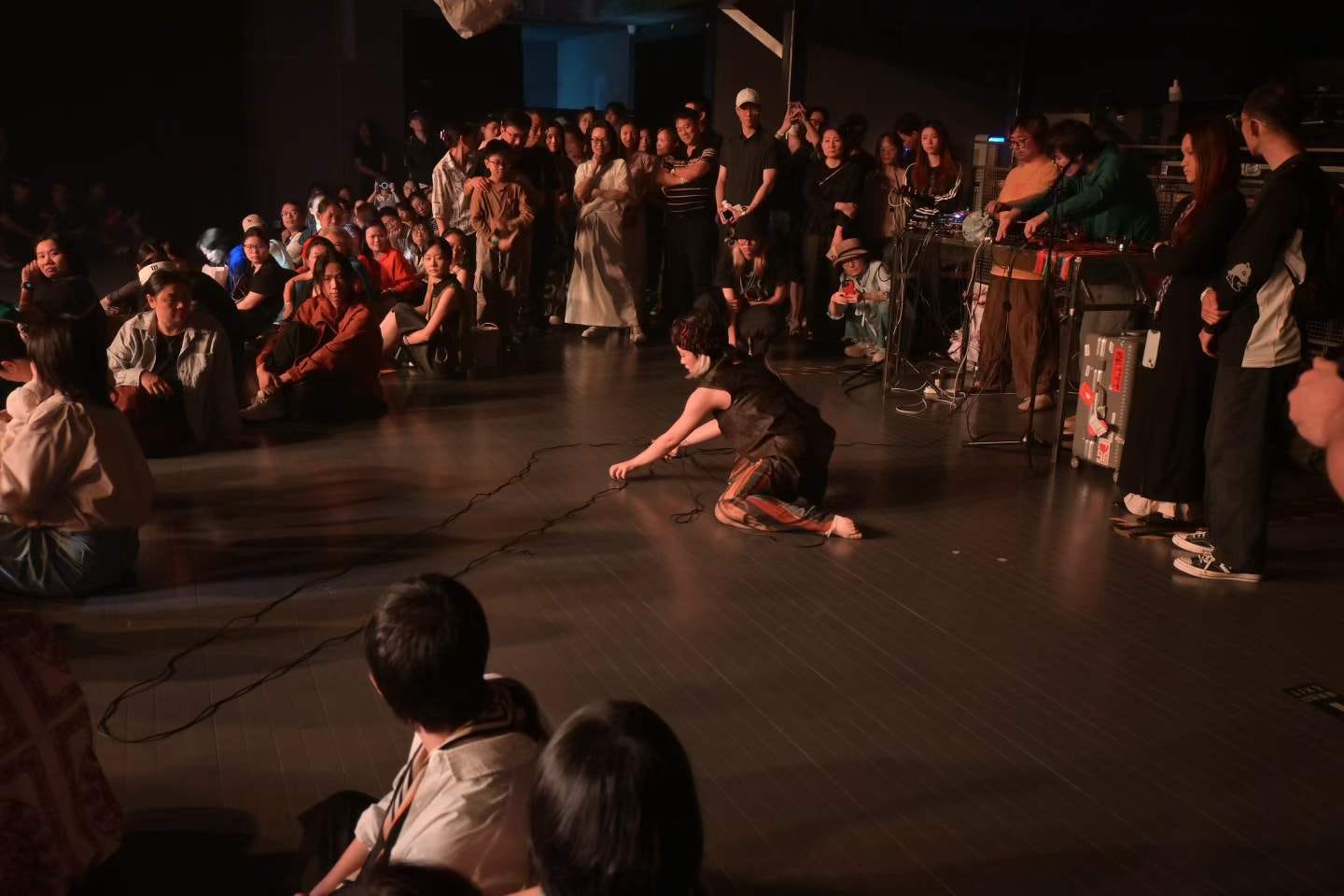
Remarkably, our performances have no dialogue and no fixed script. They may not even have a fixed cast. You don’t know what will happen next. You don’t know how a material will respond to you, or where the audience will appear.
But I’m increasingly convinced that this is not a problem. It is simply the most honest reflection of life itself.
What has troubled or occupied you most during the creative process?
Ya
What often makes me think deeply is how to define the subjects of my practice within different contexts. The artistic environments in China and abroad are very different, so the issues I focus on and engage with naturally shift as well.
When I am abroad, I often think about how to move beyond racial identity so that I can create with greater freedom. In China, my attention turns instead to things that are frequently overlooked by the mainstream—factories, as well as the emotions, everyday lives, and personal experiences of ordinary people.
Perhaps, on a deeper level, these seemingly different interests are connected by the same desire: to use art to help others, while also helping myself find a sense of recognition and belonging.
At the same time, the specific experiences and social realities behind them are different. This leads me to continually ask myself: Should I emphasize these differences? Should I search for the common ground more between them? Or should I work within a kind of ambiguous space between the two?
I have not yet found a clear answer. This tension, and the uncertainty it creates, have already become an ongoing part of my practice.
When the Work Leaves the Factory
The work moves from the factory to the stage, and from Foshan to places farther away. It begins to encounter different audiences and different interpretations. It also faces a more fundamental question: In a culture accustomed to the mainstream and the standardized, how far can a path of your own making go?
Which artists or thinkers have influenced your work?
Ya
Alberto Giacometti, the sculptor, is a major influence on me. He would work on his sculptures during the day and destroy them at night. Some pieces took him years to revise. When people asked what he was searching for, he would simply answer, “I don’t know.”
I also admire John Galliano. He has always pursued unconventional paths. After being rejected by the fashion world and dismissed from his position, no one was willing to hire him for two full years. Yet he eventually found a way to prove himself on his own terms. That kind of vitality and resilience is deeply inspiring to me.
In a sense, contemporary dance itself was born out of a rebellion against ballet, so a spirit of resistance has been present in the form from the very beginning.
We are trying to challenge certain boundaries—to avoid being confined by established rules or the noise surrounding them, and to find its own path.
Rebellion may sound exciting, but when performing in China, do you face cultural conflicts?
Ya
I am really open for the criticism. I listen to it seriously. But respecting the audience’s cultural preferences does not mean giving up my own judgment.
For example, there can be negative associations with certain colors like white and death. Large amounts of white can easily make Chinese audiences think of funerals or bad luck. But I believe people should not avoid death. We need spaces where we can face it directly.
On a broader level, respecting the audience and staying true to ourselves have never been contradictory in our work.
Our performances blur the boundary between the audience and the performers. The audience can take part, and even move freely through the space.
This is not simply an invitation that says, “Please come here and watch the show.” It is more like saying: “If you want to, we can create the story together. We can influence the direction of the work and see how it changes through our efforts.“
When our relationship is grounded in such equality, differences of opinion are more likely to be accepted and understood. At the very least, they can coexist.
How do you see the relationship between art and commerce?
Ya
Commerce is not the enemy of art, but it should not merely reproduce the surface of art.
For me, the important thing is not to keep art and commerce in some kind of perfect balance. It is to find a relationship in which they support each other.
Fortunately, art and factory production are already connected. Art can enter production and commerce without losing its creativity. In fact, it can bring uniqueness, continuity, and vitality to business.
To be honest, factories close down all the time. I don’t think simply selling products online or passing the business on to the next generation can solve the deeper problem.
We need to pay attention to the hands of the craftspeople, the unique knowledge held by the factory, and the deeper cultural exploration behind it all. That is where the real energy lies.
I encourage everyone in my family to learn design. I hope art and creativity can help extend the life of the factory.
In the end, the real question may not be how to balance art and commerce, but whether we can create a model that does not drain art of its energy, while also preventing commerce from remaining superficial.
Growth with uncertainty
Growth is not always about following a fixed path or reaching a predetermined destination. Sometimes, it means remaining open to what emerges along the way.
This openness is at the heart of Zhouxin’s growth. With every encounter, the work changes—and so does everyone involved. It continues to grow not toward a fixed conclusion, but through the endless possibilities of the next moment.
What would you like to do next?
Ya
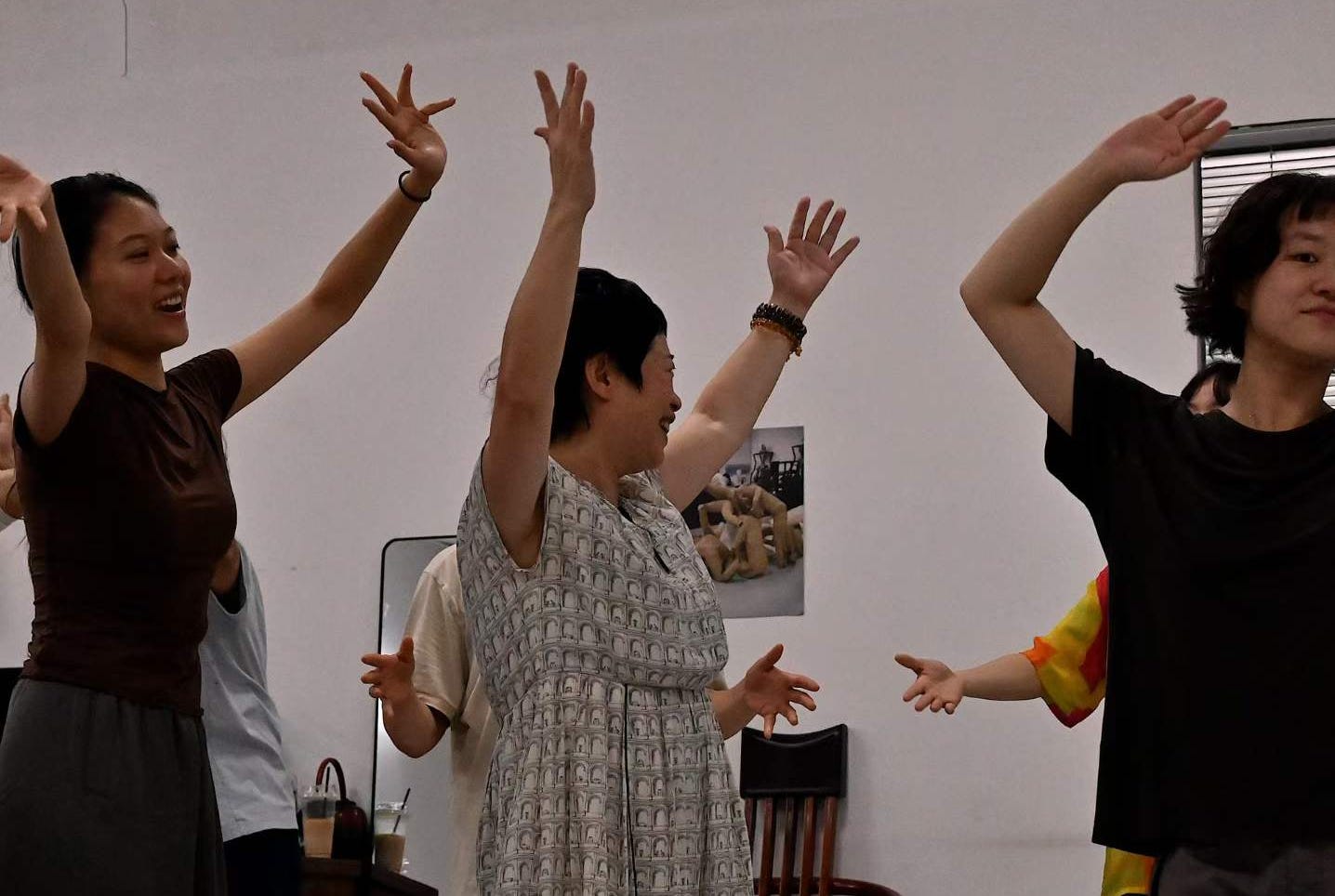
I want to invite amateur ladies over the age of fifty to take part. They carry so much experience—of the body, family, labor, and time.
They may not think of themselves as artists, but I want to see what happens when they enter the creative process.
I also want to transform my factory itself into the real stage.
In this setting, “workers” should be presented as real, specific individuals—not merely as craftspeople behind or normal audience, but as the central performers at the heart of the art world.
If you could describe Zhouxin in one word, what would it be?
Ya
Growth—but a kind of purposeless growth.
It is not a fixed model that has been designed in advance. It slowly takes shape through each encounter with bodies, materials, workers, spaces, and audiences.
In Zhouxin’s world, no one is the “main character,” and nothing is merely the “background.” The work does not assign value according to a fixed hierarchy.
Dance and installation are equal. Bamboo strips and the body are equal. The workers sitting below the stage and the performers standing on it are equal. Every material, every person, and every sound is given the possibility of shaping the work.
What I fear most is that the work might stop growing and stop changing.
In the end — Zhouxin is still taking shape.
At the moment, its value cannot be measured solely through commercial success. What matters more is the process: the relationships it creates and the encounters between people, materials, and spaces. Through Zhouxin, art returns to the world of labor — not to aestheticize it, but to listen to it and make it part of the work.
Perhaps this is what purposeless growth means: remaining open to what each encounter makes possible.
A dancer meets a worker.
A factory becomes a stage.
Something unexpected begins to grow.