

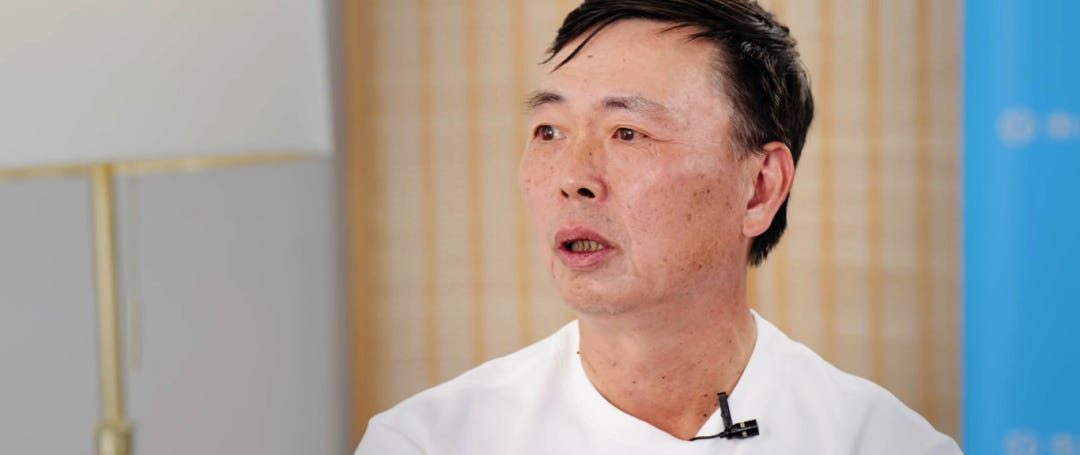
Among the many investors and business icons, Duan Yongping stands out as particularly unique. What makes his thinking so compelling is not just his investment success, but the dual perspective he offers, blending the “Entrepreneur” and the “Investor.” This is the most fundamental distinction between him and most investors.
A Dual Identity, A Unique Dimension
Duan Yongping is, first and foremost, an exceptional entrepreneur. He personally built business legends like 小霸王,步步高,OPPO and vivo, profoundly influencing an entire consumer electronics ecosystem. This background dictates that his lens for examining a company is fundamentally different from that of a Wall Street analyst: he focuses not only on profit growth on a spreadsheet but on the underlying operational essence behind it all.
His core criterion for judging a company can be boiled down to a simple question: “Is this company doing the right thing?”
“The right thing” is not a vague notion but a systemic business judgment, akin to a combination of “right timing, favorable conditions, good product, team, culture and etc…” — Is the product direction correct? Is the market timing ripe? Is the corporate culture healthy? Is the core team capable? Only when these elements align toward a positive direction can a company build enduring competitive advantages.
This sounds like common sense, so why do so few truly see through it?
Why Is This “Common Sense” So Rare?
The reason lies precisely in the fact that most people lack the firsthand experience of building something from zero to one and steering an enterprise through uncertainty. Without this experience, it’s easy to fall into Hindsight Bias: Only inferring a company's excellence from lagging results like "profits and revenue" on financial statements, with inferior ability to systematically think about and diagnose Chinese domestic companies' business models, governance methods, corporate culture, execution details, competition landscape and consumer behavior shift.
At its core, this is a lack of local business intuition and deep understanding. To truly comprehend a company requires not just analyzing what it did, but understanding why it did it, and even assessing how well it was done, what they might do next and what challenge they may encounter..
Resonance and Divergence with Buffett
This aligns perfectly with Warren Buffett’s core principle—”buying a stock means becoming an owner of the business.” This sounds simple but is exceedingly difficult in practice. A vast cognitive chasm separates the act of clicking “buy” from psychologically truly “owning” the company.
Truly “owning” a company means you must think like its founder and operator. You must care not only about next quarter’s earnings report but also about its product competitiveness, user sentiment, talent pipeline, and cultural resilience. You must even mentally simulate: If I were the CEO or product director, what would I decide? Could I do better than them? Only with this depth of understanding can you cut through market noise and identify a company’s inherent health and excellence.
Without firsthand, frontline experience in the Chinese market, it’s incredibly difficult for an outsider to truly “wear the boots” of a Chinese decision-maker. The strategic choices, competitive tactics, and compliance wisdom born from that local context remain opaque to those without lived experience. This deep, almost ineffable local insight is Duan’s unique and hard-to-replicate advantage when understanding and investing in Chinese companies.
Conclusion: Insight Springs from Understanding Essence
Duan Yongping’s investment philosophy teaches us that the highest form of investment wisdom often comes not from complex models, but from a profound grasp of the simple essence of business. It demands we place ourselves in the operator’s position and measure an enterprise against the ruler of “doing the right thing.” This perspective, forged from entrepreneurial spirit and tempered by an intimate understanding of China’s commercial ecosystem, is the sharpest and most fascinating aspect of Duan Yongping’s thinking—it brings investment back to business fundamentals, guarding a rare clarity and conviction amidst the market’s noise.
Of course, while I greatly admire Duan, that doesn’t mean I agree with all his views. In particular, I don’t quite understand his bias against Elon Musk —he seems trapped in an echo chamber, or perhaps age has made his thinking more conservative.