

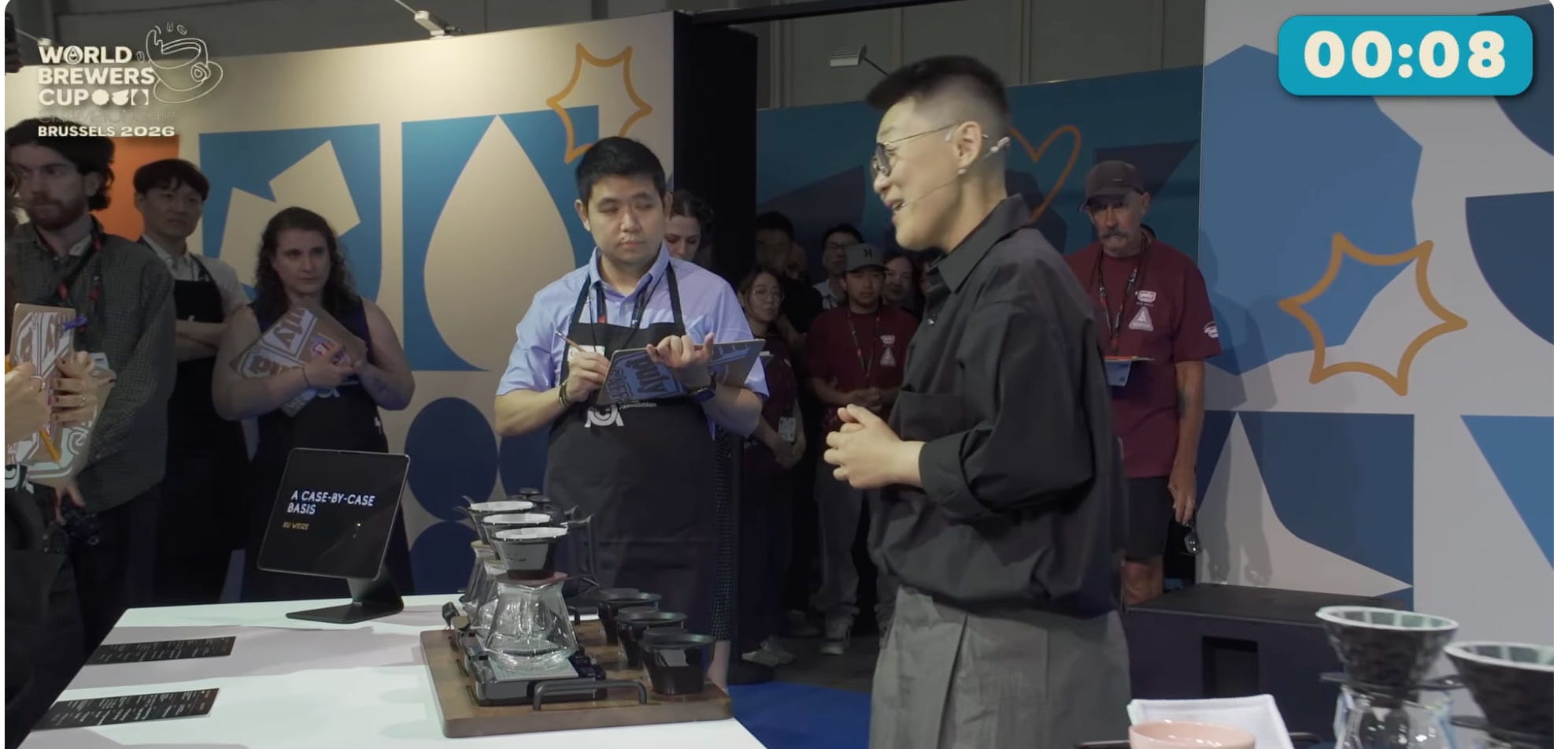
Just now, on the floor in Brussels, Weize Xu(徐维泽) — the Chinese competitor’s setup offered a clear window—not into how far she’d go, but into what she put on the table. The origins of those objects formed a kind of side-view map of where China’s coffee scene really stands.
The beans were Panamanian Geisha. The popcorn machine brand is - American LORING - both are my favorite. No surprise — when it comes to green coffee and heavyweight roasting gear, China is still learning; it hasn’t yet earned a seat at that table.
But some of the lighter kit told a different story.
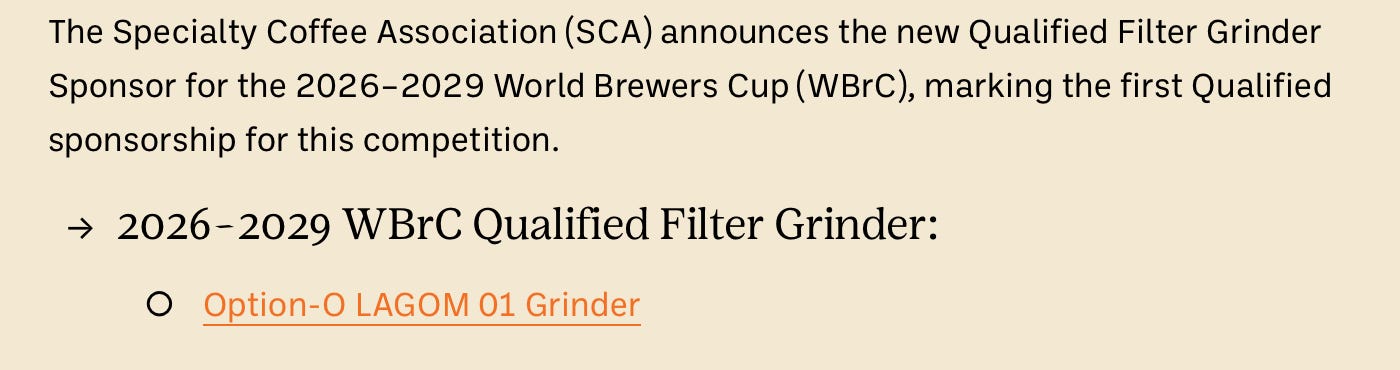
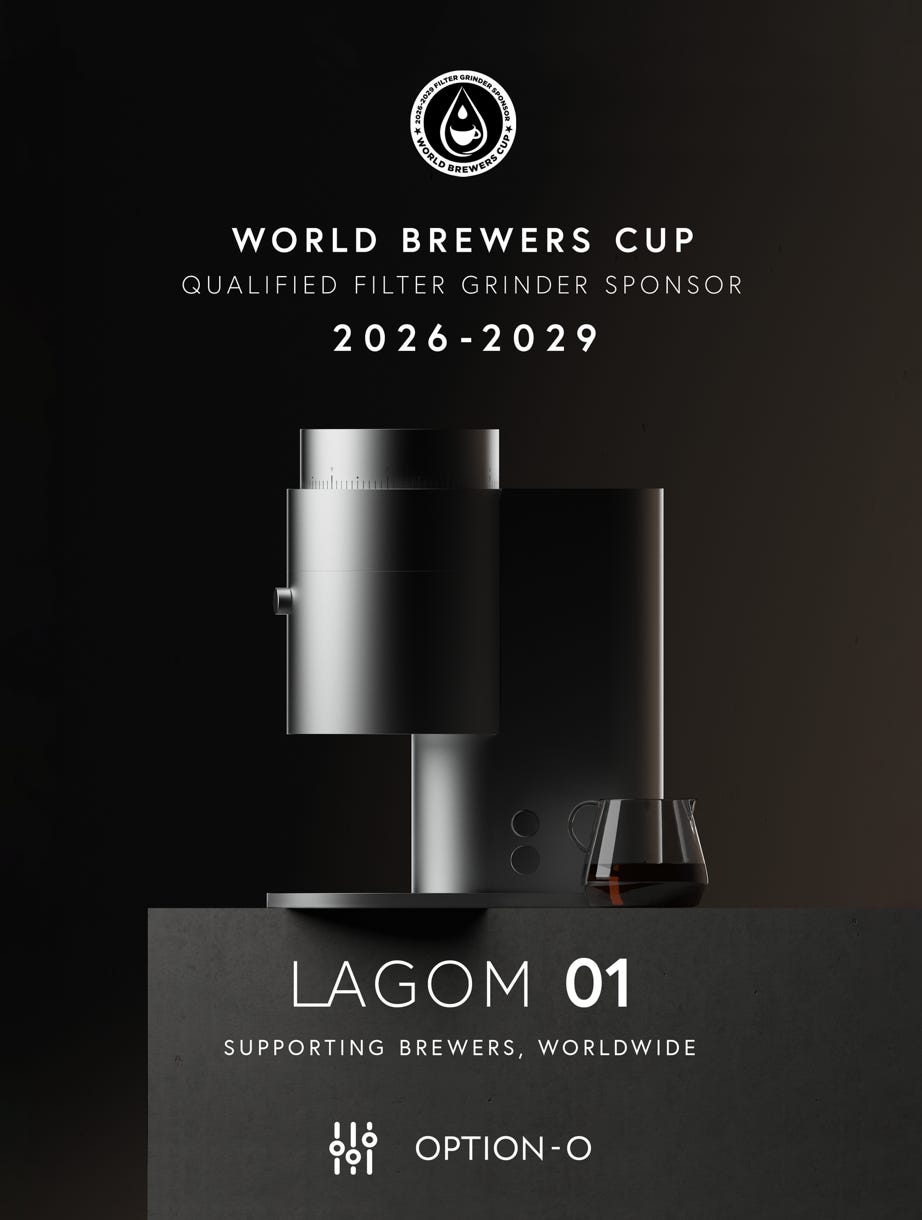
The WBRC‑sponsored filter grinder is now OPTION (LAGOM is the product name; 01 denotes the model — like iPhone XXX vs. Apple) — a Chinese brand many still assume is foreign. It didn’t get there by undercutting on price. It walked straight into the world‑class single‑dose grinder category, a space EK43s and Ditting 807s have dominated for what feels like centuries — not to confront, but to fill a gap.
EK43 and Ditting 807 lab‑sweets are legends in the professional world, but Option’s grinder aims to give users more choice — just as the brand name promises.
As you can see from the photos below, their product lineup is broad — from home to café, daily use to competition, entry‑level to high‑end. The design is exquisitely minimal and tuned for a light‑roast aesthetic — true to the name LAGOM, a Nordic word meaning “not too much, not too little.” It reflects deep coffee knowledge while blending restrained Nordic philosophy, the Chinese 中庸 (doctrine of the mean), and contemporary coffee flavour trends into a very impressive product. 👇
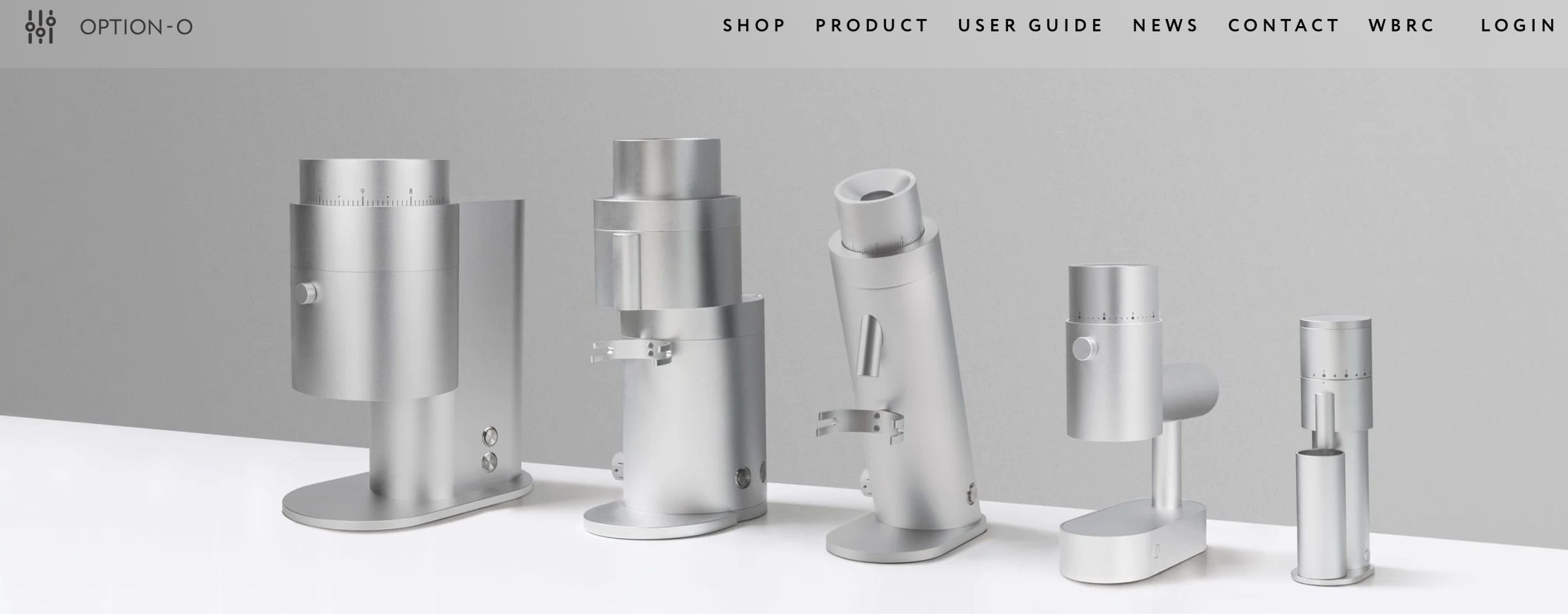
In fact, such cute machine is already in cafés worldwide — more and more top specialty cafe are using the brand.
That signals something important: at least one Chinese company has stopped asking “are we good enough?” and is letting the world’s pickiest users answer that question every day. To me, this isn’t a hype-victory story. It’s an ongoing experiment — but one that shows China’s coffee industry is deliberately aligning with global trends and growing steadily.
The drippers reinforced that picture.
The Chinese brewer used two different pour-over cones to brew separate portions of the same recipe (the second portion was even a blend of two grind sizes).
The opening dripper was the Lily Drip — a pour‑over cone invented by a Taiwanese ( I guess he is) coffee genius enthusiast 👇.
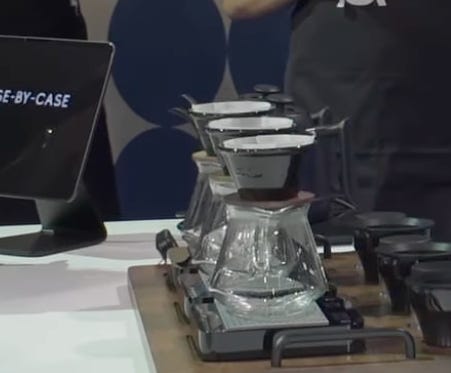
The second was the CT62 dripper 山文滤杯, designed through collaboration between a Taiwanese designer and coffee expert 👇.
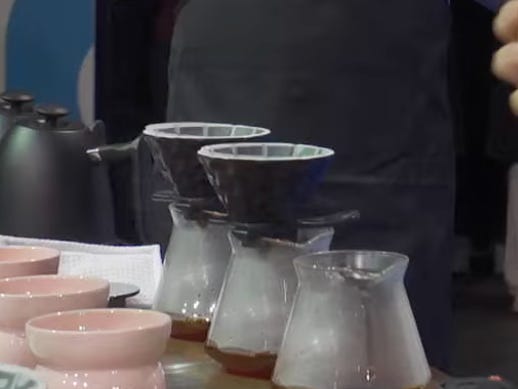
Both brands are extremely popular in China, appearing frequently on café counters and competition bars nationwide.
What this assortment points to are not a simple “Made in China” story. It’s a scattered, international community of Chinese talents — each pulling in their own direction yet together shaping what’s happening back home.
Last but not least, there’s the person behind the bar, Weize Xu — the brewer herself — an amateur.
That’s worth pausing on, at least in a Chinese context.
Not because it’s rare, but because it signals acceleration: not only professionals, but everyday Chinese consumers are getting seriously good, knowledgeable, even quasi-professional about coffee.
Part of this is global — the rise of home coffee and the democratization of brewing knowledge. But it also shows that Chinese coffee drinking pattern now has largely synced with the wider world. China isn’t some isolated market; it shares the same pulse as global coffee culture.
Of course, that rising consumer competence is putting pressure on sloppy cafés - they get called out and abandoned. And more than anything else, that consumer intolerance for mediocre coffee is what’s forcing the industry to evolve — China included.
Thanks for the information. I hadn't realized that Chinese coffee equipment is so advanced.